Widespread marine mammal and seabird reductions are unlikely to benefit salmon due to indirect ecosystem effects
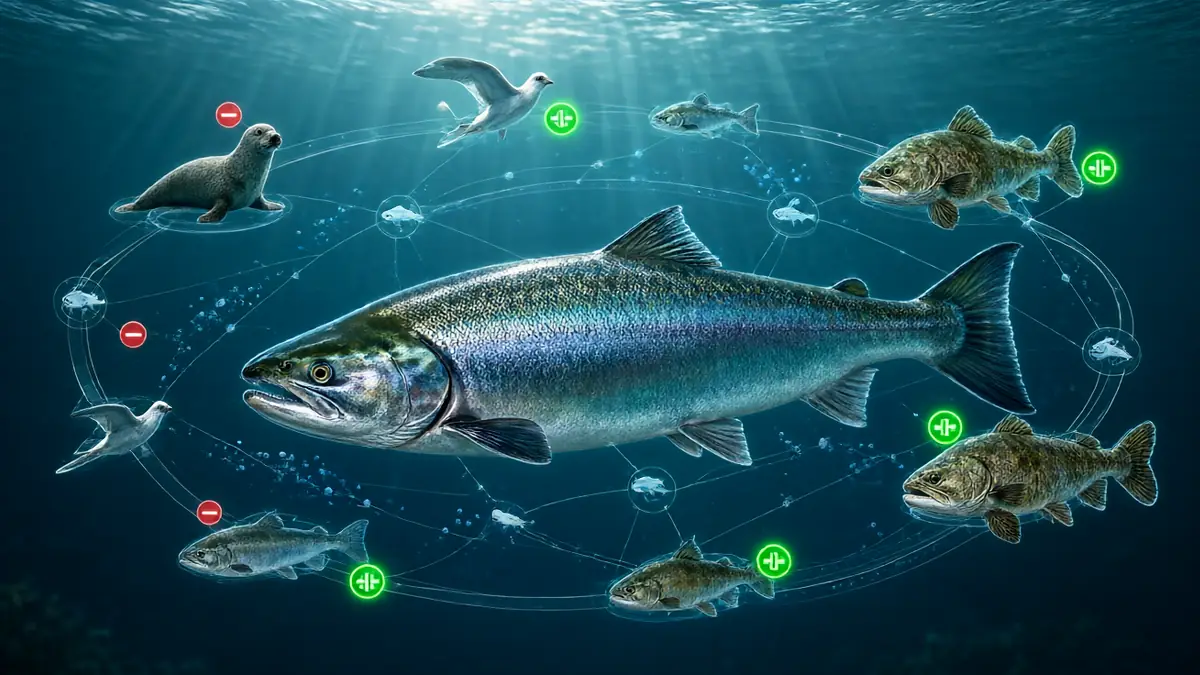
Pacific salmon are depleted due to anthropogenic impacts, and populations have failed to recover despite management interventions. Predation on salmon by pinnipeds and seabirds has been suggested as a barrier to recovery, leading to calls for predator culls by some. However, no studies have evaluated the whole-ecosystem impact of removing these predators nor estimated the direct and indirect effects of these culls on salmon. We use an end-to-end ecosystem model to assess the efficacy of widespre
Pacific salmon are depleted due to anthropogenic impacts, and populations have failed to recover despite management interventions. Predation on salmon by pinnipeds and seabirds has been suggested as a barrier to recovery, leading to calls for predator culls by some. However, no studies have evaluated the whole-ecosystem impact of removing these predators nor estimated the direct and indirect effects of these culls on salmon. We use an end-to-end ecosystem model to assess the efficacy of widespread culls in marine environments. We find that culls are unlikely to benefit salmon due to the indirect food web effects of predator reduction and the low biomass of top predator groups. Instead, more abundant fish predators, northward-expanding competitors, and temperature-sensitive prey have larger effects on salmon in the ocean.