Physical/Tech

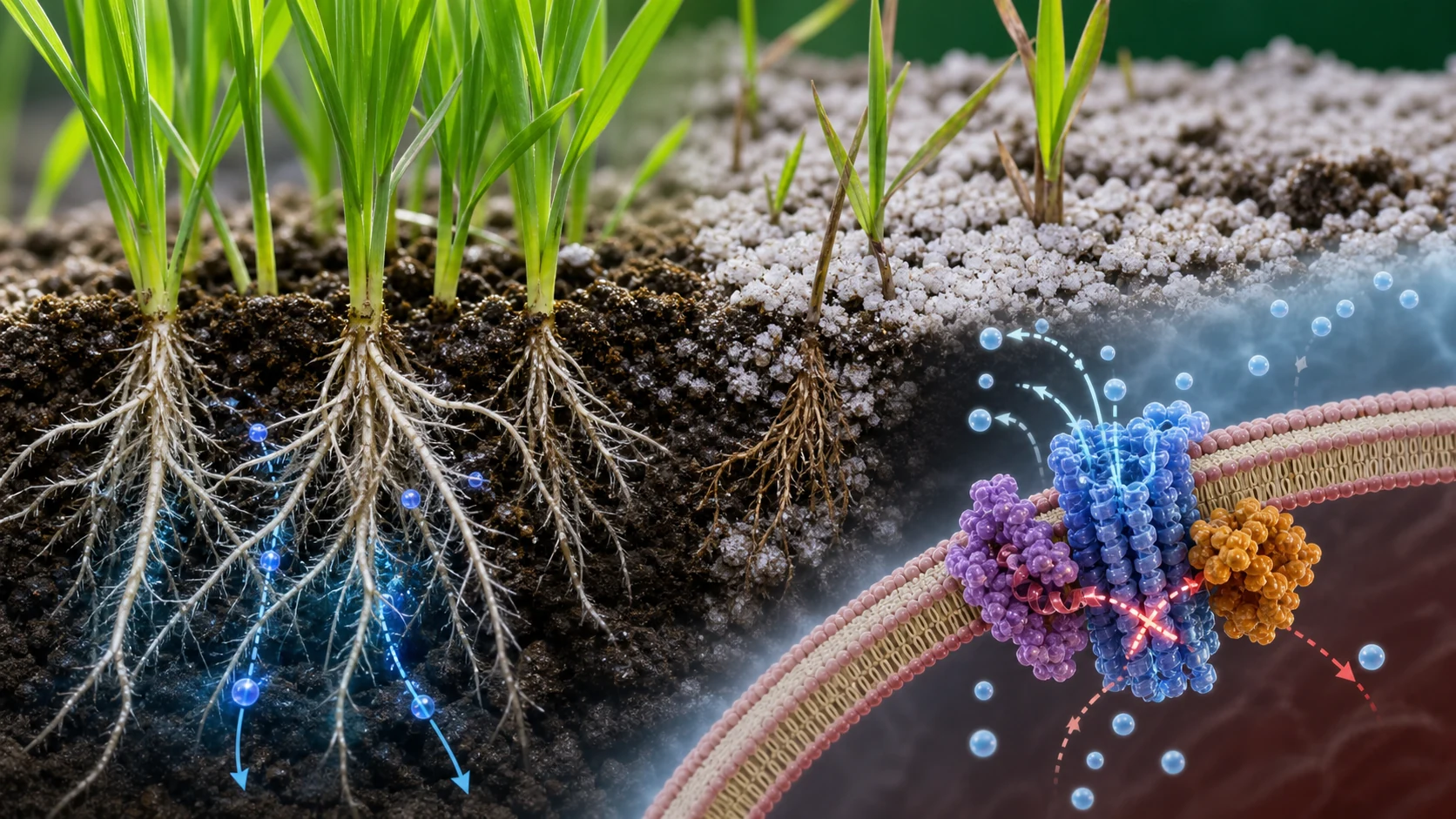
TaIAA25 negatively regulates wheat alkaline tolerance by inhibiting plasma membrane H + -ATPase activity.
| Source: Proceedings of the National Academy of Sciences of the United States of America

Soil salinization/alkalization represents a universal challenge that severely constrains crop productivity. Elucidating the molecular mechanisms underpinning saline/alkaline tolerance of wheat ( Triticum aestivum ) holds profound significance for global food security and sustainable agriculture. In this study, we functionally characterized a wheat alkaline sensitive locus designated Wheat Alkaline Sensitive 1 ( WAS1 ), through whole exome-capture sequencing-based bulked segregant analysis and fi

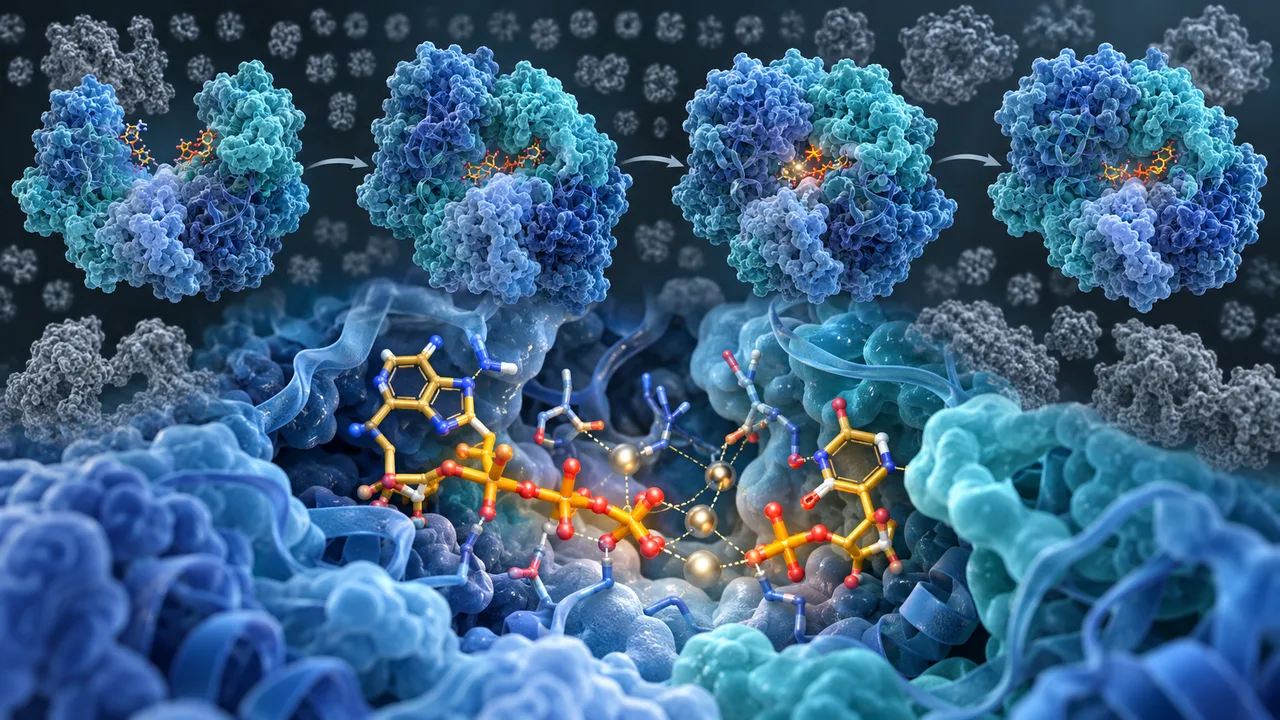
Soil salinization/alkalization represents a universal challenge that severely constrains crop productivity. Elucidating the molecular mechanisms underpinning saline/alkaline tolerance of wheat ( Triticum aestivum ) holds profound significance for global food security and sustainable agriculture. In this study, we functionally characterized a wheat alkaline sensitive locus designated Wheat Alkaline Sensitive 1 ( WAS1 ), through whole exome-capture sequencing-based bulked segregant analysis and fine mapping of was1 mutant populations. This locus encodes TaIAA25, a canonical member of the Auxin/Indole-3-Acetic Acid (Aux/IAA) protein family. A C to T transition in TaIAA25 leads to a Pro-to-Ser substitution within its Aux/IAA degron motif. This amino acid substitution enhances the stability of TaIAA25 protein, thereby rendering wheat hypersensitive to alkaline stress. The overexpression of TaIAA25 significantly increased sensitivity of wheat to alkaline treatment, whereas iaa25 knockout mutants displayed enhanced tolerance to alkaline stress. Consistent with established auxin signaling transduction, TaIAA25 interacts with auxin response factor 16 (TaARF16) to repress the TaARF16-mediated transcriptional activation of small auxin-up RNA gene TaSAUR215 . This cascade potentiates the inhibitory effect of D-clade type 2C protein phosphatase (TaPP2C.D) on plasma membrane (PM) H + -ATPase activity. Notably, TaIAA25 also directly interacts with the phosphorylation (P) domain in central loop of PM H + -ATPase 2 (TaHA2) and represses its binding with the actuator (A) domain, thereby blocking TaHA2-driven proton efflux. Collectively, our findings clarified the crucial role of the classical auxin signaling pathway in plant responses to alkaline stress. Furthermore, we revealed a mechanism wherein an Aux/IAA protein directly modulates PM H + -ATPase activity to orchestrate auxin-mediated alkaline stress response.

Read the original source →

Related Stories

Physical/Tech

Indirect reciprocity with dual private assessment.

People often cooperate out of concern for their reputation. The corresponding theory of indirect reciprocity predicts that such cooperation can only evolve if people's opinions of each other are sufficiently correlated. This correlation, however, can be difficult to achieve when individuals form their opinions independently from one another, as in private assessment models. In that case, errors can generate disagreements that propagate throughout a population. Here, we identify a simple mechanis

Continue reading
Physical/Tech

A genetic program for rapid initiation of axillary meristems at the onset of flowering.

Shoot branching patterns and their diversity arise from variable activities of axillary meristems (AMs). A common feature of flowering plants is delayed AM initiation and growth during the vegetative phase, followed by a sudden and rapid acceleration of apical AM initiation during the reproductive phase. The mechanisms underlying this pronounced developmental shift are poorly understood. During tomato floral transition, the primary shoot meristem (PSM) terminates in a flower after producing two

Continue reading
Physical/Tech

David Botstein: A pioneering geneticist and educator 1942-2026.

David Botstein, who died on February 27, 2026, was a towering figure in the field of modern molecular genetics. His research career was largely focused on the development of methods to better understand biological systems, beginning with his early work on Salmonella phage P22 and yeast, where he exploited the use of conditional lethal mutations as suppressors to identify genes with common functions and to order them in a pathway. He is best remembered for developing restriction fragment length p

Continue reading
Physical/Tech

Ultra-narrowband organic room-temperature phosphorescence achieved by boosting low-frequency vibronic coupling.

We pioneered a strategy based on low-frequency vibronic coupling to design narrowband room-temperature phosphorescent (RTP) materials. Here we select coronene derivative (CoDe) system and report that attaching aroyl group to the coronene core disrupts its intrinsic symmetry and introduces abundant low-frequency vibrational modes, thereby affording efficient room-temperature phosphorescence with a full width at half maximum (FWHM) of approximately 25 nm or narrower. In CoDe systems functionalized

Continue reading
Physical/Tech

Multidomain interaction governs the filamentous assembly of the dominant-negative DNMT3A R882H mutant.

DNA methyltransferase DNMT3A-mediated de novo DNA methylation is important for proper regulation of gene expression and genomic stability in development. The DNMT3A R882H (DNMT3A R882H ) mutation, a hot-spot mutation in acute myeloid leukemia and developmental disorders, exerts a dominant-negative effect in DNMT3A-mediated DNA methylation through promoting high-order protein assembly. However, due to the lack of structural knowledge on DNMT3A homo-oligomers, the mechanism behind wild-type DNMT3A

Continue reading