Health & Medicine

Structure of bovine viral diarrhea virus E2 glycoprotein in complex with CD46 reveals the molecular basis of virus-receptor recognition.
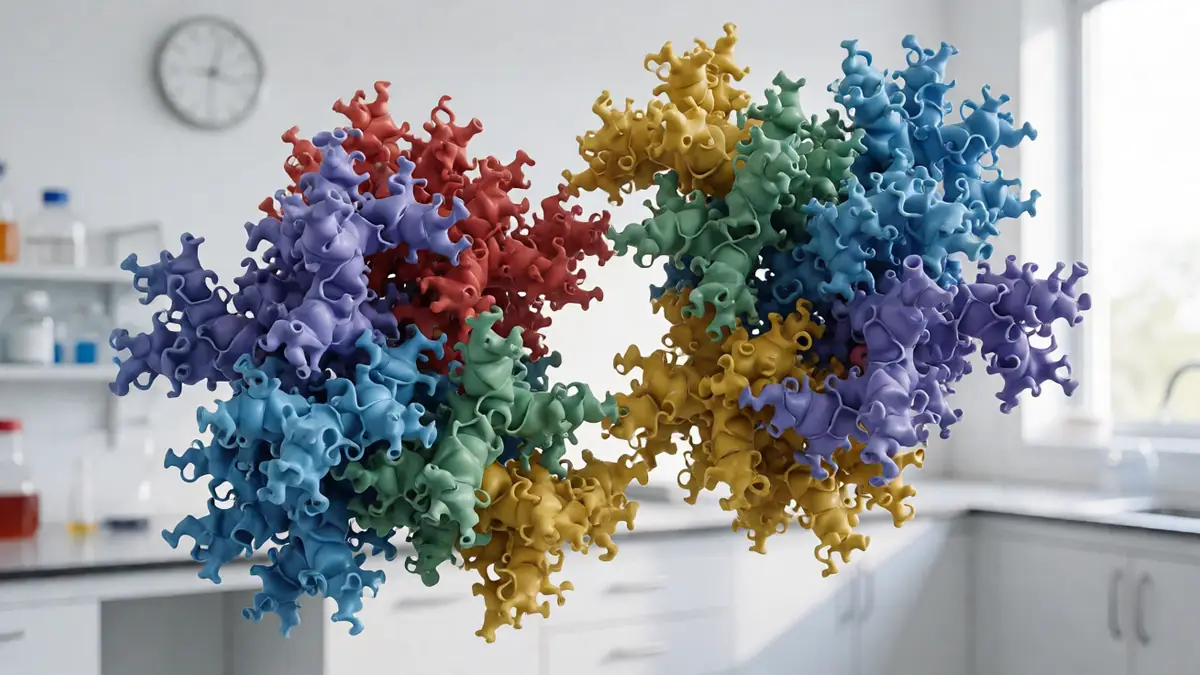
| Source: Proceedings of the National Academy of Sciences of the United States of America

Bovine viral diarrhea virus (BVDV) is a major contagious pathogen of ruminants and imposes substantial economic burdens on the global livestock industry. The viral envelope glycoprotein E2 mediates host cell attachment by recognizing the CD46 receptor; however, the molecular basis of this interaction remains unclear. Here, we report the crystal structure of BVDV-1 E2 in complex with bovine CD46 at 3.1-Å resolution. The structure reveals that the SCR1-2 domains of CD46 engage the DII-DIV dom

Bovine viral diarrhea virus (BVDV) is a major contagious pathogen of ruminants and imposes substantial economic burdens on the global livestock industry. The viral envelope glycoprotein E2 mediates host cell attachment by recognizing the CD46 receptor; however, the molecular basis of this interaction remains unclear. Here, we report the crystal structure of BVDV-1 E2 in complex with bovine CD46 at 3.1-Å resolution. The structure reveals that the SCR1-2 domains of CD46 engage the DII-DIV domains of E2 in a roughly antiparallel orientation. Atomic interactions at the E2/CD46 interface are dominated by van der Waals contacts, accompanied by only a limited number of hydrogen bonds, which explains the observed low-affinity binding between the two molecules. Structural analysis and mutagenesis studies identify key receptor features that govern host susceptibility to the virus and propose an interesting bipartite model: The D'/D interloop within SCR1 of CD46 likely serves as the "molecular determinant," and key interface residues within SCR2 function as the "affinity regulator." We further engineered CD46 decoy proteins exhibiting over 1,800-fold higher apparent binding to E2 than the wild-type receptor and demonstrated their potent virus-neutralizing activity. Collectively, these findings elucidate the molecular basis of CD46 recognition by BVDV, provide a structural framework for understanding the viral host range, and establish a receptor-based strategy for potential antiviral intervention.


Read the original source →

Related Stories

Health & Medicine

The honey bee stinger: An unusual pump with collapsible double pistons.

Most stinging animals deliver venom by contracting muscles around a venom reservoir, but honey bees employ a fundamentally different strategy. The stingers of worker bees have the unique ability to autotomize, separating from the body, to continue to sting independently. Despite more than a century of anatomical descriptions, the mechanics of venom pumping have remained unresolved due to the challenges of observing them in action. We recorded high-speed videos of active, autotomized stingers, co

Continue reading
Health & Medicine

mechanoLight: A genetically encoded fluorescent biosensor for visualizing 5-HT2AR mechanotransduction in live cells.

G protein-coupled receptors (GPCRs) are pivotal sensors of the mechanical environment, yet how they sense and transduce physical stimuli into biochemical signals within live cells remains largely elusive. Here we introduce mechanoLight, a genetically encoded red fluorescent biosensor designed to report the mechanical activation of the 5-hydroxytryptamine 2A receptor (5-HT2AR). By incorporating a circularly permuted mApple (cp-mApple) into the third intracellular loop of 5-HT2AR with the optimize

Continue reading
Health & Medicine

Neuromodulatory control of cortical function: Cell-type-specific regulation of neuronal information transfer.

Neuromodulatory systems such as dopamine and acetylcholine enable cortical circuits to rapidly shift between behavioral states, yet it remains unclear how receptor-specific signaling reshapes what single neurons compute. Here, we combined whole-cell recordings from excitatory and inhibitory neurons in layer 2/3 of mouse somatosensory cortex with information-theoretic analyses under frozen-noise stimulation. We quantified stimulus-to-spike information transfer and profiled each neuron across four

Continue reading
Health & Medicine

Identification and characterization of neoplastic cells in keratin-positive giant cell-rich tumors.

Keratin-positive giant cell-rich tumor (KPGCT) is a newly described bone and soft tissue tumor. The tumor is characterized by scattered keratin-positive cells and the presence of HMGA2::NCOR2 fusions. It is not known if the HMGA2::NCOR2 fusion is located in the keratin-positive cells, and little is known about how KPGCT develops. KPGCT shares some histologic features with tenosynovial giant cell tumor (TGCT), a soft tissue tumor with CSF1 rearrangements. Single-nuclei RNA sequencing and Xenium s

Continue reading
Health & Medicine

Mediator-associated proteins and the small RNA-guided Polycomb repressive complex enhance cryptic transcription for transposon exclusion.

Suppression of transposable elements (TEs) is critical for maintaining genome integrity. The evolutionary arms race between TEs and their eukaryotic host organisms has driven the development of small RNA-dependent mechanisms that specifically suppress TEs while leaving non-TE regions unperturbed. In the binucleated ciliate Tetrahymena , small RNAs (sRNAs) are generated from both TE and non-TE regions of the germline genome, whereas noncoding RNAs (ncRNAs) from the TE-free somatic genome target a

Continue reading