Physical/Tech

Shading enhances Se accumulation in tea leaves through promoting CsMYB7-like-mediated conversion of Se (VI) to Se (IV)
| Source: PNAS

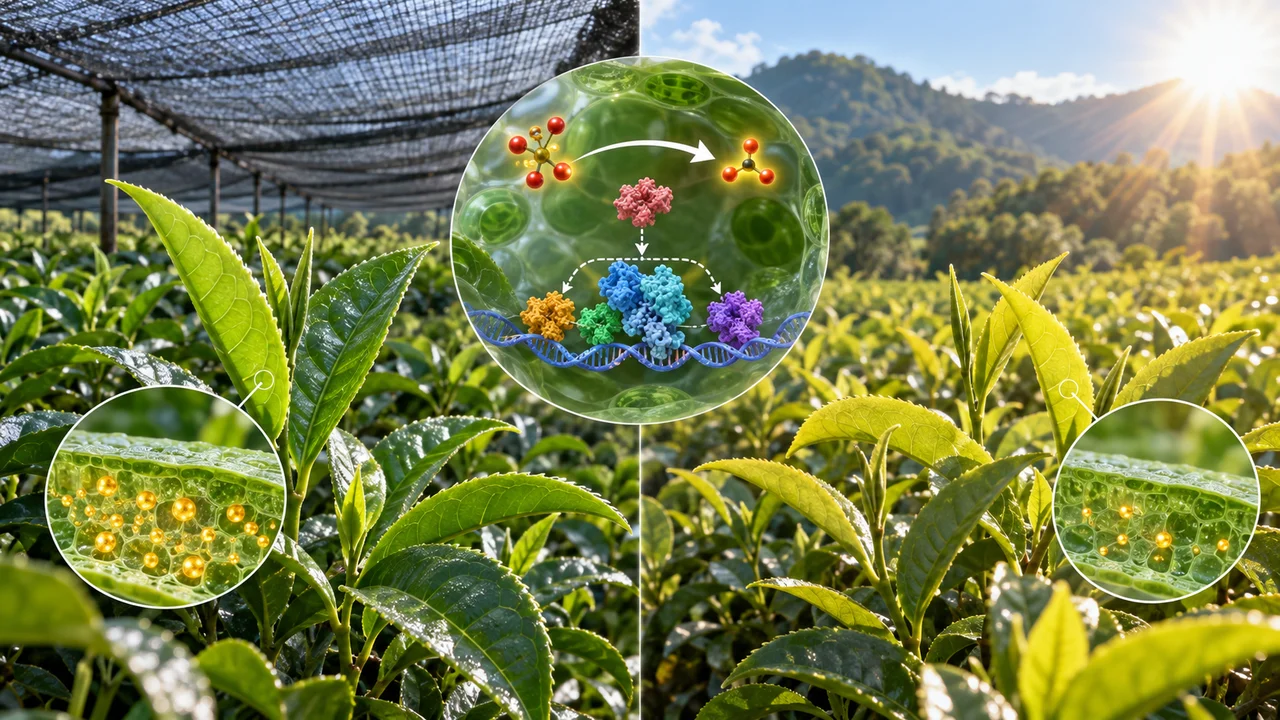
Limited selenium (Se) accumulation in agricultural products contributes to widespread dietary Se deficiency, posing a global nutritional threat. Efficient agronomic strategies to enhance Se biofortification in crops are still lacking. Here, we reveal the synergistic effects of shading and Se nanoparticles application on Se biofortification in tea leaves. Field experiments demonstrate that shading enhances Se accumulation in tea leaves under sufficient Se supply, through activating Se metabolism

Limited selenium (Se) accumulation in agricultural products contributes to widespread dietary Se deficiency, posing a global nutritional threat. Efficient agronomic strategies to enhance Se biofortification in crops are still lacking. Here, we reveal the synergistic effects of shading and Se nanoparticles application on Se biofortification in tea leaves. Field experiments demonstrate that shading enhances Se accumulation in tea leaves under sufficient Se supply, through activating Se metabolism pathway. We identify CsAPR1 functions at the early stage of Se assimilation, catalyzing the reduction of Se (VI). The transcription of CsAPR1 is activated by CsMYB7-like and is further promoted by shading through interaction with CsbHLH70. Under sunlight, CsHY5 competes with CsbHLH70 for binding to CsMYB7-like, thereby attenuating CsMYB7-like-mediated transcription of CsAPR1 and suppressing Se accumulation in tea plants. Our findings reveal the molecular mechanisms underlying shade-induced enhancement of Se biofortification, offering insights and strategies for Se-enriched crop production.

Read the original source →

Related Stories

Physical/Tech

Pyrethroid insecticide exposure enhances the ability of Helicoverpa armigera to counter host plant defenses through symbiotic bacteria.

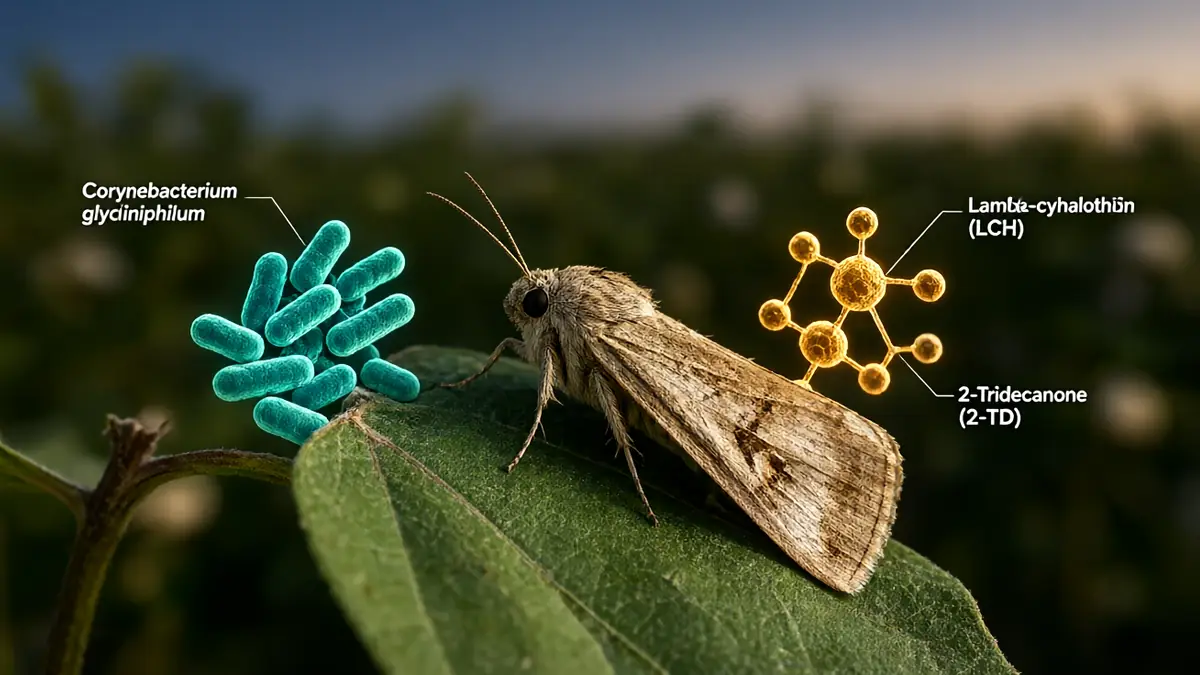
Like plant toxins, synthetic insecticides can exert strong selective pressures on pest populations. While responses to both plant toxins and synthetic insecticides can depend on adaptive changes in the nuclear genotype of the pest species, increasing evidence suggests that symbiotic microbes, particularly gut microbes, can also influence these responses. In the cotton bollworm, Helicoverpa armigera , concentrations of the symbiont Corynebacterium glyciniphilum increased in moth strains that were

Continue reading
Physical/Tech

The microbial world of male reproduction.

The last decade has brought renewed interest to microbial influences on host biology, yet the roles of microbes in host reproductive biology are underappreciated and often defined by a profound maternal bias. This perspective synthesizes emerging evidence across the tree of life to highlight the paternal microbiome as an overlooked driver of fitness, reproductive output, and intergenerational health, impacting epigenetic sculpting of the sperm and embryo, sexual transmission of microbes, and mal

Continue reading
Physical/Tech

A gut-brain sensory-motor circuit regulates sugar ingestion in Drosophila.

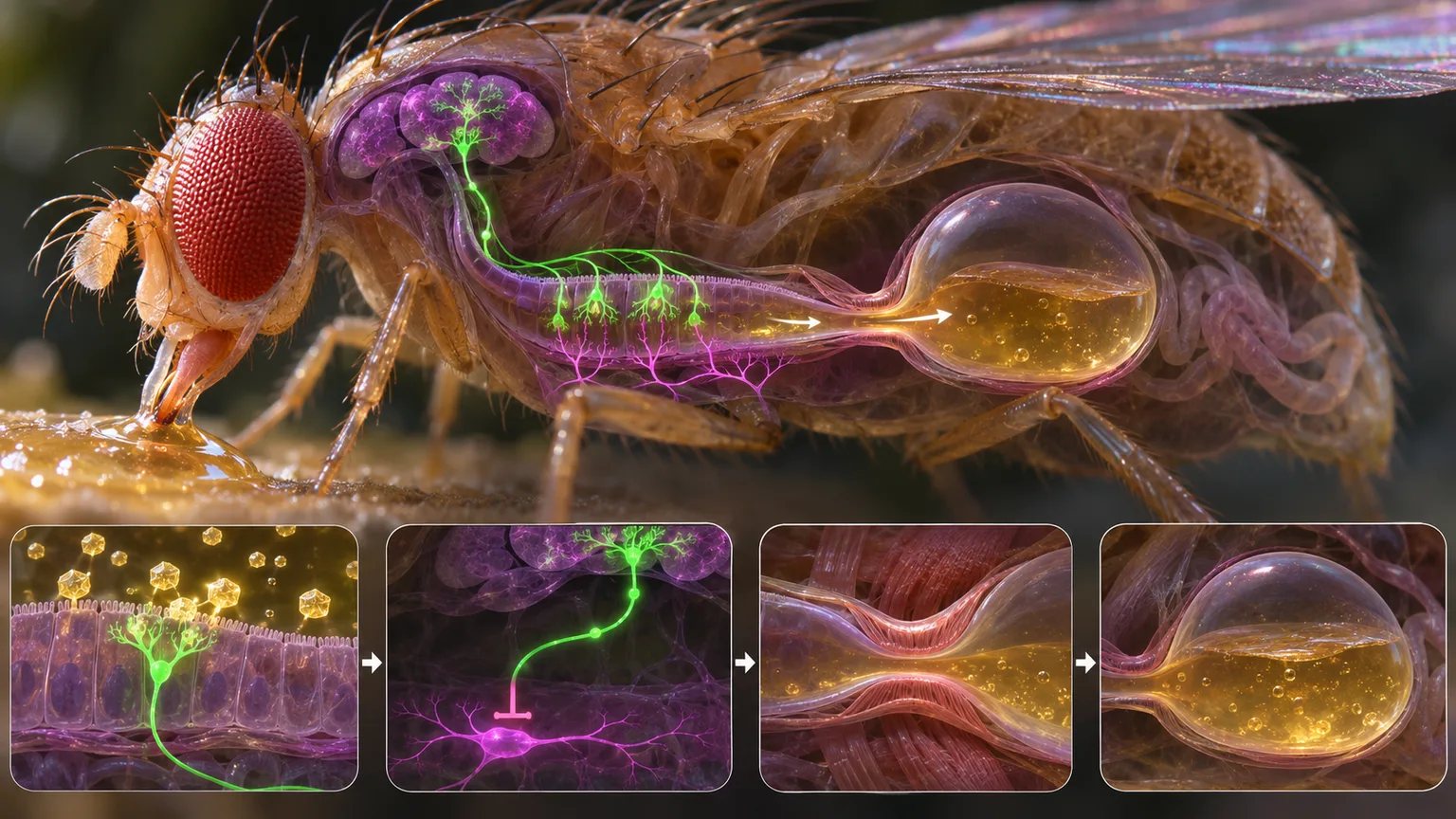
Bidirectional communication between the brain and digestive tract is critical for optimizing nutrient preference and food intake, yet the neural mechanisms that couple gut nutrient sensing with ingestive motor control remain poorly understood. Here we identify a gut-brain sensory-motor circuit that regulates sugar ingestion in flies. We show that the brain neurons that regulate food ingestion, IN1s 1 , receive excitatory input from enteric sensory neurons that penetrate the foregut epithelium an

Continue reading
Physical/Tech

Rare-variant genetic architecture of height in over 1.4 million individuals.

Highly heritable, polygenic and easily measured, adult height has long been the model trait in human genetics 1,2 . Although the landscape of height-associated common genetic variation has been studied extensively 2 , rare variation remains relatively unexplored 1 . Here, using rare protein-altering variants in a discovery set of 826,066 exomes, we identify 207 height-associated genes, 98% of which replicate in an additional 624,567 individuals. The rarest and most deleterious class of variation

Continue reading
Physical/Tech

Detecting Catalytically Competent Surface-Bound Hydrogen on Electrocatalysts with Weak Acids.

The characterization of catalytically competent molecular metal-hydride intermediates distinguishes mechanistic possibilities in reductive molecular electrocatalysis. While surface-bound hydrogen is invoked in several heterogeneous electrocatalytic schemes, the synthetic and spectroscopic tools to establish catalytic competence in molecular systems are not readily translated to surfaces. Molecular systems offer uniform and well-defined active sites; however, surface systems consist of multiple p

Continue reading