Physical/Tech

Secondary Solvation Shell Regulation for Fast-Charging Lithium Metal Batteries.

| Source: Journal of the American Chemical Society

Most electrolyte strategies in lithium metal batteries (LMBs) target the first solvation shell or solvation diversity. However, such approaches have shown limited success in enabling fast-charging, as Li+ depletion inevitably develops at polarized interfaces. Here, we identify the secondary solvation shell as a critical regulator of fast-charging stability and show that a gradient solvation structure (GSS) overcomes ion depletion-induced failure. Guided by intrinsic solvation strengths, we desig

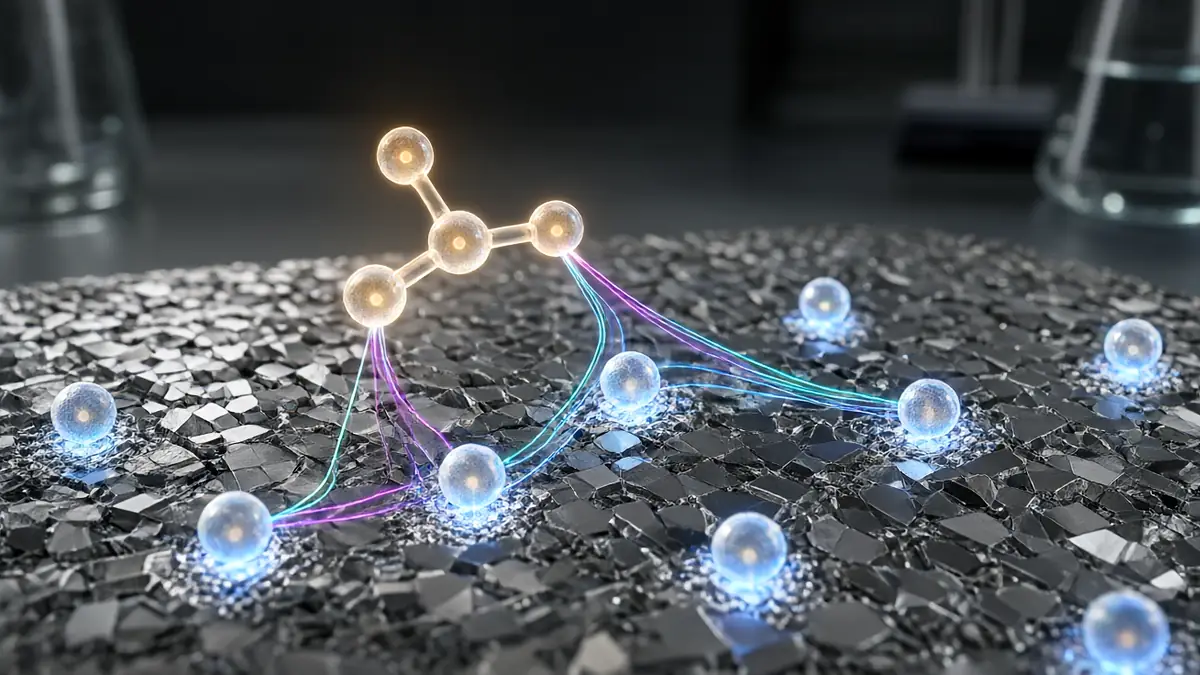
Most electrolyte strategies in lithium metal batteries (LMBs) target the first solvation shell or solvation diversity. However, such approaches have shown limited success in enabling fast-charging, as Li+ depletion inevitably develops at polarized interfaces. Here, we identify the secondary solvation shell as a critical regulator of fast-charging stability and show that a gradient solvation structure (GSS) overcomes ion depletion-induced failure. Guided by intrinsic solvation strengths, we design a tri-solvent electrolyte comprising 1,2-dimethoxyethane (DME), 1,1,1-trifluoro-2,3-dimethoxypropane (TFDMP), and N,N-dimethyltrifluoromethane-sulfonamide (DMTMSA). DME and TFDMP define a stable primary solvation shell and balanced ion-pair distribution, whereas DMTMSA localizes in the secondary shell, suppressing long-range ionic clustering and maintaining interfacial ion availability. Despite similar primary-shell structures and equilibrium impedances, only the tri-solvent system preserves interfacial kinetics under depletion conditions. This architecture enables a Coulombic efficiency of 98.4% at 16 mA cm-2, a specific capacity of 162.0 mAh g-1 at 10C, and 90.4% capacity retention for 200 cycles. These findings establish a gradient solvation structure as a governing principle for fast-charging LMB electrolytes.
Read the original source →

Related Stories

Physical/Tech

Pyrethroid insecticide exposure enhances the ability of Helicoverpa armigera to counter host plant defenses through symbiotic bacteria.

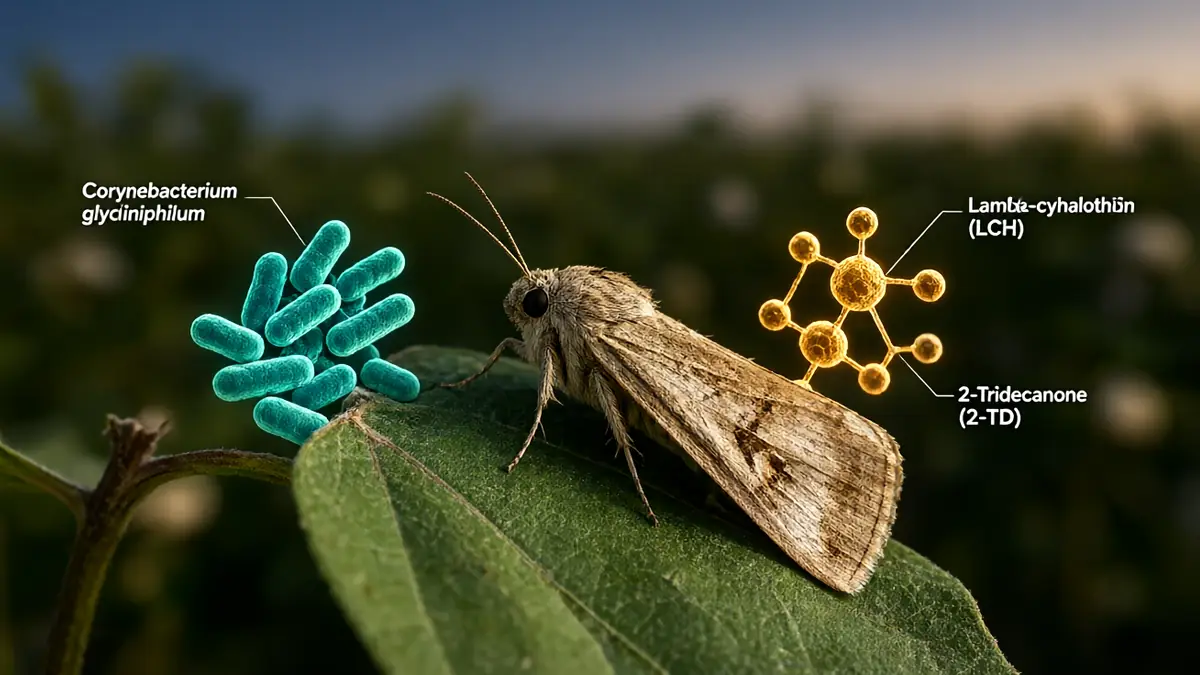
Like plant toxins, synthetic insecticides can exert strong selective pressures on pest populations. While responses to both plant toxins and synthetic insecticides can depend on adaptive changes in the nuclear genotype of the pest species, increasing evidence suggests that symbiotic microbes, particularly gut microbes, can also influence these responses. In the cotton bollworm, Helicoverpa armigera , concentrations of the symbiont Corynebacterium glyciniphilum increased in moth strains that were

Continue reading
Physical/Tech

The microbial world of male reproduction.

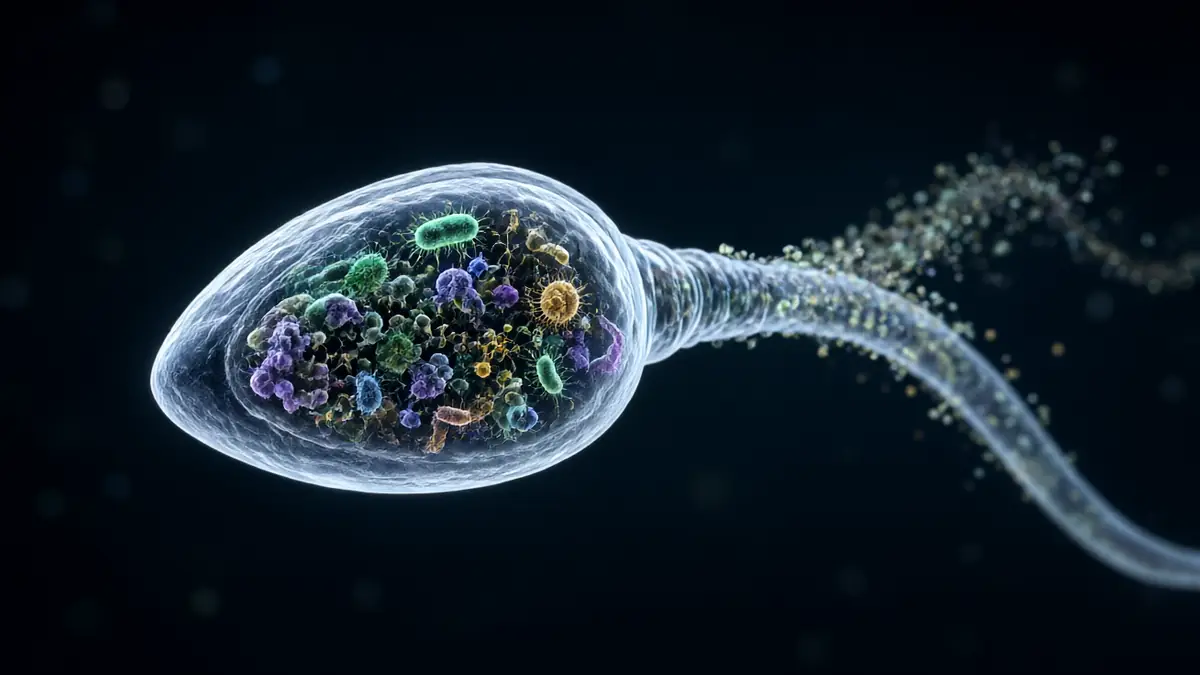
The last decade has brought renewed interest to microbial influences on host biology, yet the roles of microbes in host reproductive biology are underappreciated and often defined by a profound maternal bias. This perspective synthesizes emerging evidence across the tree of life to highlight the paternal microbiome as an overlooked driver of fitness, reproductive output, and intergenerational health, impacting epigenetic sculpting of the sperm and embryo, sexual transmission of microbes, and mal

Continue reading
Physical/Tech

A gut-brain sensory-motor circuit regulates sugar ingestion in Drosophila.

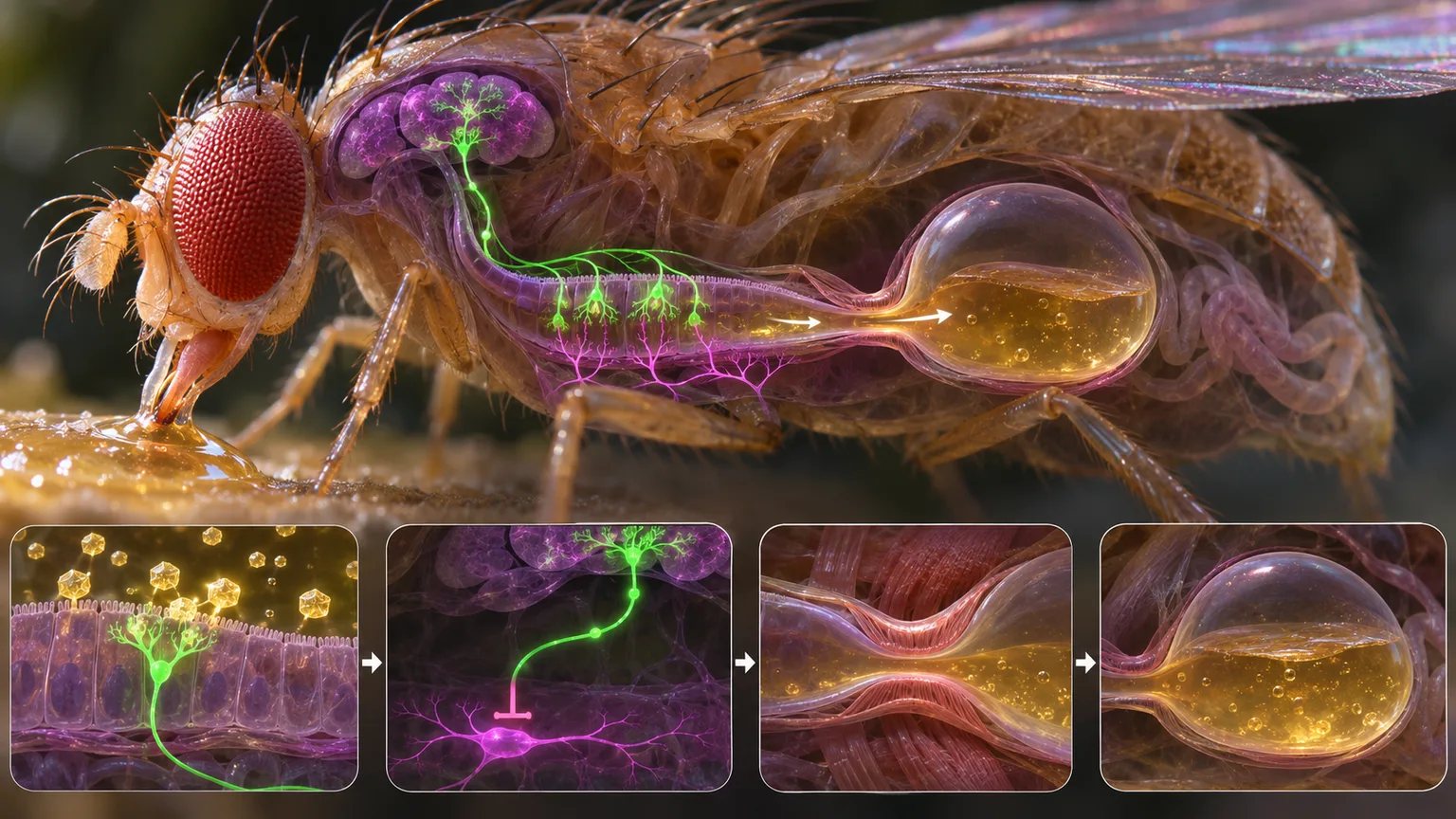
Bidirectional communication between the brain and digestive tract is critical for optimizing nutrient preference and food intake, yet the neural mechanisms that couple gut nutrient sensing with ingestive motor control remain poorly understood. Here we identify a gut-brain sensory-motor circuit that regulates sugar ingestion in flies. We show that the brain neurons that regulate food ingestion, IN1s 1 , receive excitatory input from enteric sensory neurons that penetrate the foregut epithelium an

Continue reading
Physical/Tech

Rare-variant genetic architecture of height in over 1.4 million individuals.

Highly heritable, polygenic and easily measured, adult height has long been the model trait in human genetics 1,2 . Although the landscape of height-associated common genetic variation has been studied extensively 2 , rare variation remains relatively unexplored 1 . Here, using rare protein-altering variants in a discovery set of 826,066 exomes, we identify 207 height-associated genes, 98% of which replicate in an additional 624,567 individuals. The rarest and most deleterious class of variation

Continue reading
Physical/Tech

Detecting Catalytically Competent Surface-Bound Hydrogen on Electrocatalysts with Weak Acids.

The characterization of catalytically competent molecular metal-hydride intermediates distinguishes mechanistic possibilities in reductive molecular electrocatalysis. While surface-bound hydrogen is invoked in several heterogeneous electrocatalytic schemes, the synthetic and spectroscopic tools to establish catalytic competence in molecular systems are not readily translated to surfaces. Molecular systems offer uniform and well-defined active sites; however, surface systems consist of multiple p

Continue reading