Safety and lipoprotein(a)-lowering effects of Kylo-11, a non-canonical, long-duration small interfering RNA targeting lipoprotein(a): a first-in-human, randomised, double-blind, placebo-controlled, ph
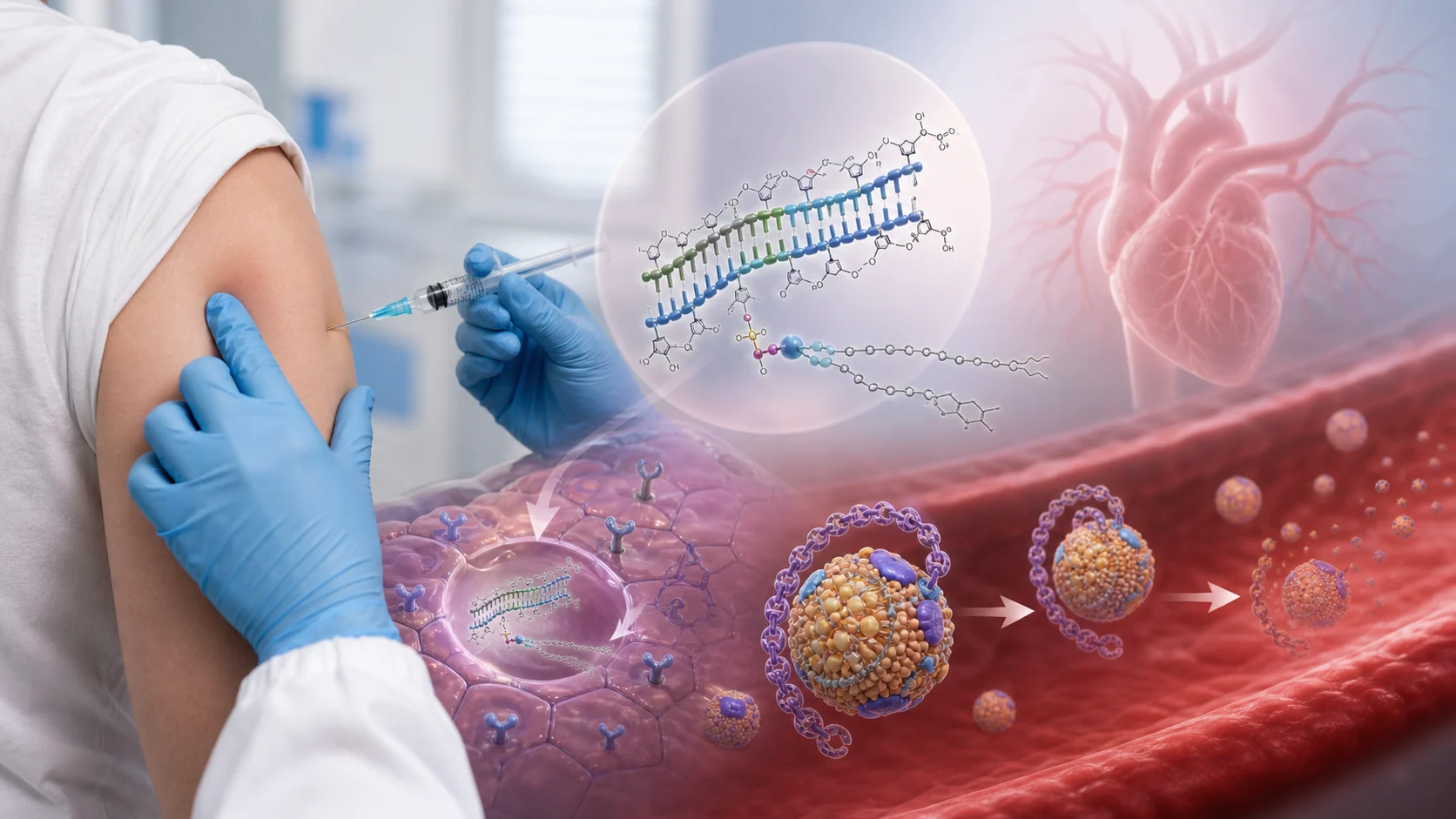
Elevated lipoprotein(a) concentrations are associated with the development of atherosclerotic cardiovascular disease. The aim of this study was to evaluate the safety and lipoprotein(a)-lowering effects of Kylo-11, a very long-acting small interfering RNA that targets lipoprotein(a). This randomised, double-blind, placebo-controlled, phase 1 trial was performed in a single hospital-based site in China in adults aged 18-55 years with elevated lipoprotein(a) concentrations who were otherwise healt
Elevated lipoprotein(a) concentrations are associated with the development of atherosclerotic cardiovascular disease. The aim of this study was to evaluate the safety and lipoprotein(a)-lowering effects of Kylo-11, a very long-acting small interfering RNA that targets lipoprotein(a). This randomised, double-blind, placebo-controlled, phase 1 trial was performed in a single hospital-based site in China in adults aged 18-55 years with elevated lipoprotein(a) concentrations who were otherwise healthy. Participants were randomly assigned to receive a single, subcutaneous dose of Kylo-11 or placebo (8:2) across seven dosing cohorts. Kylo-11 recipients could enter conditional extension follow-up up to day 337, whereas placebo recipients were followed up to day 169. Participants with lipoprotein(a) concentrations of 75-200 nmol/L were enrolled into cohorts 1-6 (ie, doses of 9, 30, 75, 225, 450, and 600 mg). Participants with lipoprotein(a) concentrations of more than 200 nmol/L were enrolled into cohort 7 (225 mg). The randomisation schedule was generated by an unmasked statistician with no involvement in study conduct, efficacy or safety analyses, or blinded data analysis, and assigned to treatment groups by an interactive web response system. Participants, investigators, and study personnel were masked to cohort assignment. The primary endpoint was the incidence of investigator-assessed adverse events within 24 weeks. All randomly assigned participants who received a dose of investigational product were included in the safety analysis set. All randomly assigned participants who received a dose of Kylo-11 and had at least one pharmacodynamic datapoint were included in the pharmacodynamic analysis set. Missing data were not imputed. The trial was registered on ClinicalTrials.gov (NCT06363851) and is now complete. Between May 30, 2024, and Dec 30, 2024, 71 participants were randomly assigned to the Kylo-11 cohorts (n=57) or the placebo cohort (n=14) and 70 participants received a dose. The median age of participants was 27·5 years (IQR 22·0-32·0), and 46 (65%) participants were male and 25 (35%) were female. Participants were followed up for a median of 337 days (IQR 334-337). 37 (53%) of 70 participants had adverse events up to 24 weeks, the majority of which were grade 1-2 and deemed unrelated to the study drug by the investigators. There were no injection-site reactions, no serious adverse events, no drug-related adverse events, and no deaths. Two grade 3 or higher events (ie, transient hypertriglyceridaemia at day 168 and elevated creatine phosphokinase at day 168) in the 225 mg cohort were adjudicated as unrelated to the study drug; one grade 3 or higher event (transient hypertriglyceridaemia) occurred in the placebo group at day 84. The prespecified pharmacodynamic secondary endpoints of median percent and absolute reductions in serum lipoprotein(a) over time at the final follow-up timepoint of 48 weeks for the Kylo-11 groups ranged from -53% (IQR -71 to -41) and -71 nmol/L (-79 to -60) in the 9 mg cohort to -97% (-98 to -97) and -129 nmol/L (-153 to -99) in the 600 mg cohort. In cohort 7 (225 mg; baseline lipoprotein(a) >200 nmol/L), the median reductions were -96% (-98 to -91) and -208 nmol/L (-222 to -198). A single dose of Kylo-11 was well tolerated, and at doses of 225 mg or higher, durably reduced serum lipoprotein(a) concentrations up to 48 weeks. Kylonova Biopharma.