Robust regulatory interplay of enhancers, facilitators, and promoters in a native chromatin context.
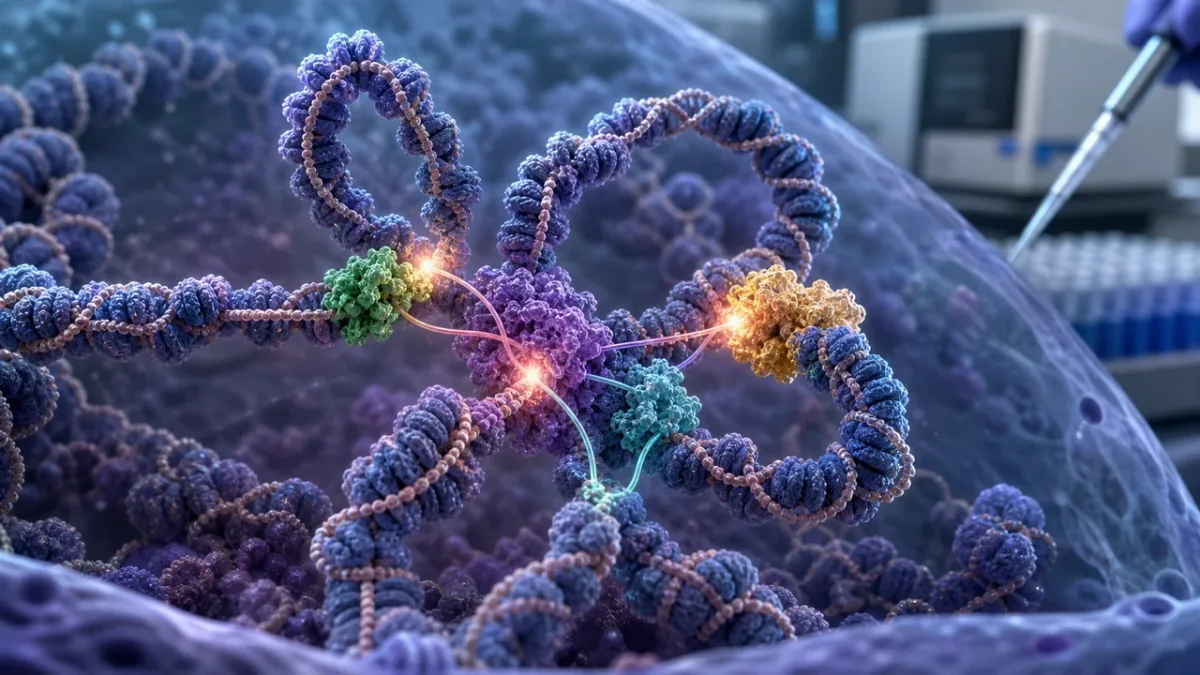
Enhancers are abundant and critical gene-distal cis-regulatory elements with distinct architectural features; however, a mechanistic understanding of their interactions within endogenous chromatin contexts remains challenging. Here, we developed a recombinase-mediated genome-rewriting platform to explore how a long-range human enhancer, eNMU, confers a remarkable 10,000-fold activation of its target gene, Neuromedin U (NMU), at its native locus. Our systematic dissection reveals two functionally
Enhancers are abundant and critical gene-distal cis-regulatory elements with distinct architectural features; however, a mechanistic understanding of their interactions within endogenous chromatin contexts remains challenging. Here, we developed a recombinase-mediated genome-rewriting platform to explore how a long-range human enhancer, eNMU, confers a remarkable 10,000-fold activation of its target gene, Neuromedin U (NMU), at its native locus. Our systematic dissection reveals two functionally distinct sub-elements of eNMU: the canonical autonomous enhancer e1 and the intrinsically inactive facilitator e2, which dramatically augments e1's activity. The autonomous enhancer e1 is functionally hierarchical to e2, additional facilitators, and the NMU promoter across the ∼100-kb NMU-eNMU region, and it orchestrates the formation of a 3D regulatory hub. e1 also harbors a bipartite structure: a divergently transcribed retroviral long terminal repeat (LTR) enhancer and an adjacent LTR promoter that dampens NMU expression. We explore and discuss the broader implications of our focused study for understanding enhancer regulatory mechanisms genome-wide.