Recent strengthening of eastern Pacific ENSO in the last millennium paleorecord.
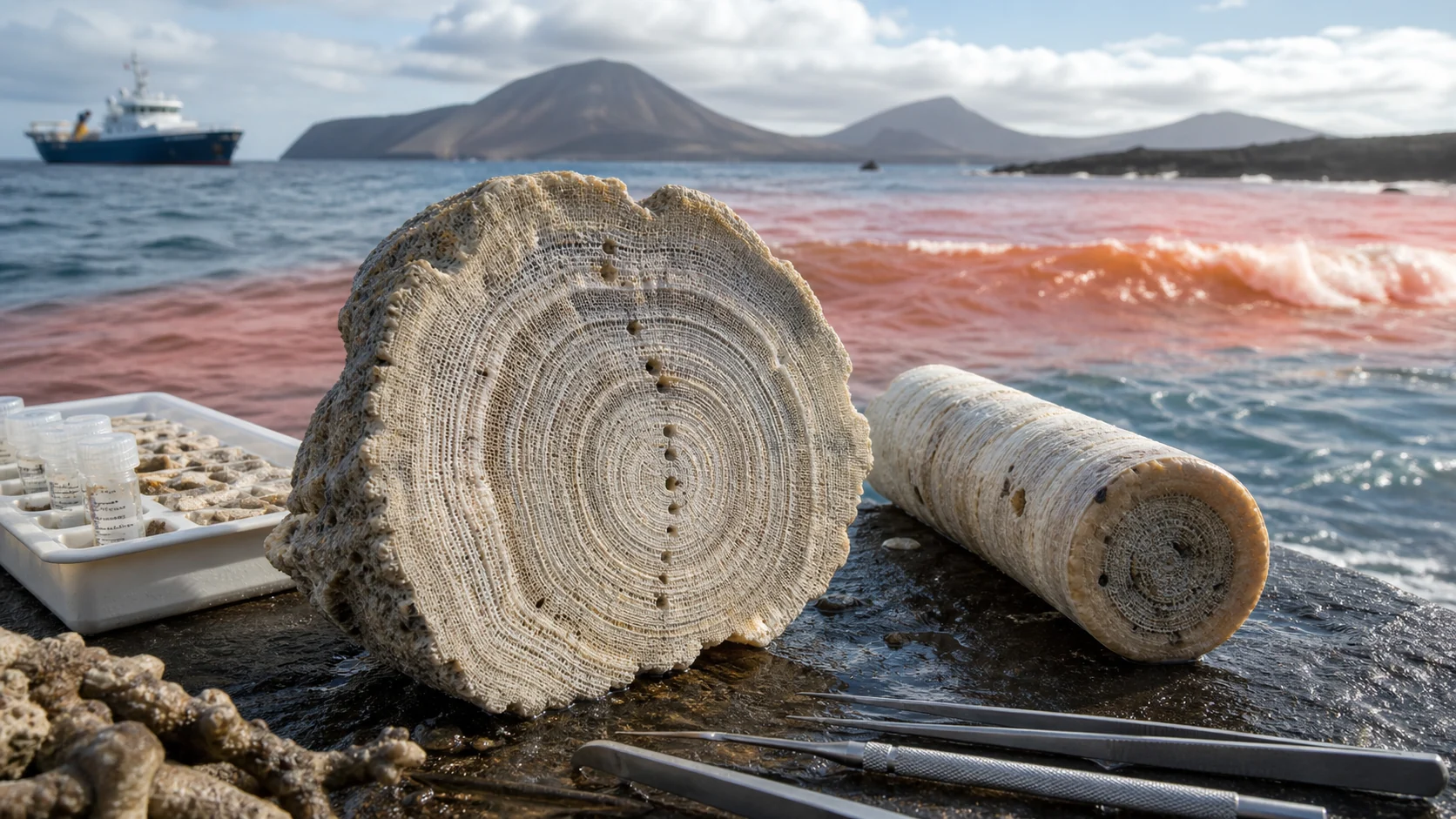
The Pacific El Niño-Southern Oscillation (ENSO) generates climate extremes that endanger ecosystems, infrastructure, and human well-being worldwide. The response of this system to climate warming is poorly constrained, due both to data scarcity and uncertainties in climate models. The geochemistry of Galápagos coral skeletons across the past millennium reveals a large recent increase in interannual variability of sea surface temperature in the eastern equatorial Pacific compared to exi
The Pacific El Niño-Southern Oscillation (ENSO) generates climate extremes that endanger ecosystems, infrastructure, and human well-being worldwide. The response of this system to climate warming is poorly constrained, due both to data scarcity and uncertainties in climate models. The geochemistry of Galápagos coral skeletons across the past millennium reveals a large recent increase in interannual variability of sea surface temperature in the eastern equatorial Pacific compared to existing paleorecords that exceeds simulated natural variability. This increase parallels rising global temperature and results from stronger El Niño events. Central Pacific coral data also show increased variability, although less distinctly than in the Galápagos. Our results provide long-term context for understanding ENSO variability trends, with troubling implications for climate extremes.