Environment

Polarized Metal Nitride Solid Solutions as Electrocatalysts Enabling Ampere-Level Selective Formic Acid Synthesis.
| Source: Journal of the American Chemical Society

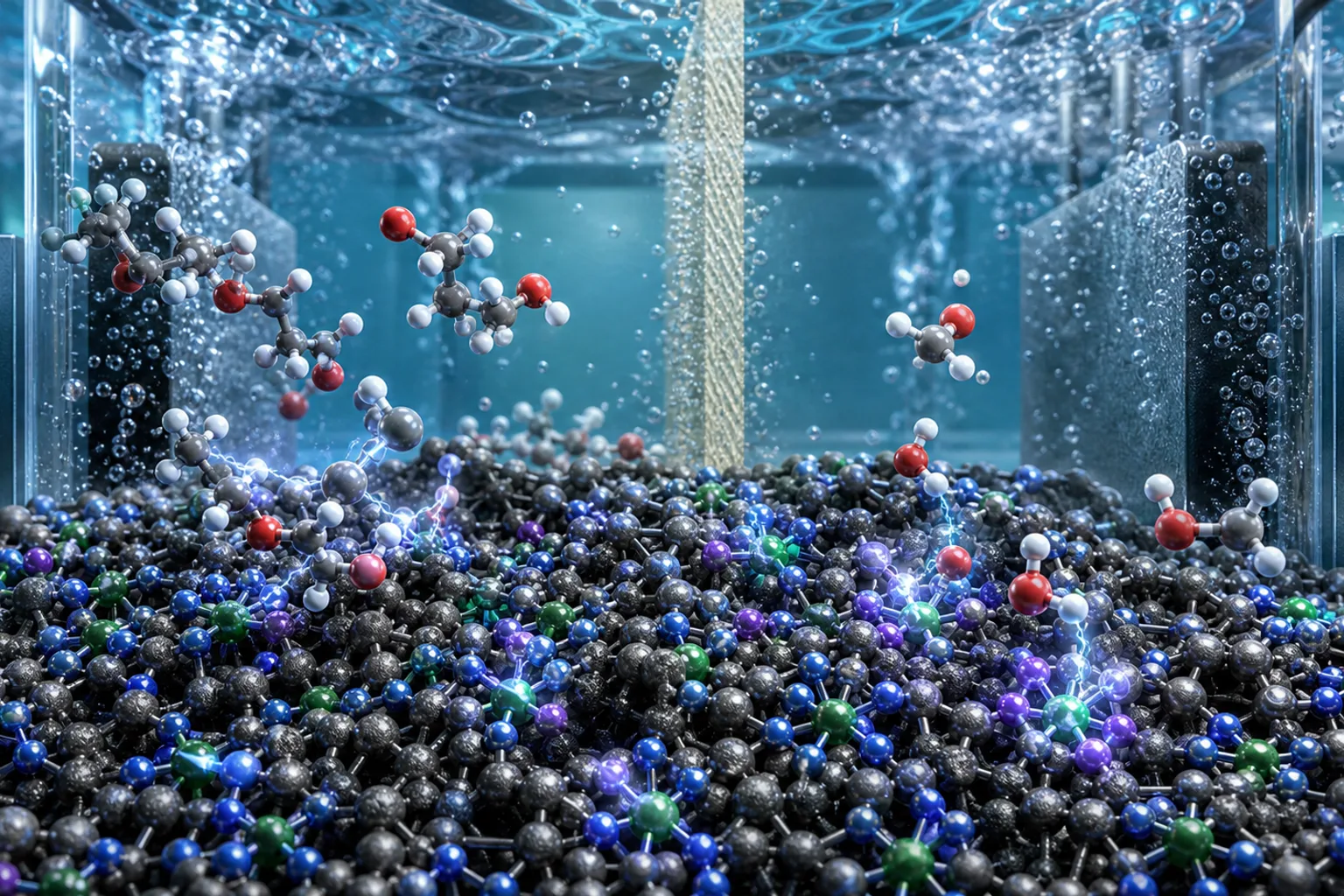
Formic acid (FA) is an important value-added product in biomass electrooxidation and an effective liquid fuel and hydrogen carrier. However, achieving its efficient industrial-scale synthesis with durable hydrogen evolution remains challenging. Here, we report a single-phase NiCoN solid-solution metal nitride catalyst, in which atomic-level Co incorporation induces symmetry-breaking Ni-N-Co coordination environments with electronically polarized active sites. This structural modulation drives th

Formic acid (FA) is an important value-added product in biomass electrooxidation and an effective liquid fuel and hydrogen carrier. However, achieving its efficient industrial-scale synthesis with durable hydrogen evolution remains challenging. Here, we report a single-phase NiCoN solid-solution metal nitride catalyst, in which atomic-level Co incorporation induces symmetry-breaking Ni-N-Co coordination environments with electronically polarized active sites. This structural modulation drives the interfacial transformation into metal oxy(hydro)xide species and optimizes the adsorption energies of relevant intermediates. These changes accelerate dehydrogenation kinetics and lower the energy barrier for C-C bond cleavage, thereby directing the reaction pathway toward selective stepwise oxidation to FA. The optimal NiCoN catalyst achieves a FA Faradaic efficiency of 97.2% and sustains over 3,600 h of operation at 1 A cm-2 in an anion-exchange membrane (AEM) electrolyzer, representing one of the longest reported lifetimes for a glycerol-assisted coupled system. This work establishes atomic-scale solid-solution engineering as an effective approach to regulate catalytic pathways and long-term interfacial stability for biomass electrochemical conversion.

Read the original source →

Related Stories

Environment

Nutrient legacies from elephant megacarcasses create coldspots of biodiversity and hotspots of ecosystem processes.

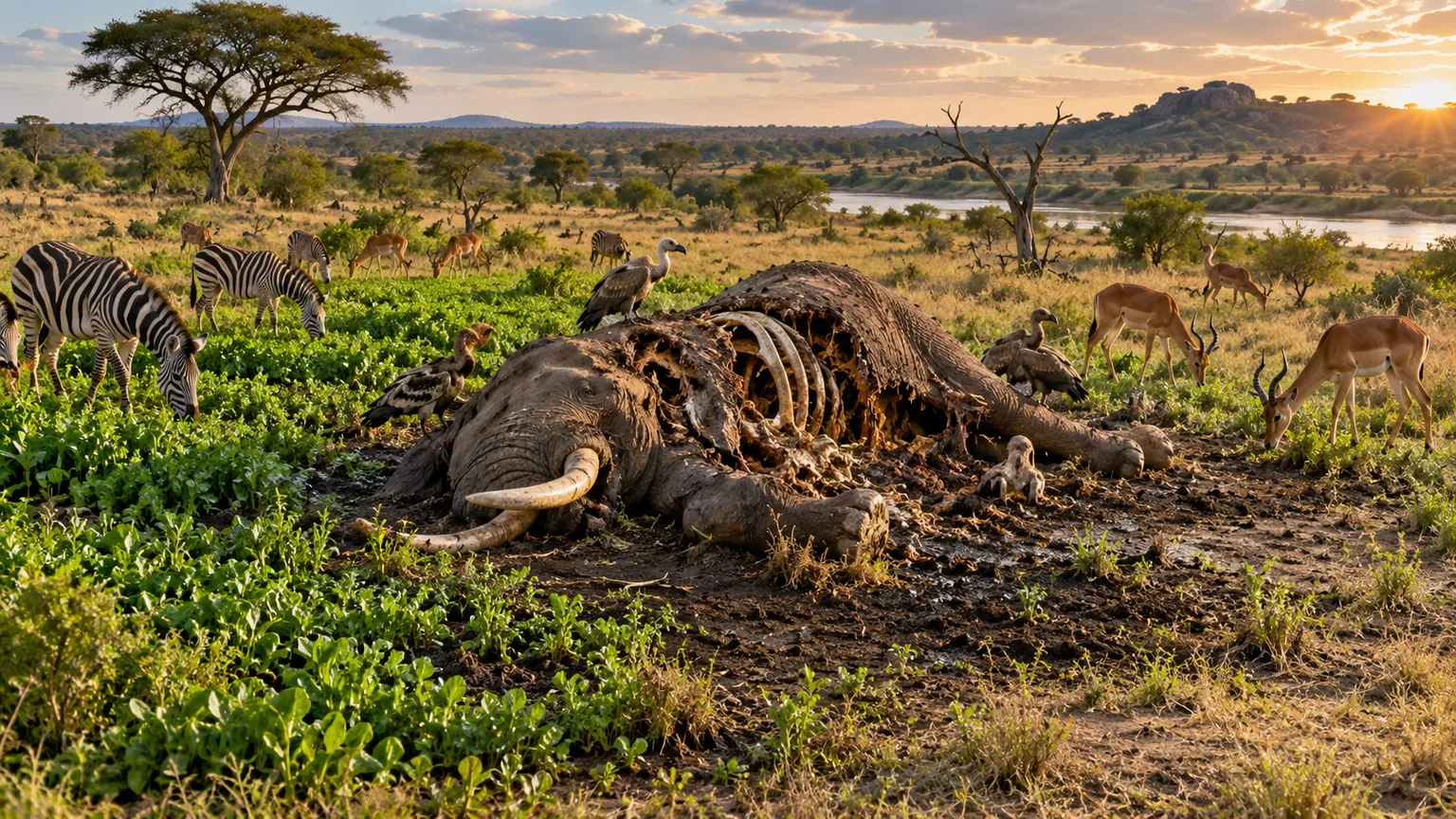
Terrestrial megafauna (animals >1,000 kg) have substantial impacts on ecosystems while alive; yet, we know little about the impacts of these ecosystem engineers after they die. Like whale carcasses in the ocean, terrestrial megacarcasses may leave ecological legacies via the nutrient pulses they create on the landscape. Here, we investigated the impact of elephant megacarcasses on savanna ecosystems in Kruger National Park, South Africa. To determine how elephant carcasses affect below- and a

Continue reading
Environment

Maternal ranging strategies facilitate offspring social play at energetic cost in the most solitary ape.

In most vertebrates, social play among peers is considered essential for behavioral development. Yet in solitary species bearing single offspring, opportunities for social play are inherently scarce. Whether mothers of such species actively facilitate play opportunities for their offspring, and at what cost, remains unknown. We used 15 y of behavioral and movement data (∼32,600 observation hours) from 31 wild Bornean orangutan ( Pongo pygmaeus wurmbii ) mother-offspring pairs to test whet

Continue reading
Environment

Continuous UV irradiation played an inconclusive role in selecting the canonical genetic alphabet.

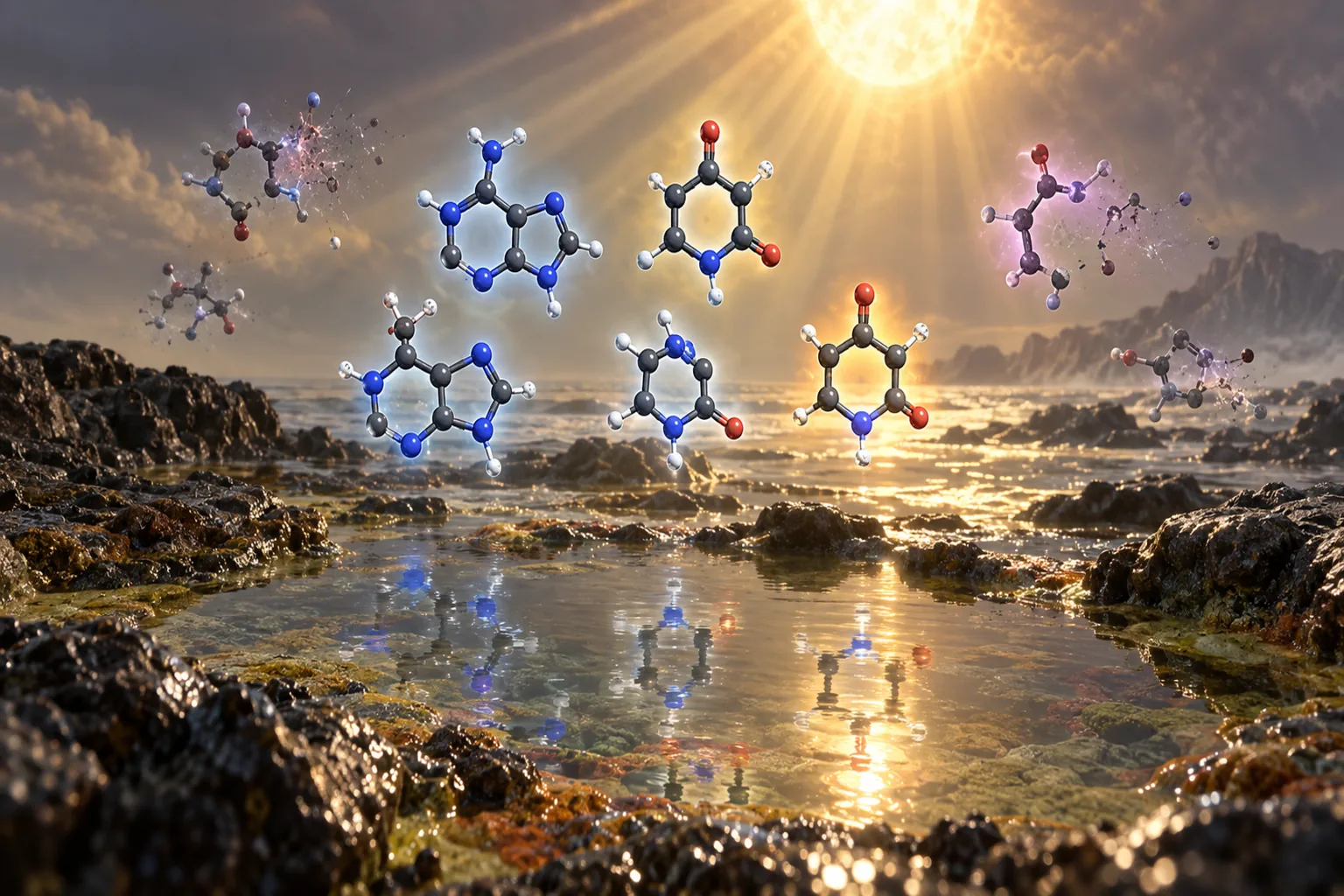
An abundance of heterocyclic molecules analogous to canonical nucleobases (i.e., adenine, thymine, guanine, cytosine, and uracil) used as the genetic alphabet in DNA and RNA could have been present in various prebiotic environments on early Earth. However, extant biology generally uses the canonical nucleobases and nucleosides as the genetic alphabet, and not any number of possible noncanonical counterparts. Ultraviolet (UV) irradiation was likely abundant on the surface of the early Earth and h

Continue reading
Environment

Fault-controlled natural hydrogen reservoirs as underground hydrogen storage sites.

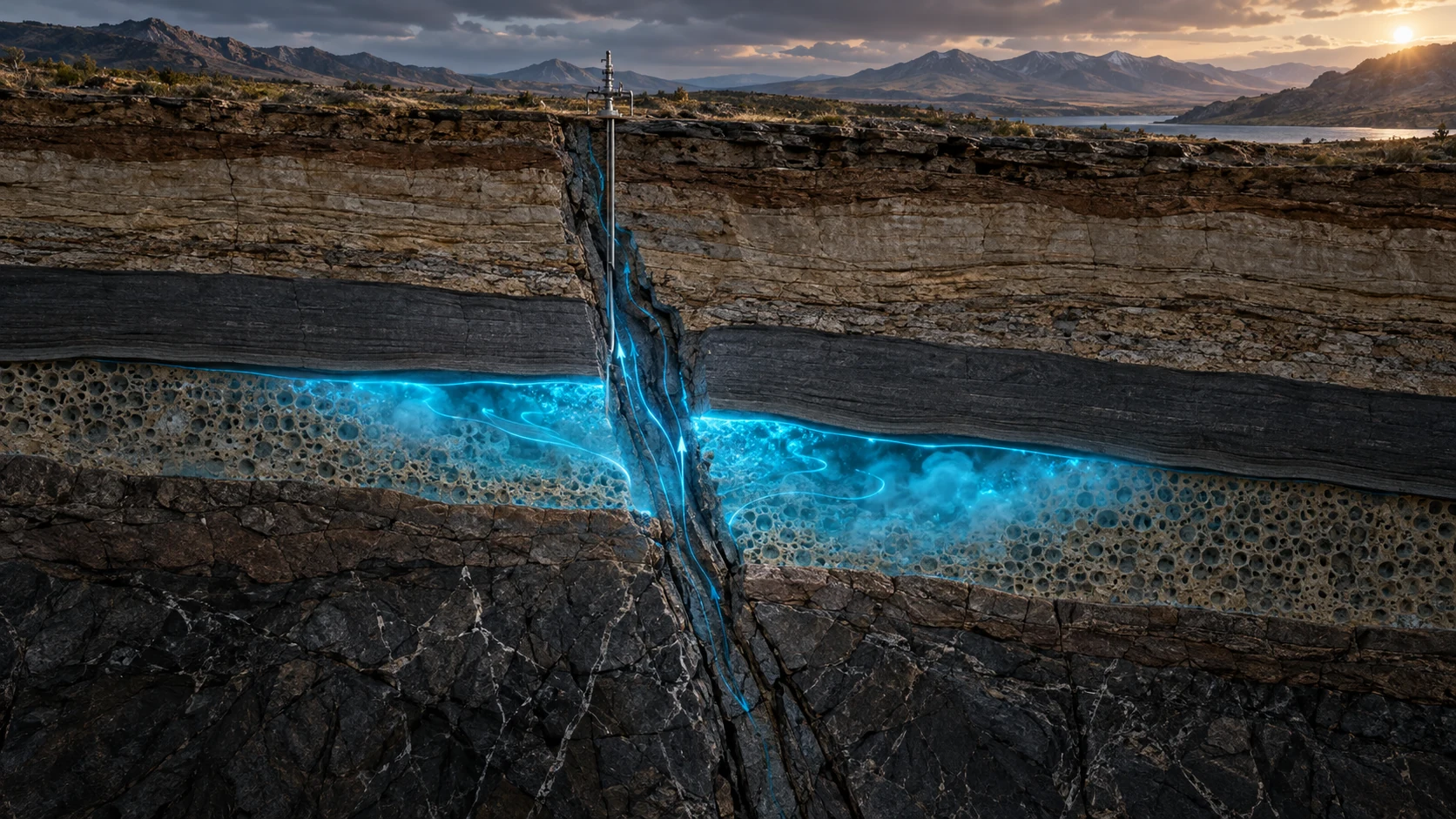
Underground hydrogen storage requires geological formations with demonstrated hydrogen containment, yet no conventional storage candidate (salt caverns, aquifers, or depleted hydrocarbon reservoirs) offers direct, prior evidence of H 2 -specific sealing. We propose that subcommercial natural hydrogen reservoirs, where H 2 has accumulated over geological timescales, can serve as precertified storage sites. This proposition is evaluated using the Bulqizë fault-controlled natural H 2 reservoir

Continue reading
Environment

Breaking trait scaling via the evolution and regulation of dimorphic decoupling in ants.

The evolution of allometry, changing how morphological traits scale to body size, has fueled adaptive radiations. In ants, allometry has facilitated the repeated evolution of a worker-soldier caste system. Here, we reveal an unexpected morphological pattern and its superorganismal regulation within the hyperdiverse genus Pheidole . We uncovered that antennal sizing between the small worker and the big soldier is identical, lacking intercaste scaling (antennae-body scaling is decoupled) yet retai

Continue reading