Multidomain interaction governs the filamentous assembly of the dominant-negative DNMT3A R882H mutant.
DNA methyltransferase DNMT3A-mediated de novo DNA methylation is important for proper regulation of gene expression and genomic stability in development. The DNMT3A R882H (DNMT3A R882H ) mutation, a hot-spot mutation in acute myeloid leukemia and developmental disorders, exerts a dominant-negative effect in DNMT3A-mediated DNA methylation through promoting high-order protein assembly. However, due to the lack of structural knowledge on DNMT3A homo-oligomers, the mechanism behind wild-type DNMT3A
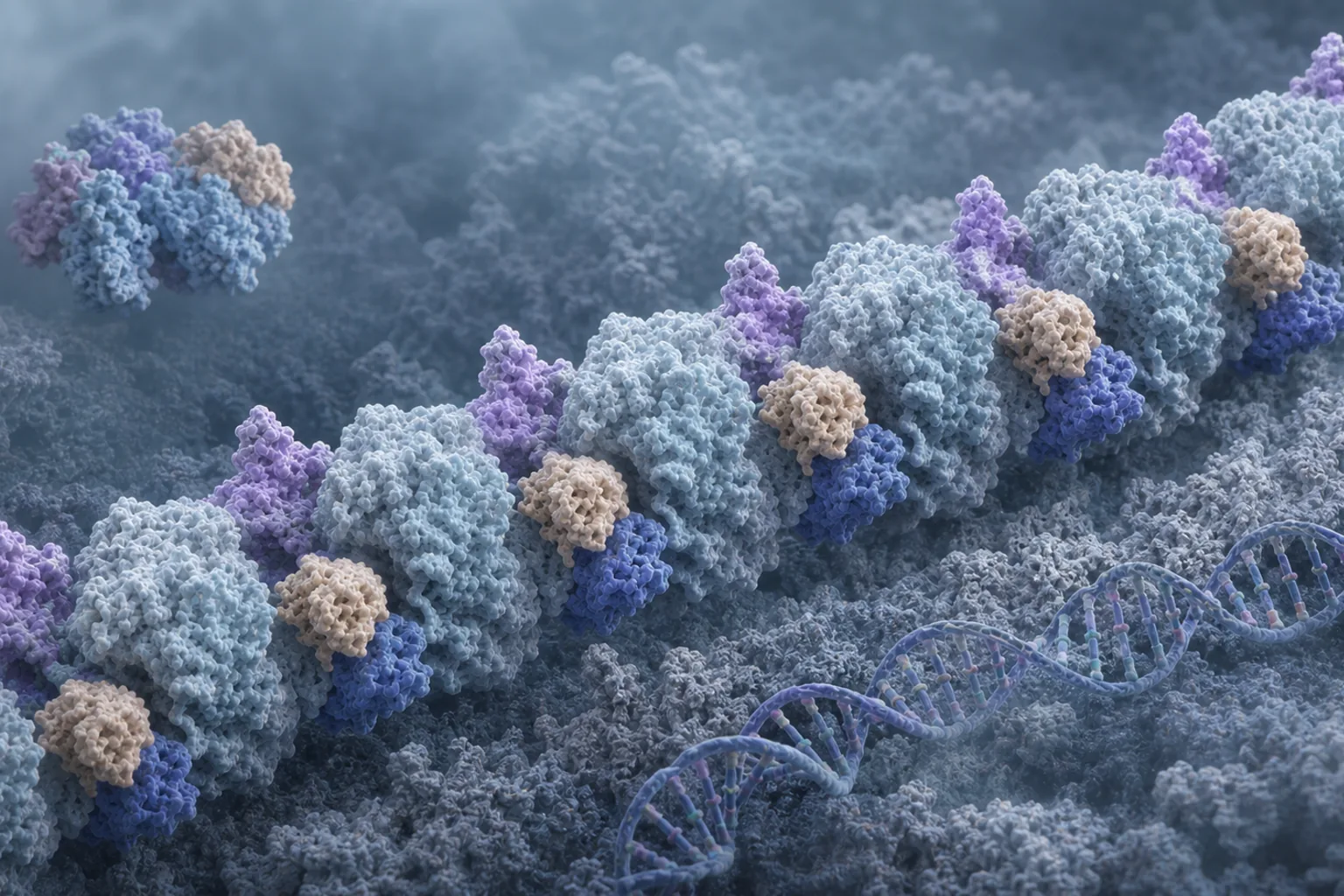
DNA methyltransferase DNMT3A-mediated de novo DNA methylation is important for proper regulation of gene expression and genomic stability in development. The DNMT3A R882H (DNMT3A R882H ) mutation, a hot-spot mutation in acute myeloid leukemia and developmental disorders, exerts a dominant-negative effect in DNMT3A-mediated DNA methylation through promoting high-order protein assembly. However, due to the lack of structural knowledge on DNMT3A homo-oligomers, the mechanism behind wild-type DNMT3A (DNMT3A WT ) and DNMT3A R882H polymerization remains unclear. Here, we report the single-particle cryo-EM structures of homo-oligomeric DNMT3A WT and filamentous DNMT3A R882H , revealing the role of the regulatory Pro-Trp-Trp-Pro (PWWP) and ATRX-DNMT3-DNMT3L (ADD) domains of DNMT3A in their dynamic assembly. While the oligomeric assembly of DNMT3A is mainly driven by the well-characterized oligomer interfaces in the methyltransferase domain, the autoinhibitory interaction of the PWWP and ADD domains in DNMT3A places them in a position for intermolecular contact, thereby contributing to the filamentous assembly of DNMT3A R882H . Disrupting the autoinhibitory interaction facilitates the transition of DNMT3A R882H polymer toward the low-order oligomeric assembly, reinforcing the aggregation-attenuation effect of the previously characterized oligomer-interface mutation R676K. Together, this study uncovers a multidomain cooperated assembly mechanism for DNMT3A, with important implication in development of effective therapeutic strategies against DNMT3A R882H -associated diseases.