Milk osteopontin alters the infant microbiome to drive DC hematopoiesis and disease tolerance.
Breastfeeding reduces the risk of severe lower respiratory infections (sLRIs), a leading cause of infant mortality; however, the protective mechanisms remain elusive. Here, we demonstrated that the absence of milk-derived osteopontin (OPN), highly expressed in colostrum, predisposes neonatal mice to viral and bacterial sLRI, consequent to disrupted dendritic cell (DC) hematopoiesis in the developing liver and lung. Amelioration of disease severity by oral OPN supplementation was associated with
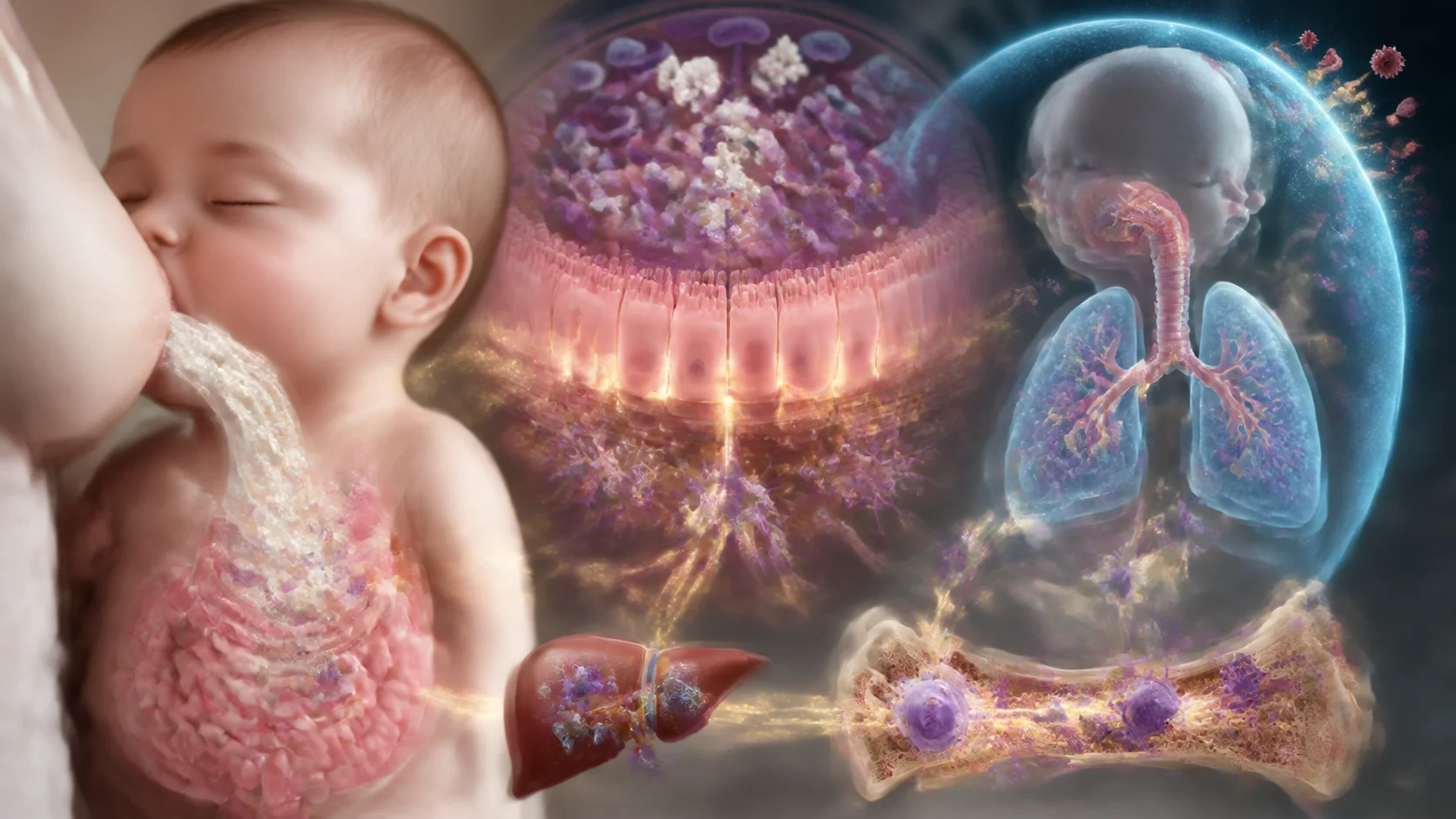
Breastfeeding reduces the risk of severe lower respiratory infections (sLRIs), a leading cause of infant mortality; however, the protective mechanisms remain elusive. Here, we demonstrated that the absence of milk-derived osteopontin (OPN), highly expressed in colostrum, predisposes neonatal mice to viral and bacterial sLRI, consequent to disrupted dendritic cell (DC) hematopoiesis in the developing liver and lung. Amelioration of disease severity by oral OPN supplementation was associated with increased enteric abundance of Lactobacillaceae and elevated levels of serum 3-phenyllactic acid (PLA), a peroxisome proliferator-activated receptor gamma (PPARγ) agonist. Supplementation with PLA or the PPARγ agonist rosiglitazone restored lung DC hematopoiesis via airway epithelium-derived chemokine ligand 25 (CCL25)-mediated recruitment of lymphoid-myeloid primed progenitors and induction of a supportive lung niche. PLA-induced DC hematopoiesis and disease tolerance were attenuated by plasmacytoid DC depletion, immunoneutralization of stem cell factor, or genetic deletion of airway epithelial Flt3L. Our findings elucidate a microbiome-host interaction by which milk OPN confers protection against sLRI.