Maternal 6-valent group B Streptococcus vaccine in non-pregnant and pregnant females: a randomized phase 1/2 trial.
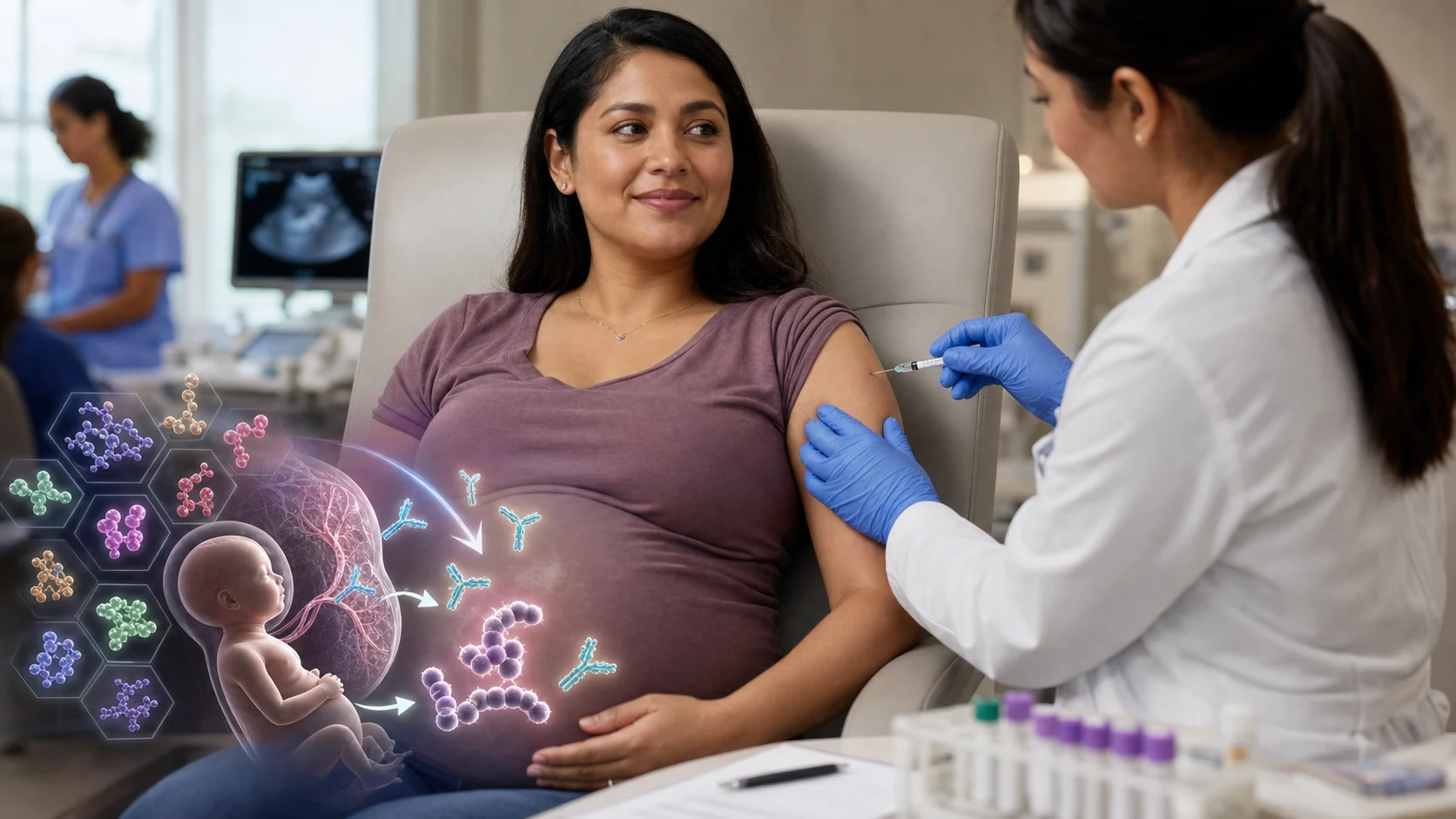
Group B Streptococcus (GBS) disease is a major cause of infant morbidity and mortality. Capsular polysaccharide conjugate GBS vaccines have been evaluated for decades; however, none is licensed. This phase 1/2 trial evaluated an investigational maternal hexavalent polysaccharide-protein conjugate GBS vaccine (GBS6) in non-pregnant females and pregnant participants and their infants. In stage 1 (conducted in South Africa), healthy non-pregnant participants received GBS6, GBS6 + alum
Group B Streptococcus (GBS) disease is a major cause of infant morbidity and mortality. Capsular polysaccharide conjugate GBS vaccines have been evaluated for decades; however, none is licensed. This phase 1/2 trial evaluated an investigational maternal hexavalent polysaccharide-protein conjugate GBS vaccine (GBS6) in non-pregnant females and pregnant participants and their infants. In stage 1 (conducted in South Africa), healthy non-pregnant participants received GBS6, GBS6 + aluminum phosphate (AlPO 4 ) or placebo; a subset received GBS6 + AlPO 4 booster approximately 2 years later. Stage 2 (conducted in South Africa) maternal dose-finding data were reported previously and are not presented here. In stage 3, healthy pregnant participants from South Africa, the United States and the United Kingdom received GBS6 or placebo (24-36 weeks' gestation). In stage 1, 66 non-pregnant participants received GBS6, GBS6 + AlPO 4 or placebo (n = 22 each); 26 also received GBS6 + AlPO 4 booster. In stage 3, 216 pregnant participants were included (GBS6, n = 108; placebo, n = 108); 209 infants were born to maternal participants (GBS6, n = 104; placebo, n = 105). Primary objectives described GBS6 safety/tolerability profiles. Nearly all reactogenicity events were mild or moderate. Among non-pregnant participants, no serious adverse events (SAEs) or adverse event (AE)-associated withdrawals were reported after vaccination; medically attended adverse events (MAEs) were reported in similar percentages across primary vaccination groups (GBS6 groups = 41-45%; placebo = 41%). Rates of AEs (GBS6 = 75/108 (69%); placebo = 70/108 (65%)), SAEs (GBS6 = 21/108 (19%); placebo = 23/108 (21%)) and delivery outcome frequencies were similar in GBS6 and placebo maternal participants. Most infants were born full-term. Infant AE (GBS6 = 87/104 (84%); placebo = 86/105 (82%)), SAE (GBS6 = 45/104 (43%); placebo = 46/105 (44%)) and MAE (GBS6 = 65/104 (63%); placebo = 66/105 (63%)) frequencies were similar across groups. Two neonatal sepsis-associated deaths occurred (GBS6 = 1; placebo = 1); neither was considered vaccine related. Secondary objectives described immune responses. GBS6 elicited robust immune responses in non-pregnant and pregnant individuals; additionally, serotype-specific quantitative and functional antibody responses were observed in infants whose parent received GBS6. These data support continuing clinical investigation of maternal GBS6 vaccination. ClinicalTrials.gov identifier: NCT03765073 .