Low-Voltage Ablation in Persistent Atrial Fibrillation: The IDEAL-AF Randomized Clinical Trial.
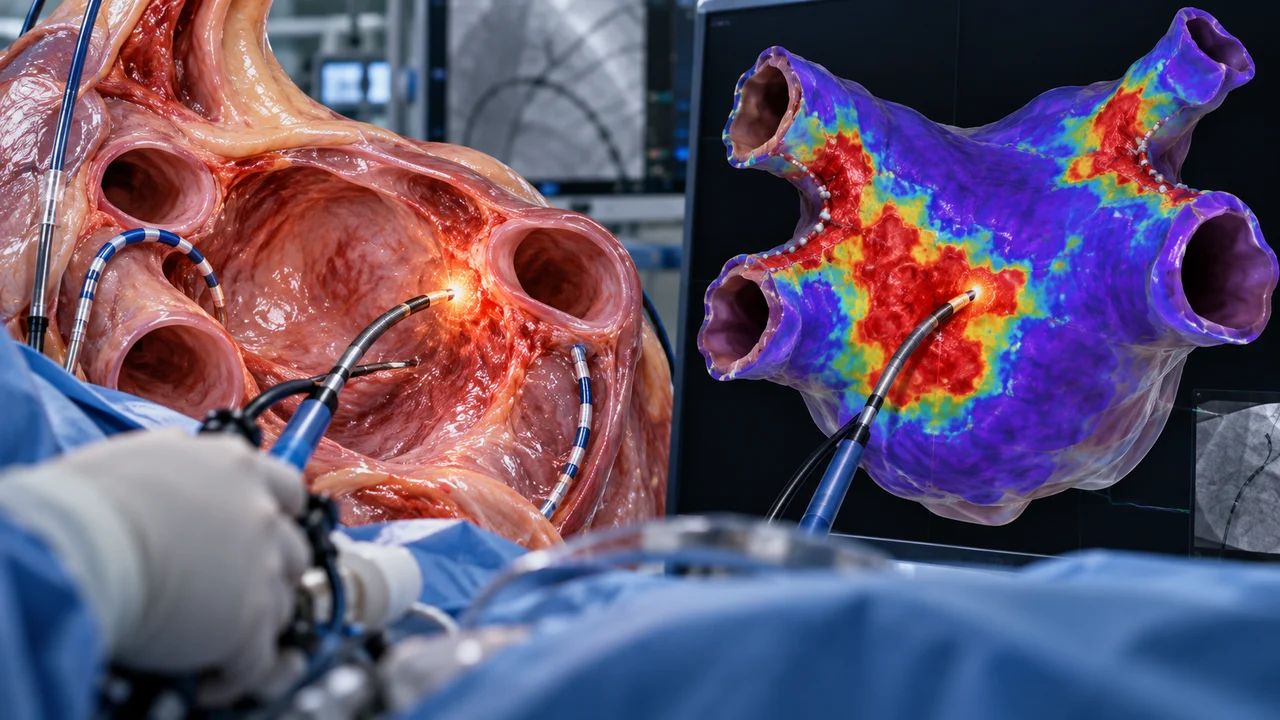
Pulmonary vein isolation remains the foundational ablation approach for atrial fibrillation (AF), yet outcomes in persistent AF remain suboptimal. Targeting low-voltage zones identified by electroanatomical mapping offers a promising strategy for enhancing ablation success. To determine whether adjunctive individualized low-voltage zone ablation improves arrhythmia outcomes and health-related quality of life beyond pulmonary vein isolation alone in patients with persistent AF and significant low
Pulmonary vein isolation remains the foundational ablation approach for atrial fibrillation (AF), yet outcomes in persistent AF remain suboptimal. Targeting low-voltage zones identified by electroanatomical mapping offers a promising strategy for enhancing ablation success. To determine whether adjunctive individualized low-voltage zone ablation improves arrhythmia outcomes and health-related quality of life beyond pulmonary vein isolation alone in patients with persistent AF and significant low-voltage zones. Multicenter randomized clinical trial with 12 months of follow-up conducted at 5 Swedish ablation centers between May 18, 2020, and April 9, 2026. Of 936 adult patients undergoing first-time ablation and voltage mapping for persistent AF, 209 with low-voltage zones of 3.0 cm2 or greater were randomized. Following pulmonary vein isolation, patients with significant low-voltage zones were randomized to either receive individualized adjunctive low-voltage zone ablation (n = 102) or receive no further ablation (n = 107). The primary outcome was freedom from documented atrial arrhythmia without antiarrhythmic drugs at 12 months after 1 or 2 ablation procedures within 6 months. Secondary outcomes were time to first recurrence after a single procedure without antiarrhythmic drugs, health-related quality of life, and safety. Among the 209 randomized patients (median age, 72 years; 109 females [52.2%]), the primary outcome was achieved more frequently in the pulmonary vein isolation plus low-voltage zone ablation group than in the pulmonary vein isolation alone group. Arrhythmia-free survival was achieved in 69 patients (67.6%) vs 40 patients (37.4%), respectively (unadjusted difference, 30.3% [95% CI, 17.4%-43.2%]; odds ratio, 3.5 [95% CI, 2.0-6.2]; P < .001). Time to first recurrence after a single ablation procedure without antiarrhythmic drugs also favored low-voltage zone ablation (hazard ratio, 0.4; 95% CI, 0.3-0.6; P < .001). Improvements in health-related quality of life were greater in the low-voltage zone ablation group, whereas rates of serious adverse events were similar between groups. Adjunctive low-voltage zone ablation added to pulmonary vein isolation improved rhythm outcomes and health-related quality of life without increasing serious adverse events in patients with persistent AF and significant low-voltage zones. These findings support a low-voltage zone-guided ablation strategy in this population. ClinicalTrials.gov Identifier: NCT04377594.