Health & Medicine

Loss of Sox10 prevents tumor initiation in vivo and induces luminal-to-basal reprogramming in Neu+ tumor cells.
| Source: Proceedings of the National Academy of Sciences of the United States of America

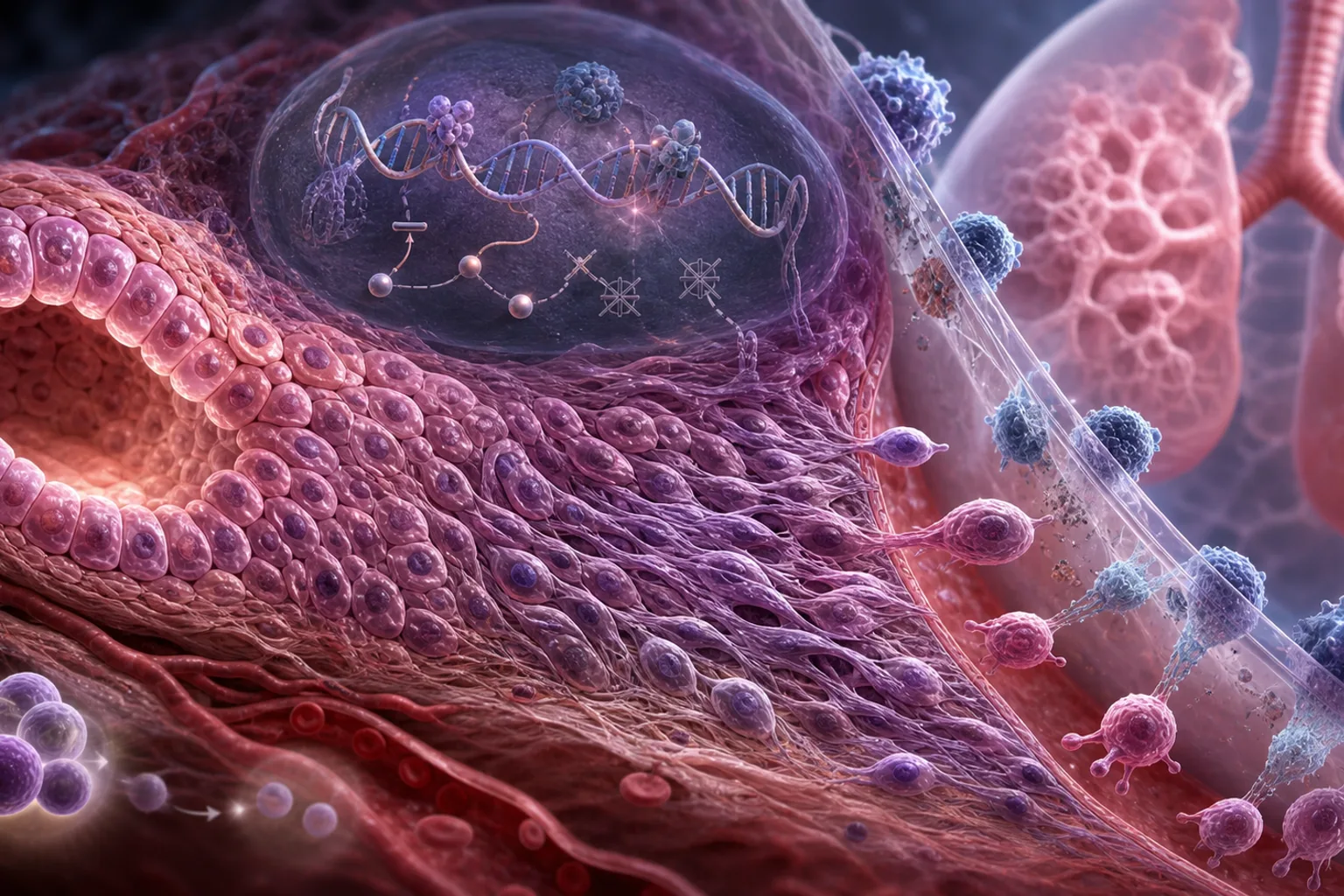
The SRY-HMG-Box transcription factor SOX10 plays a critical role in neural crest development, but its function in epithelial tumorigenesis remains unclear. Here, we identify SOX10 as a key regulator of tumor-initiating activity in Neu-driven mammary cancers. Genetic ablation of Sox10 in the luminal compartment of MMTV-Neu (NIC) mice resulted in delayed but normal mammary gland development. Sox10 deletion resulted in a reduction in mammary progenitors and a complete loss of tumor initiation in So

The SRY-HMG-Box transcription factor SOX10 plays a critical role in neural crest development, but its function in epithelial tumorigenesis remains unclear. Here, we identify SOX10 as a key regulator of tumor-initiating activity in Neu-driven mammary cancers. Genetic ablation of Sox10 in the luminal compartment of MMTV-Neu (NIC) mice resulted in delayed but normal mammary gland development. Sox10 deletion resulted in a reduction in mammary progenitors and a complete loss of tumor initiation in Sox10-deficient luminal cells. CRISPR/Cas9-mediated Sox10 inactivation in Neu-transformed tumor cells led to diminished self-renewal in mammosphere assays, markedly impaired growth in orthotopic transplant models and profoundly reduced lung colonization following tail vein injection, suggesting a depletion of cancer stem cell activity. Transcriptomic profiling revealed that Sox10-deficiency in Neu+ tumor cells induces a luminal-to-basal/mesenchymal-like shift and the downregulation of several genes associated with genetic networks regulating stemness. Collectively, these findings demonstrate that Sox10 is required for a permissive luminal cell state for Neu-driven tumor initiation and that it is critical for cancer stem cell activity and the establishment of metastases.


Read the original source →

Related Topics

Related Stories

Health & Medicine

PLASTID ENVELOPE ION CHANNELS (PEC1/2) link Ca 2+ and jasmonic acid signaling in plant cells.

Plants constantly encounter adverse environmental interactions. One organelle is particularly specialized in stress signaling and phytohormone synthesis: the plastid. Calcium (Ca 2+ ), a key second messenger, is known to intersect with cellular phytohormone signaling networks. While cytosolic Ca 2+ dynamics have been studied extensively, the physiological relevance of stromal Ca 2+ transients and the identity of channels mediating rapid Ca 2+ flux into plastids remain largely unexplored. In this

Continue reading
Health & Medicine

Detection of "hidden" mitotic crossovers by long-read DNA sequencing.

Mitotic crossovers in diploid organisms are usually detected by looking for loss of heterozygosity (LOH) for a marker. Assuming the crossover occurs between two duplicated chromatids, a single reciprocal crossover will result in two recombinant chromatids and two nonrecombinant chromatids. LOH will only be observed when a recombinant chromatid cosegregates with a nonrecombinant chromatid. Cells containing both recombinant chromosomes will not result in LOH. Below, we use long-range DNA sequencin

Continue reading
Health & Medicine

Amino acid homeostasis by CORVET/HOPS: A metabolic and stress resilience checkpoint for T cells.

Amino acid sufficiency is critical for T cell metabolic reprogramming, yet how T cells maintain amino acid homeostasis remains poorly defined. Here, we identify the CORVET and HOPS (CORVET/HOPS) tethering complexes as essential upstream regulators. In activated T cells, they sustain intracellular amino acid levels by promoting macropinocytosis to acquire extracellular nutrients. This function enables dual signaling outcomes: suppression of the integrated stress response (ISR) and activation of m

Continue reading
Health & Medicine

Bright monomeric fluorescent protein elite-niRFP704 for two-channel near-infrared STED nanoscopy.

The near-infrared (NIR) spectral region is attractive for live-cell imaging, due to low autofluorescence and reduced phototoxicity. Some phytochrome-derived fluorescent proteins absorb and emit fluorescence in the NIR, but have short fluorescence lifetimes and relatively low quantum yields, requiring higher laser powers thus limiting their usefulness for live-cell superresolution microscopy. Using the bacterial phytochrome miRFP703 as a template, we screened for variants with longer fluorescence

Continue reading
Health & Medicine

Quantitative nanoscale imaging shows peptide-MHC I complexes are monomeric and spatially regulated in human dendritic cells.

Major histocompatibility complex class I (MHC I) molecules present antigenic peptides to cytotoxic T cells, a process central to immune surveillance. However, the nanoscale spatial organization of peptide-MHC I (pMHC I) on human dendritic cells (DCs), key initiators of cytotoxic T cell responses, remains largely unexplored. Here, we combine high-affinity soluble T cell receptors with DNA-based point accumulation for imaging in nanoscale topography (DNA-PAINT) to quantitatively map and count defi

Continue reading