Localization mechanisms and function of postsynaptic K v 7 (KCNQ) channels and their reduction in KCNQ2 epileptic encephalopathy
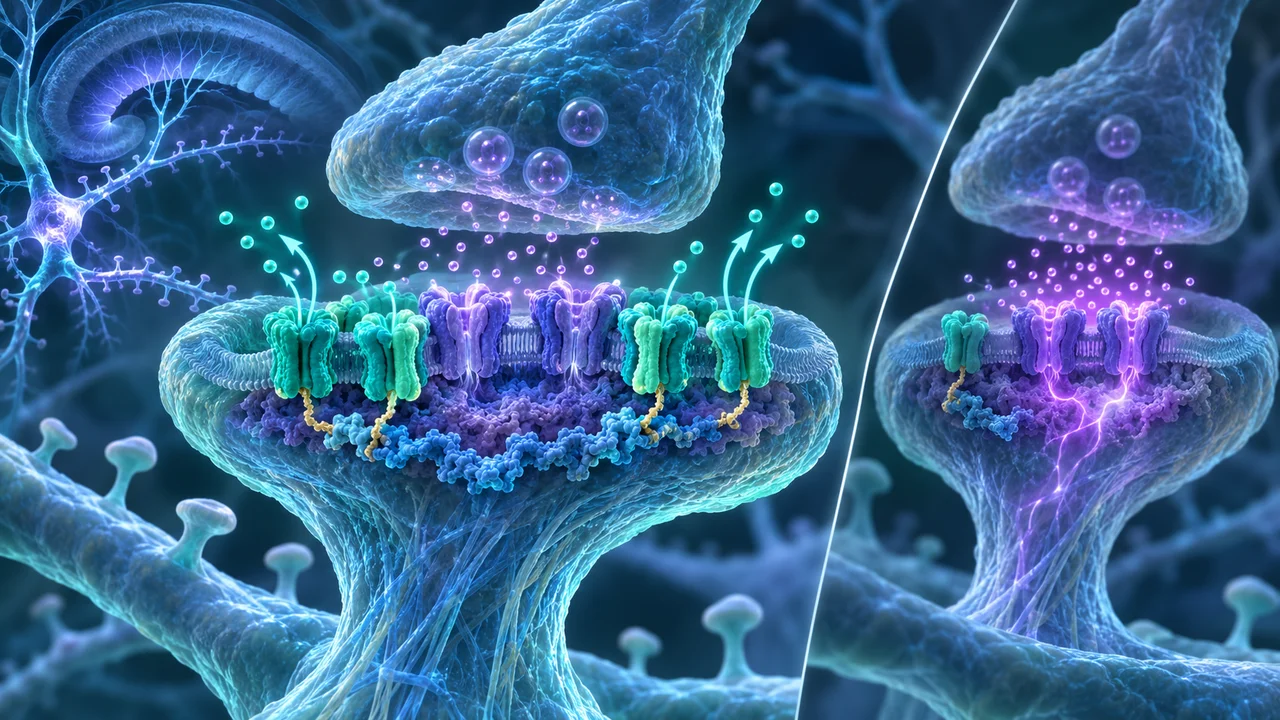
K v 7 channels composed of K v 7.2 and K v 7.3 subunits are enriched in neuronal axons where their hyperpolarizing potassium current suppresses repetitive and burst firing of action potentials. Mutations in their genes, KCNQ2 and KCNQ3 , cause neonatal epilepsy, underscoring their critical role in regulating neuronal excitability. In this study, we provide evidence that K v 7 channels are present at and near the postsynaptic density within dendritic spines of hippocampal neurons, where their cur
K v 7 channels composed of K v 7.2 and K v 7.3 subunits are enriched in neuronal axons where their hyperpolarizing potassium current suppresses repetitive and burst firing of action potentials. Mutations in their genes, KCNQ2 and KCNQ3 , cause neonatal epilepsy, underscoring their critical role in regulating neuronal excitability. In this study, we provide evidence that K v 7 channels are present at and near the postsynaptic density within dendritic spines of hippocampal neurons, where their current decreases calcium influx through NMDA receptors. This spine localization is promoted by heteromerization of K v 7.2 and K v 7.3 and their binding to AnkyrinG-190, which is the only AnkyrinG isoform present in dendritic spines. Lastly, spine localization of K v 7 channels and their ability to suppress NMDA receptor activity are markedly reduced by select variants of KCNQ2 that cause developmental and epileptic encephalopathy (DEE). These findings reveal a subcellular population of K v 7 channels that can dampen excitatory synaptic transmission and implicate their dysregulation in KCNQ2 -associated DEE.