LDL Cholesterol Lowering With Evolocumab Before Percutaneous Coronary Intervention for Acute Myocardial Infarction: The AMUNDSEN Randomized Clinical Trial.
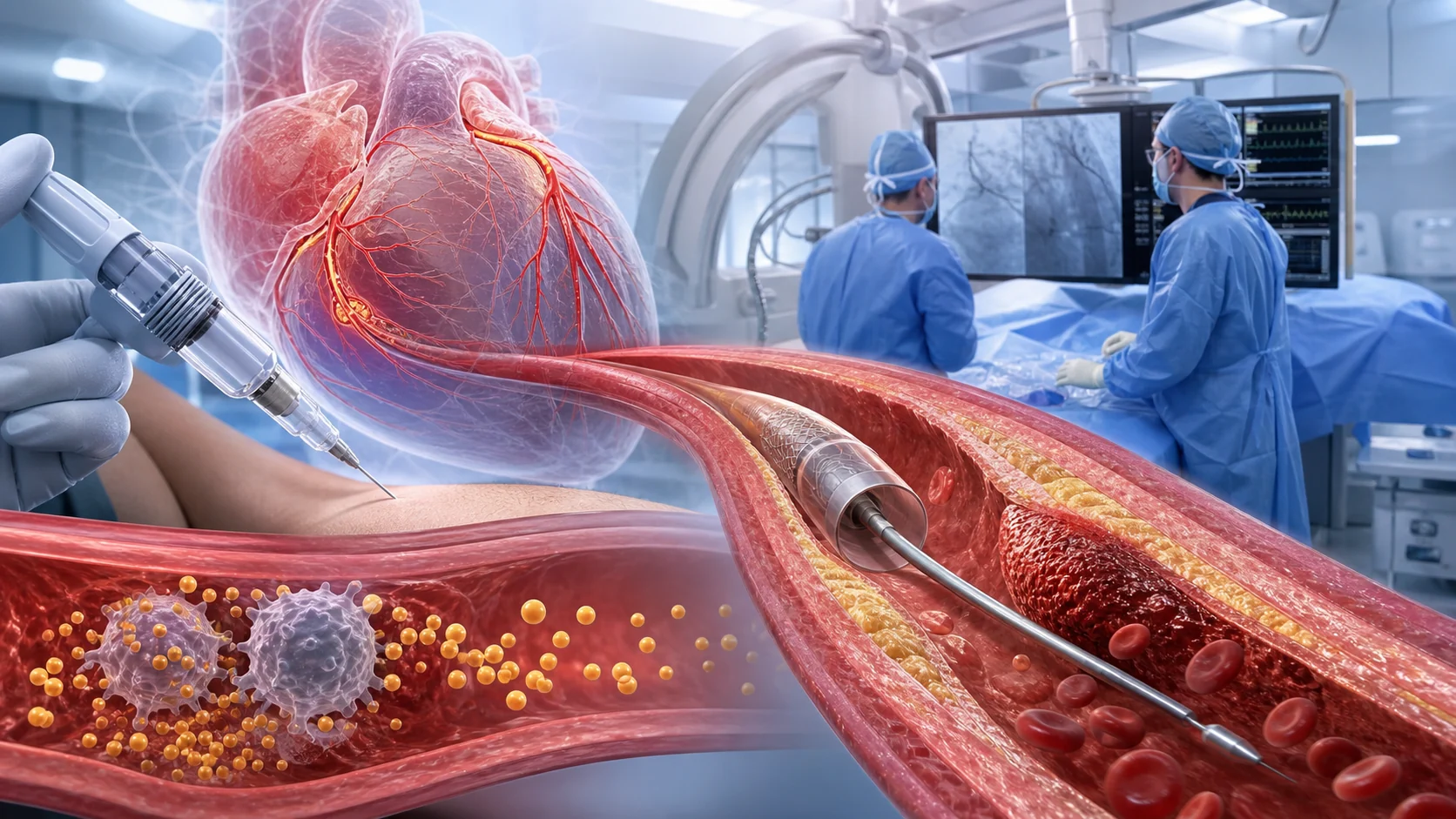
Proprotein convertase subtilisin-kexin type 9 (PCSK9) inhibition is recommended as second- or third-line lipid-lowering therapy after myocardial infarction (MI), resulting in prolonged periods of inadequate low-density lipoprotein cholesterol (LDL-C) control. Whether in-catheterization laboratory decision of PCSK9 inhibition, started before mechanical reperfusion, could improve LDL-C control and clinical outcomes at 1 year is unknown. To evaluate evolocumab as first-line therapy vs standard care
Proprotein convertase subtilisin-kexin type 9 (PCSK9) inhibition is recommended as second- or third-line lipid-lowering therapy after myocardial infarction (MI), resulting in prolonged periods of inadequate low-density lipoprotein cholesterol (LDL-C) control. Whether in-catheterization laboratory decision of PCSK9 inhibition, started before mechanical reperfusion, could improve LDL-C control and clinical outcomes at 1 year is unknown. To evaluate evolocumab as first-line therapy vs standard care in patients with high-risk acute MI undergoing percutaneous coronary intervention (PCI). This international, phase 4, prospective randomized, open, blinded end-point adjudication study was conducted at 48 sites in 6 countries. Adults with high-risk ST-elevation MI (STEMI; aged >55 years) or non-ST-elevation MI (NSTEMI) with 1 or more additional high-risk characteristics were enrolled beginning September 29, 2021, through May 22, 2025, with final follow-up on May 22, 2026. Patients were randomized 1:1 to receive evolocumab 140 mg subcutaneously every 2 weeks for 1 year (first injection before PCI) in addition to standard care (n = 1087) or standard care alone (n = 1074). Standard care included high-intensity oral lipid-lowering therapy with the optional PCSK9 inhibitor use per guideline indication in the control group. The primary outcome was LDL-C less than 55 mg/dL and at least 50% reduction in LDL-C from baseline at 12 months. The main clinical end point was all-cause death or unplanned cardiovascular hospitalization at 12 months. Among 2161 randomized patients (mean age, 67 years; 1703 males [79%]; 1261 [58%] with STEMI; 900 [42%] with NSTEMI), the primary outcome was achieved in 792 of 970 patients (82%) with evolocumab vs 370 of 934 (40%) with standard care (adjusted odds ratio, 5.54 [95% CI, 4.50-6.82]; P < .001). At 6 weeks, median LDL-C was 16 mg/dL with evolocumab vs 56 mg/dL with standard care. The main clinical end point occurred in 159 of 1087 patients (14.6%) with evolocumab vs 165 of 1074 (15.4%) with standard care (adjusted odds ratio, 0.94 [95% CI, 0.73-1.19]; P = .59). In patients with acute MI undergoing PCI, first-line evolocumab combined with high-intensity lipid-lowering therapy produced rapid and sustained LDL-C reduction, with more than 80% of patients reaching the guideline-recommended target at 1 year. However, no clinical benefit was detected during the first year of follow-up, arguing against clinically meaningful acute pleiotropic effects of PCSK9 inhibitors in addition to standard care. ClinicalTrials.gov Identifier: NCT04951856.