Immunogenicity of fractional one-fifth and one-half doses of 17DD yellow fever vaccine compared with full dose in children aged 9-23 months in Uganda: a phase 4, single-blind, randomised clinical tria
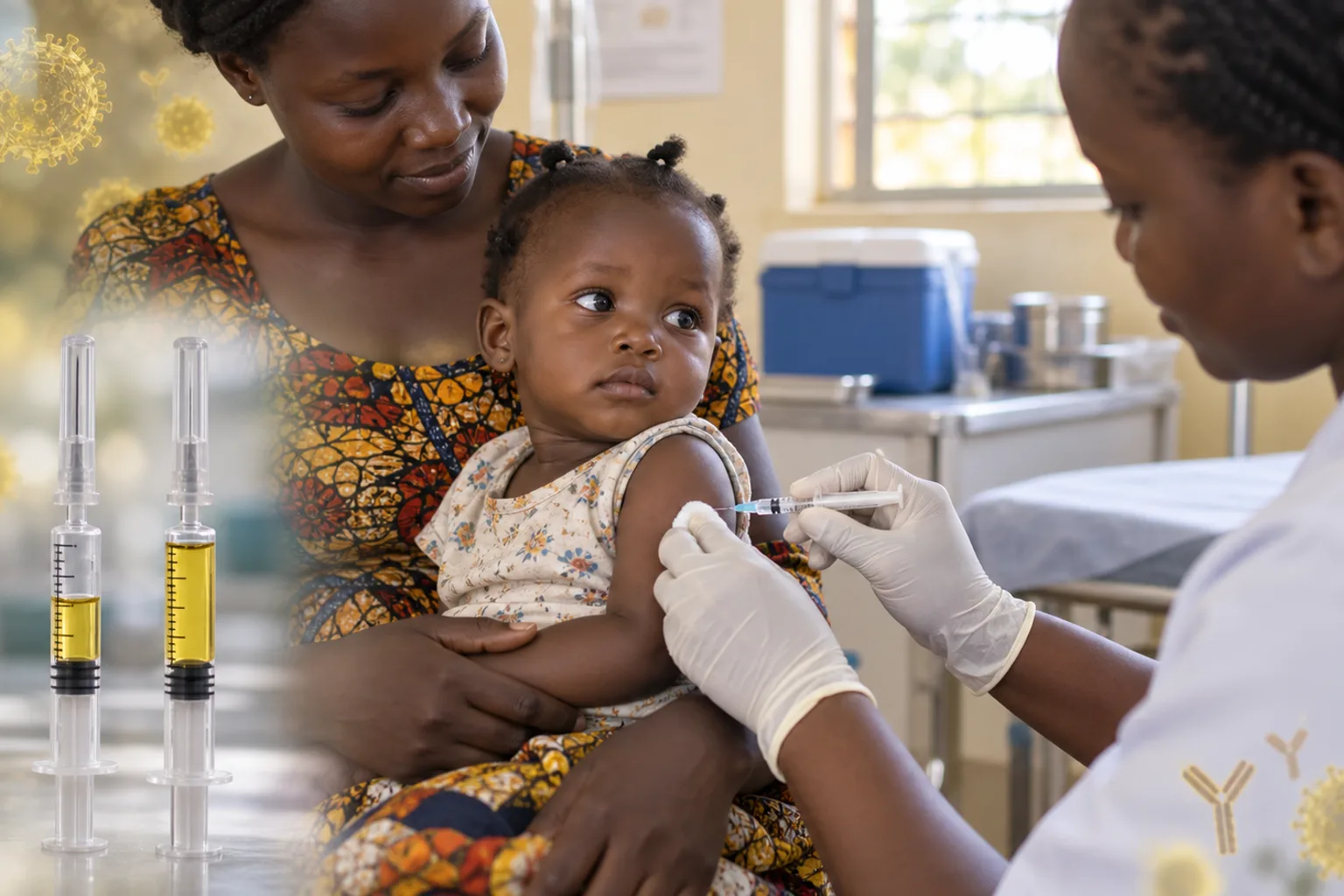
Fractional doses of yellow fever vaccines have been shown to be safe and immunogenic in randomised controlled trials in adults and children. However, little evidence still remains in children younger than 2 years. We assessed immunogenicity of one-fifth (0·1 mL) and one-half (0·25 mL) fractional doses compared with full doses of 17DD yellow fever vaccine in children aged 9-23 months in Kampala, Uganda. This phase 4, single-blind, randomised clinical trial evaluating fractional dose 17D
Fractional doses of yellow fever vaccines have been shown to be safe and immunogenic in randomised controlled trials in adults and children. However, little evidence still remains in children younger than 2 years. We assessed immunogenicity of one-fifth (0·1 mL) and one-half (0·25 mL) fractional doses compared with full doses of 17DD yellow fever vaccine in children aged 9-23 months in Kampala, Uganda. This phase 4, single-blind, randomised clinical trial evaluating fractional dose 17DD yellow fever vaccine among children was conducted at three public-sector health facilities in Uganda. Eligible participants were aged 9-23 months at enrolment, had no history of yellow fever disease or vaccination, and did not meet the exclusion criteria. Children were enrolled in three age strata: 9-12 months, 13-18 months, and 19-23 months, and were randomly assigned (1:1:1) using block randomisation (block sizes of three and six) to one-fifth (0·1 mL), one-half (0·25 mL), or full (0·5 mL) doses of the 17DD yellow fever vaccine. Participants were followed up at 4 weeks (visit 1 [V1]), 1 year (visit 2 [V2]), and 13-48 months (visit 3 [V3]) after vaccination. The primary analysis included per-protocol participants who attended within the prespecified visit window; an intention-to-treat analysis was also conducted including all randomly assigned participants with available outcome data. Participants with missing serological data were excluded from the analysis at the corresponding visit. The primary outcome was non-inferiority in seroconversion (5 percentage-point margin) at V1 measured by 50% plaque reduction neutralisation test. This study is registered with ClinicalTrials.gov, NCT03725618, and is complete. Between March 26, 2019, and May 11, 2021, 1784 participants were randomly assigned to either one-fifth dose (n=600), one-half dose (n=594), or full dose (n=590). The median (IQR) age at enrolment was 13 (11-18) months. Both fractional doses met the non-inferiority criterion compared with the full dose with no difference in seroconversion between one-fifth and full doses and -0·17 (95% CI -0·52 to 0·17) difference between one-half and full doses in the per-protocol population at V1. There was no difference between the one-fifth and full doses. Both fractional doses of 17DD yellow fever vaccine were non-inferior to full doses in inducing initial seroconversion. The results support the use of fractional dose yellow fever vaccines among young children for outbreak response during supply shortages. US Centers for Disease Control and Prevention.