Genomic predisposition is associated with the direction of sex chromosome evolution.
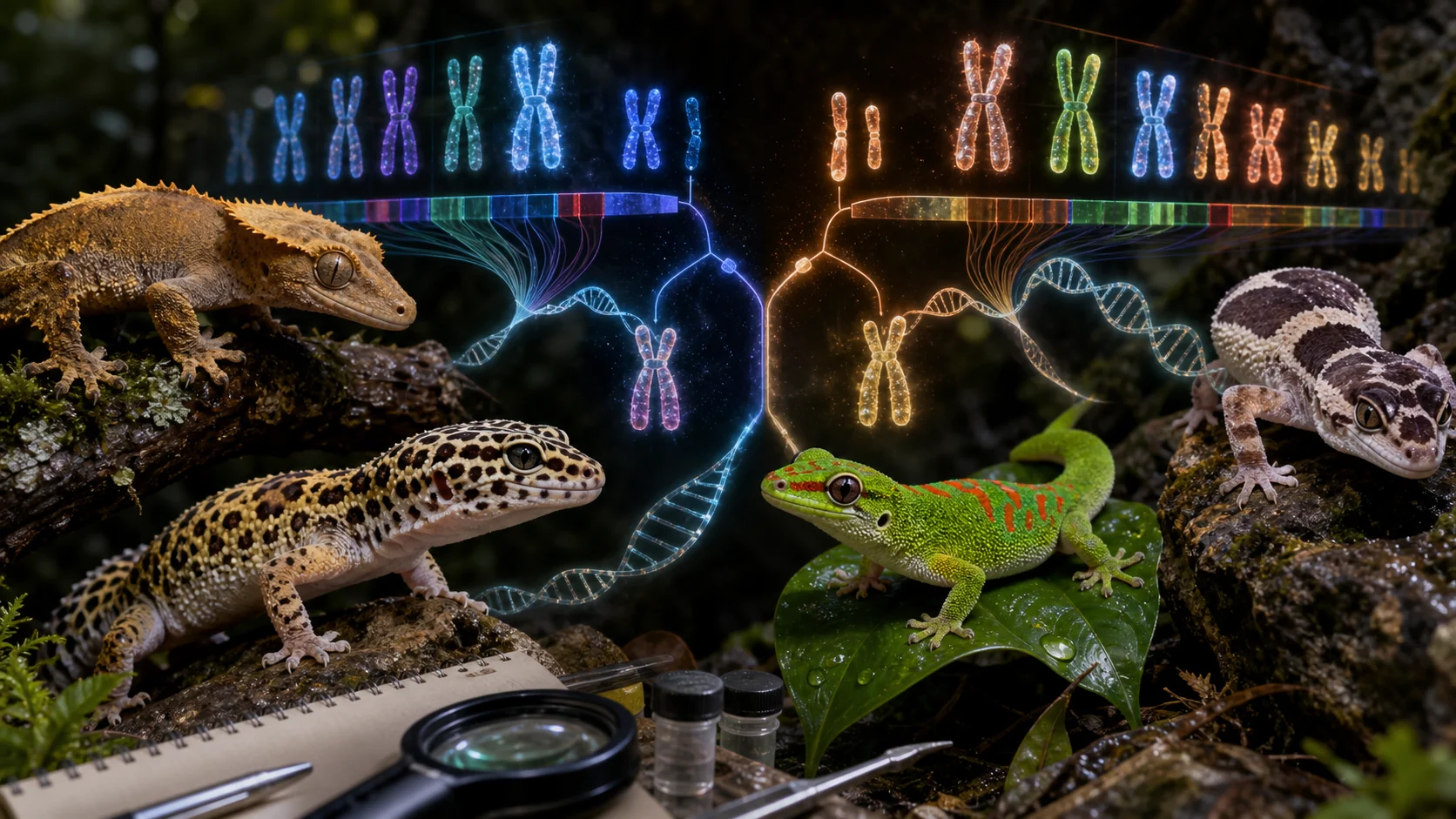
Sex chromosome evolution is among the most dynamic genomic innovations in vertebrates, yet why some lineages evolve XY while others evolve ZW remains unclear. Using chromosome-level genomes from 19 geckos, we found that gecko sex chromosomes originated independently from 16 ancestral chromosomes. Their origins are nonrandom in both time and direction. Five of 11 datable origins coincide near the Middle Miocene Climatic Transition (~10 million years ago). Ancestral gene content is associated with
Sex chromosome evolution is among the most dynamic genomic innovations in vertebrates, yet why some lineages evolve XY while others evolve ZW remains unclear. Using chromosome-level genomes from 19 geckos, we found that gecko sex chromosomes originated independently from 16 ancestral chromosomes. Their origins are nonrandom in both time and direction. Five of 11 datable origins coincide near the Middle Miocene Climatic Transition (~10 million years ago). Ancestral gene content is associated with the direction of evolution, with testis-enriched regions tending to evolve into ZW and testis-depleted regions into XY, a pattern observed across multiple amniote sex chromosome origins. Geckos with genetic sex determination repeatedly evolve partial dosage balance through up-regulation in the heterogametic sex. Sex chromosome evolution thus follows constraints from ancestral genomic predisposition and environmental context.