Foreshock productivity and rupture nucleation in injection-induced earthquakes in western Canada
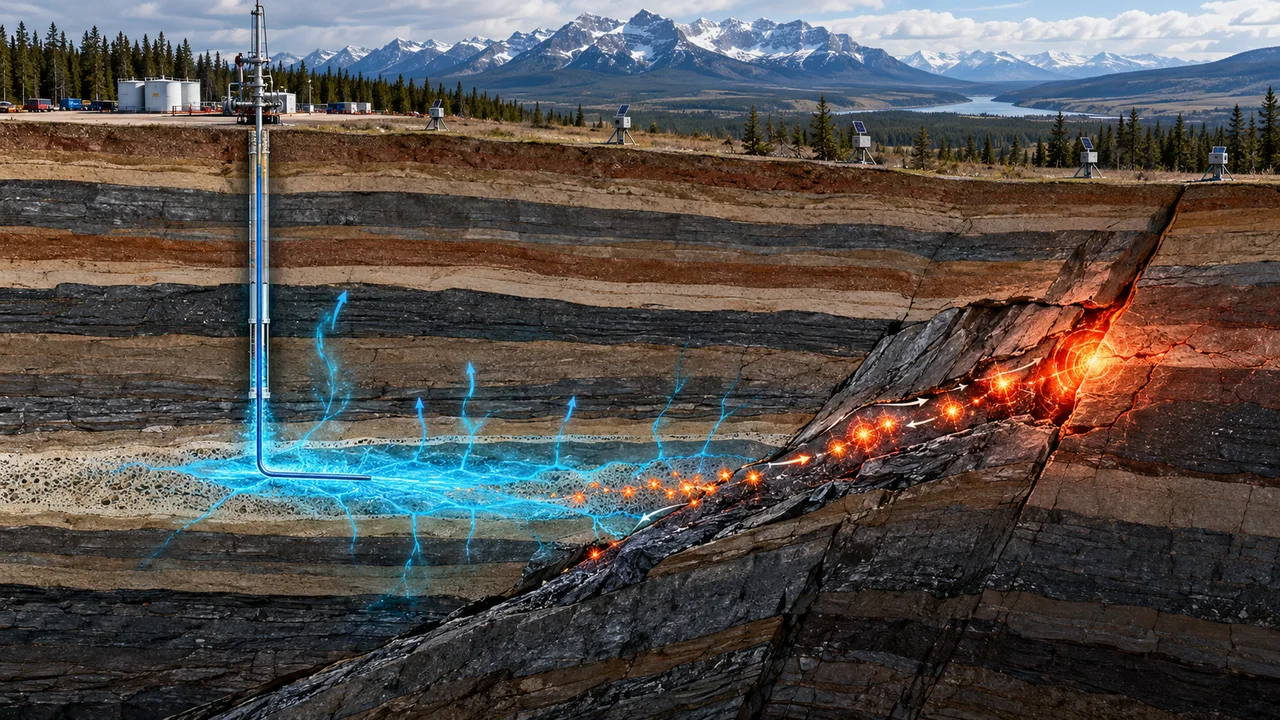
Foreshock activity is a key consideration in traffic-light protocol (TLP) to mitigate seismic risk from injection-induced earthquakes (IIEs). However, the seismogenic processes of IIE foreshocks remain poorly understood. Using an enhanced western Canada catalog (2014–2024), we analyzed 77 IIE sequences to statistically delineate foreshock patterns before local magnitude ( M L ) ≥ 3 mainshocks. We found that 92% are preceded by foreshocks and that foreshock productivity and spatiotemporal pattern
Foreshock activity is a key consideration in traffic-light protocol (TLP) to mitigate seismic risk from injection-induced earthquakes (IIEs). However, the seismogenic processes of IIE foreshocks remain poorly understood. Using an enhanced western Canada catalog (2014–2024), we analyzed 77 IIE sequences to statistically delineate foreshock patterns before local magnitude ( M L ) ≥ 3 mainshocks. We found that 92% are preceded by foreshocks and that foreshock productivity and spatiotemporal patterns reflect the interplay among fluid injection, the seismogenic index, and the fault stress state. Sequence-specific analyses elucidate three nucleation models: fluid-driven preslip with weakened source asperity, fluid-driven preslip with intact source asperity, and fluid-driven cascade, highlighting the central role of fluids in enabling aseismic slip and interevent stress transfer before mainshock rupture. These results imply that IIE monitoring strategies should be spatially conditioned according to foreshock productivity.