Folic acid prevention of neural tube defects requires retinoic acid produced by ALDH1L1.
Folic acid (FA) supplementation during pregnancy is the commonly accepted treatment to prevent neural tube defects. The mechanism by which FA prevents neural tube defects (NTDs) remains unclear. FA also prevents other developmental malformations, including alcohol-induced malformations in Fetal Alcohol Syndrome models. We show that FA acts through a metabolic link to retinoic acid (RA) signaling. Using a pax3 -knockdown Xenopus model of FA-rescuable NTDs, we show that RA or its precursors equall
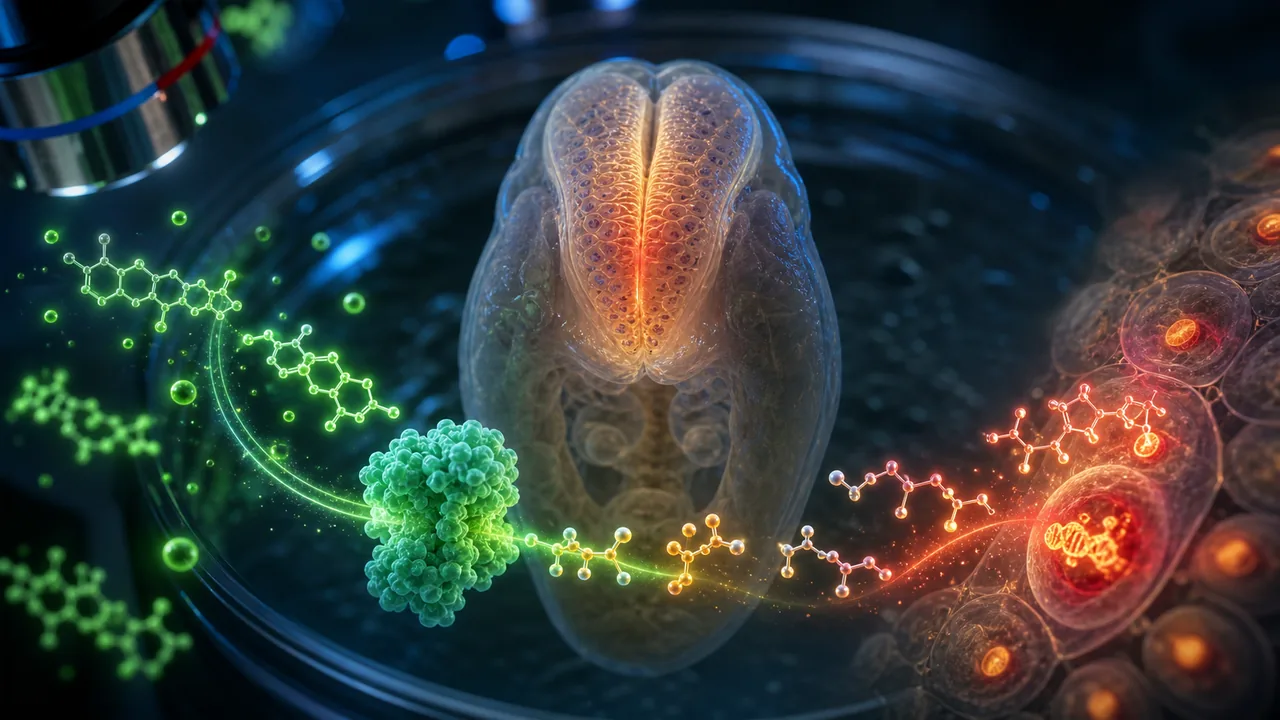
Folic acid (FA) supplementation during pregnancy is the commonly accepted treatment to prevent neural tube defects. The mechanism by which FA prevents neural tube defects (NTDs) remains unclear. FA also prevents other developmental malformations, including alcohol-induced malformations in Fetal Alcohol Syndrome models. We show that FA acts through a metabolic link to retinoic acid (RA) signaling. Using a pax3 -knockdown Xenopus model of FA-rescuable NTDs, we show that RA or its precursors equally rescue these defects. Similarly, FA rescues alcohol-induced NTDs in a model previously shown to be rescued by retinoids. We identify the FA-metabolizing enzyme, formyl tetrahydrofolate dehydrogenase (ALDH1L1, FTHFD), encoded by the aldh1l1 gene, as essential for this rescue. Mechanistically, FA upregulates aldh1l1 expression, thereby increasing RA biosynthesis. Knockdown of ALDH1L1 activity using CRISPR/Cas9 abolishes the FA protective effect. To support these observations, we show that the human ALDH1L1 enzyme converts retinaldehyde to RA, and its overexpression restores neural tube closure in aldh1l1 -knockdown embryos when retinaldehyde is provided. At the cellular level, reduced RA signaling results in overproliferation of neural plate precursors and a pathological expansion of the neural tube. ALDH1L1 enables FA to restore normal neural plate proliferation, thereby preventing NTDs. These findings establish ALDH1L1 as an unexpected enzymatic link between FA (vitamin B9) and RA signaling, revealing how FA supplementation safeguards neural development and suggesting opportunities to refine strategies for NTD prevention.