A two-dimensional reticular triaxial molecularly woven fabric.
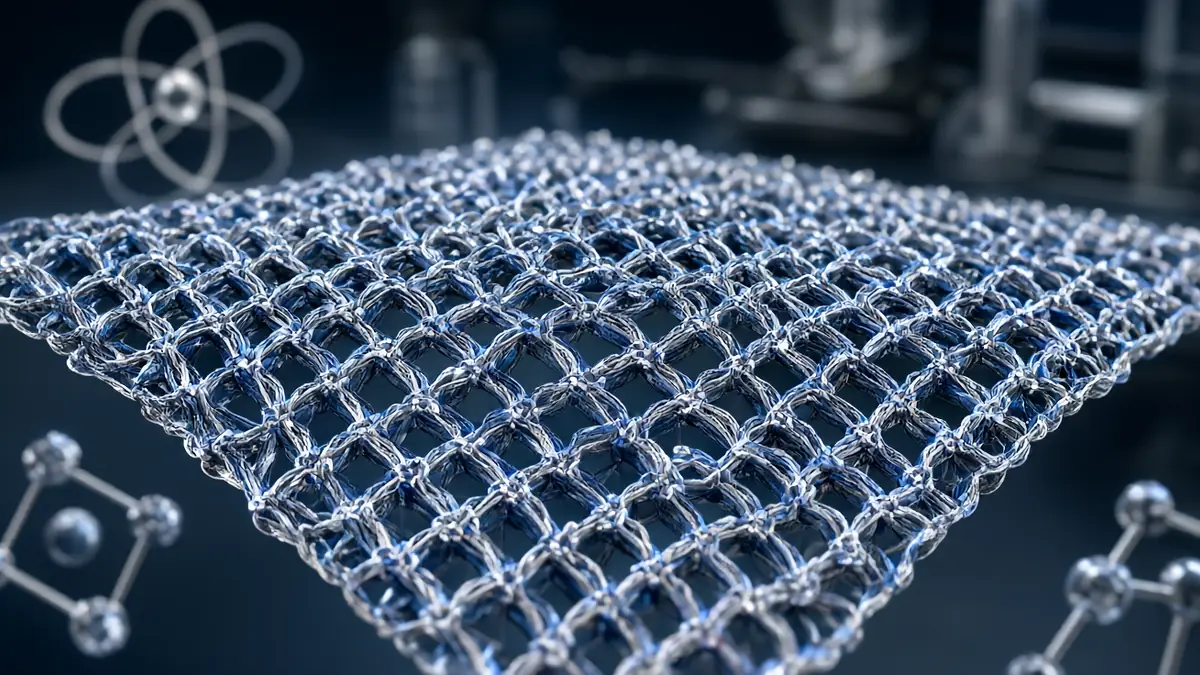
Inspired by macroscopic weaving techniques 1-4 , molecular weaving, which interlaces molecular strands into ordered networks, has emerged as a powerful strategy for designing functional materials with emergent properties 5,6 . However, so far, molecular weaving has relied mainly on linear building blocks and biaxial structures. Higher-order weaving (≥3 axes) of nonlinear building blocks is expected to produce intriguing architectures and bring new and unforeseen functions
Inspired by macroscopic weaving techniques 1-4 , molecular weaving, which interlaces molecular strands into ordered networks, has emerged as a powerful strategy for designing functional materials with emergent properties 5,6 . However, so far, molecular weaving has relied mainly on linear building blocks and biaxial structures. Higher-order weaving (≥3 axes) of nonlinear building blocks is expected to produce intriguing architectures and bring new and unforeseen functions to the resulting materials; however, their construction and property investigation remain underexplored. Here we report a two-dimensional reticular triaxial woven polymer network constructed by incorporating C 3 -symmetric macrocycles into the woven structure through dative B-N polymerization. The resulting material not only exhibits unique topological chirality and robust mechanical properties but it also serves as a porous material that permits the separation of representative aromatic/aliphatic compounds. This functional utility highlights how higher-order triaxial woven topologies can provide unique advantages in terms of regulating material properties and introduces an extra topological dimension for the construction of functional materials.