Ecdysteroid signaling acts as a central switch underlying wing polyphenism in two hemipteran insects.
Wing polyphenism represents a prevalent evolutionary adaptation in insect taxa, characterized by the capacity of a single genotype to produce distinct wing morphologies in response to environmental variations. Across hemipteran lineages, the regulation of wing polyphenism involves taxon-specific endocrine signaling cascades; however, the evolutionarily conserved genetic toolkit that underlies this developmental plasticity remains elusive. Here, we find that the steroid hormone ecdysteroids serve
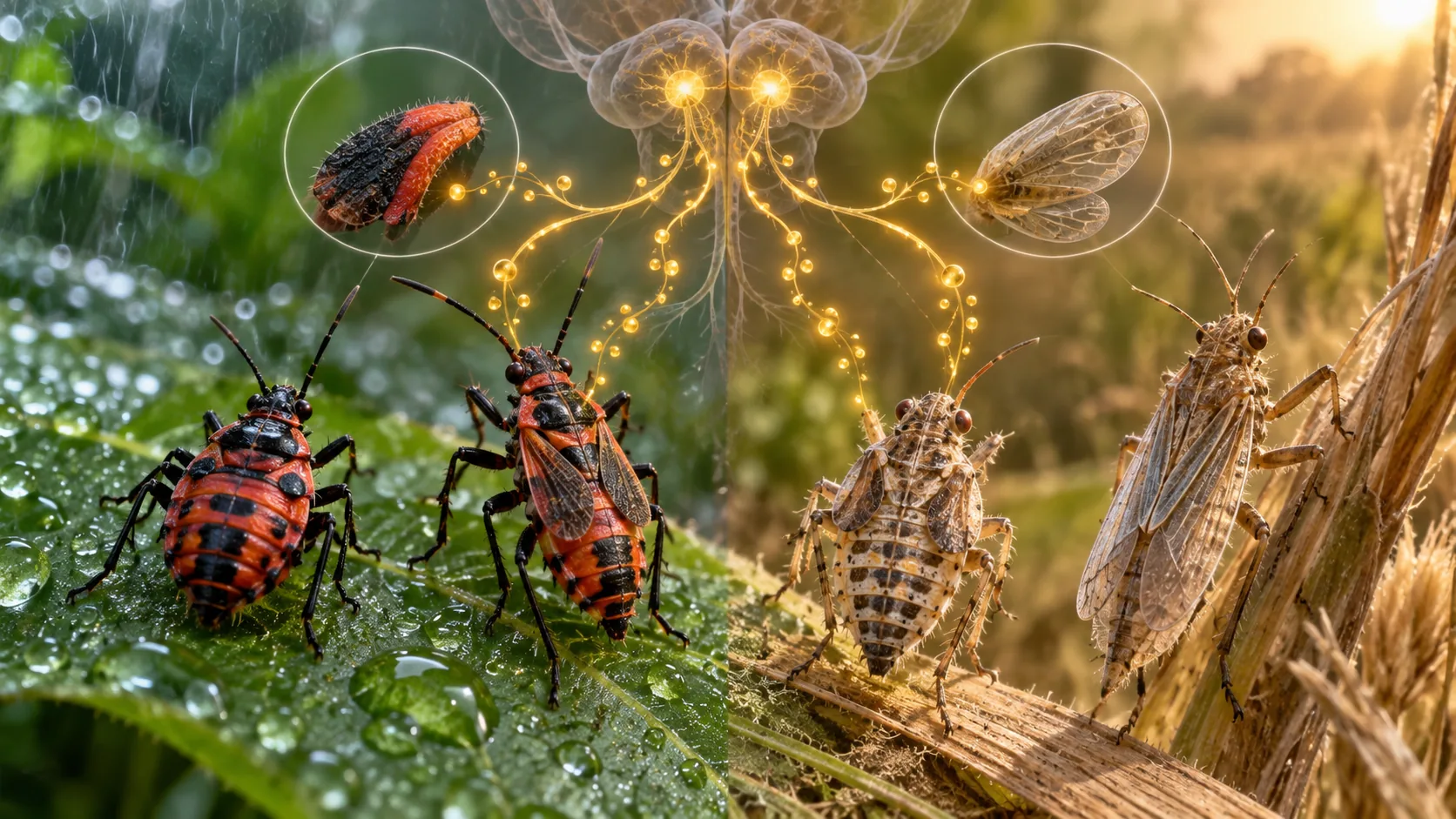
Wing polyphenism represents a prevalent evolutionary adaptation in insect taxa, characterized by the capacity of a single genotype to produce distinct wing morphologies in response to environmental variations. Across hemipteran lineages, the regulation of wing polyphenism involves taxon-specific endocrine signaling cascades; however, the evolutionarily conserved genetic toolkit that underlies this developmental plasticity remains elusive. Here, we find that the steroid hormone ecdysteroids serve as a central hormonal switch that orchestrates wing polyphenism through dual downstream integration of the prothoracicotropic hormone (PTTH)-its receptor (Torso) and insulin/IGF-1 signaling (IIS) pathways in both the firebug Pyrrhocoris apterus and planthopper Nilaparvata lugens , two evolutionarily divergent Hemiptera species. Silencing of ecdysteroidogenic genes ( Spo and Shd ) in the firebug or ecdysteroid receptor signaling components ( EcR ) in both species induced wing bud growth in final-instar nymphs. Loss-of-function mutagenesis of Ptth or Torso in the firebug, whereas mutagenesis of Torso only in the planthopper, transformed short-wing-destined wing buds into long wings. In contrast to wild-type controls, disruption of both Torso and IIS signaling delayed the timing of the ecdysteroid pulse during the final nymphal instar of both species. Administration of exogenous ecdysteroids neutralized the effect of Torso and IIS signaling on wing morphs, redirecting the developmental trajectory of wings from long to short. The finding of the "neuropeptide-ecdysteroid axis" in the planthopper and the firebug indicates a conserved regulatory principle underlying wing polyphenism across Hemiptera.