Environment

Decadal doubling of Siberian methane emissions due to warming-induced fires and methanogenesis
| Source: Science

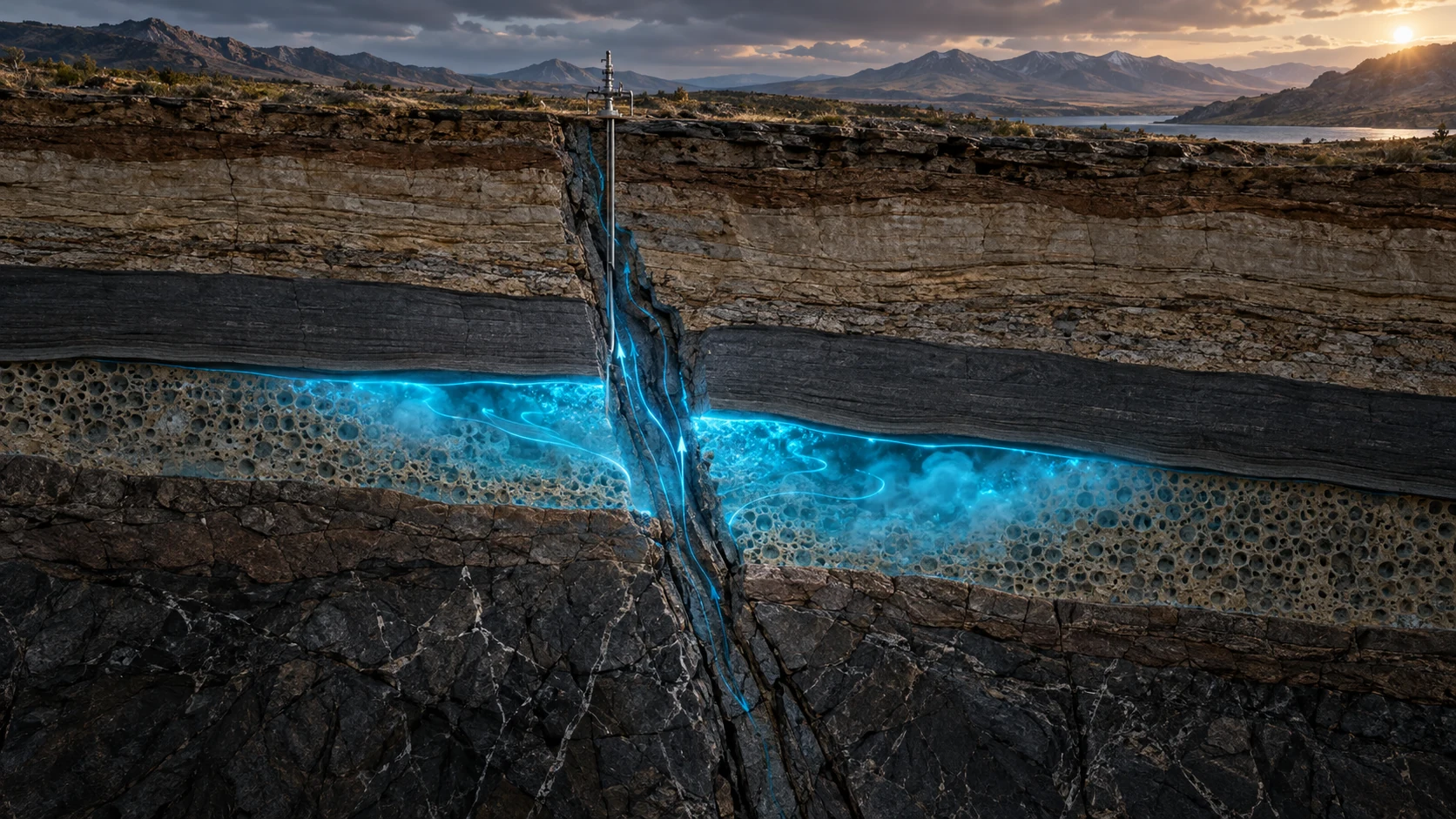
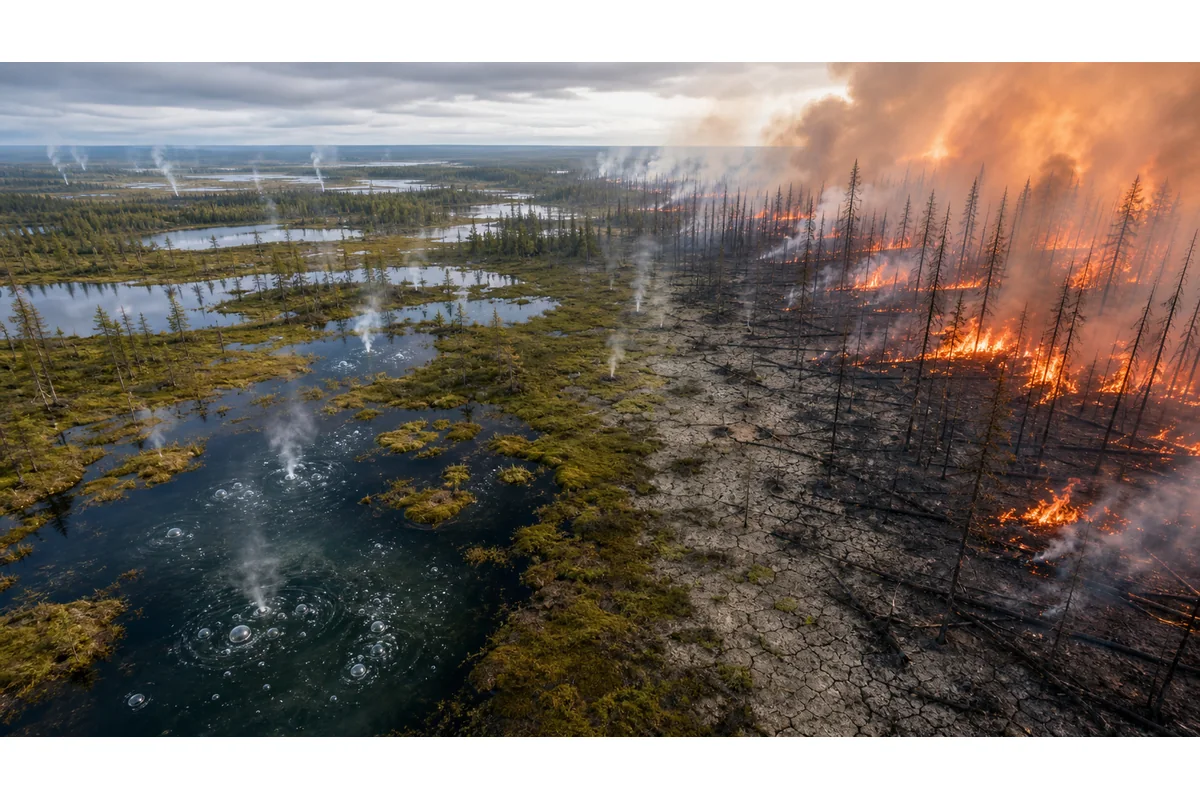
The northern permafrost region, which stores double the amount of carbon in the atmosphere, is vulnerable to accelerated warming. Methane emissions from thawing permafrost may eventually result in a climate-carbon feedback. Our analysis of atmospheric methane data shows that Siberian growing-season methane emissions have increased by 12.0 ± 1.9 teragrams of methane (TgCH 4 ) (5% per year) over the period 2010–2023. We reveal contrasting Siberian hydrological trends linked to high-pressure system

The northern permafrost region, which stores double the amount of carbon in the atmosphere, is vulnerable to accelerated warming. Methane emissions from thawing permafrost may eventually result in a climate-carbon feedback. Our analysis of atmospheric methane data shows that Siberian growing-season methane emissions have increased by 12.0 ± 1.9 teragrams of methane (TgCH 4 ) (5% per year) over the period 2010–2023. We reveal contrasting Siberian hydrological trends linked to high-pressure systems and distinct air-sea-land interactions. Warmer, drier conditions over eastern Siberia enhance fire-related emissions (0.7 ± 0.1 TgCH 4 year −2 ), and wetter conditions over western Siberia promote wetland-related emissions (0.4 ± 0.1 TgCH 4 year −2 ). Weakly nonlinear relationships between temperature maxima and emissions suggest that by 2050, higher Siberian emissions could offset about 20% of the global methane reduction required for climate targets, with eastern Siberia dominating the projected increase.

Read the original source →

Related Stories

Environment

Co-option of ancestral stem regulators drove recurrent evolution of underground storage organs.

Geophytes are plants that produce underground storage organs such as tubers, rhizomes, and bulbs, to facilitate asexual reproduction and withstand a myriad of environmental challenges. While the potato ( Solanum tuberosum L.) serves as the primary model for studying tuberization, the genetic mechanisms encoding this trait across diverse angiosperm lineages remains unclear. This study utilized a phylogenomic-transcriptomic approach to compare tuber development across nine tuberizing species with

Continue reading
Environment

Major role for internal variability in tropical Pacific warming pattern over satellite era.

Home to El Niño, the tropical Pacific is a key player in the global climate system. While most of the planet has warmed during the satellite era of 1982-2024, the eastern tropical Pacific surface has mysteriously cooled. What is troubling is that fully coupled global climate models mostly fail to simulate this distinctive pattern. By replacing wind stress applied to the ocean with observations, here we show that climate models successfully reproduce the La Niña-like (LN) trend pattern

Continue reading
Environment

Reconstruction of an extinct soundscape reveals ultrasonic communication in the Jurassic.

Very little is known about the acoustic landscape of long-gone environments, such as the Jurassic forests. The sounds made by dinosaurs and other charismatic vertebrates are not definitively known because their vocal organs rarely preserve well in fossils. Unlike tetrapod vocal cords, the sound-producing organs present in the sclerotized cuticle of some arthropods do fossilize well. For example, the stridulatory structures (file, plectrum) can be observed and measured in the fossilized forewings

Continue reading
Environment

Recent strengthening of eastern Pacific ENSO in the last millennium paleorecord.

The Pacific El Niño-Southern Oscillation (ENSO) generates climate extremes that endanger ecosystems, infrastructure, and human well-being worldwide. The response of this system to climate warming is poorly constrained, due both to data scarcity and uncertainties in climate models. The geochemistry of Galápagos coral skeletons across the past millennium reveals a large recent increase in interannual variability of sea surface temperature in the eastern equatorial Pacific compared to exi

Continue reading
Environment

Genomic predisposition is associated with the direction of sex chromosome evolution.

Sex chromosome evolution is among the most dynamic genomic innovations in vertebrates, yet why some lineages evolve XY while others evolve ZW remains unclear. Using chromosome-level genomes from 19 geckos, we found that gecko sex chromosomes originated independently from 16 ancestral chromosomes. Their origins are nonrandom in both time and direction. Five of 11 datable origins coincide near the Middle Miocene Climatic Transition (~10 million years ago). Ancestral gene content is associated with

Continue reading