Environment

Climate mitigation contributes more to population persistence than evolutionary adaptation in a long-lived seabird.

| Source: Proceedings of the National Academy of Sciences of the United States of America

Evolutionary rescue-the process by which adaptive evolution prevents population extinction following environmental deterioration -is frequently proposed as a buffer against biodiversity loss under climate change, yet its capacity to alter future population trajectories is rarely assessed quantitatively. Most forecasts of evolutionary rescue rely on simplified demographic models, focus on a single adaptive trait, and explore hypothetical environmental scenarios rather than standardized climate pa

Evolutionary rescue-the process by which adaptive evolution prevents population extinction following environmental deterioration -is frequently proposed as a buffer against biodiversity loss under climate change, yet its capacity to alter future population trajectories is rarely assessed quantitatively. Most forecasts of evolutionary rescue rely on simplified demographic models, focus on a single adaptive trait, and explore hypothetical environmental scenarios rather than standardized climate pathways, neglecting uncertainty from demographic and internal climate variability. We developed a hyperstate eco-evolutionary population model coupled with large ensembles of climate projections from global climate models to test whether evolutionary adaptation or climate mitigation (through reduced greenhouse gas emissions) can prevent declines in a threatened seabird, the black-browed albatross. We parameterized this framework using three decades of demographic and phenotypic data, while propagating uncertainty from demographic processes and natural climate variability in climate projections. We modeled selection on morphological, behavioral, and phenological traits affecting different life-cycle components across climate scenarios. Across climate scenarios, evolution increased population size under stationary historical climates but failed to prevent decline under projected warming. Increasing heritability had little effect on extinction risk, whereas climate mitigation reduced extinction probability by approximately half. Evolutionary rescue occurred only under the most optimistic climate scenario when climate change directly strengthened selection on wing length, a trait affecting juvenile survival. Our results reveal limits to evolutionary rescue under environmental change.

Read the original source →

Related Topics

Related Stories

Environment

Meteoritic organic matter records primitive oxygen reservoirs of the solar system.

Unraveling the complex formation and alteration history for extraterrestrial organic matter is key to understanding the chemical evolution of the solar system (SS) and potentially even life's emergence on Earth. In this study, we performed high-precision triple oxygen isotope measurements on insoluble organic matter (IOM) sourced from a diverse suite of carbonaceous chondrites (CCs). Remarkably, the IOM from primitive Type 1 and 2 CCs-including CI, CM, CR, Bells, and Tarda-have oxygen isotope co

Continue reading
Environment

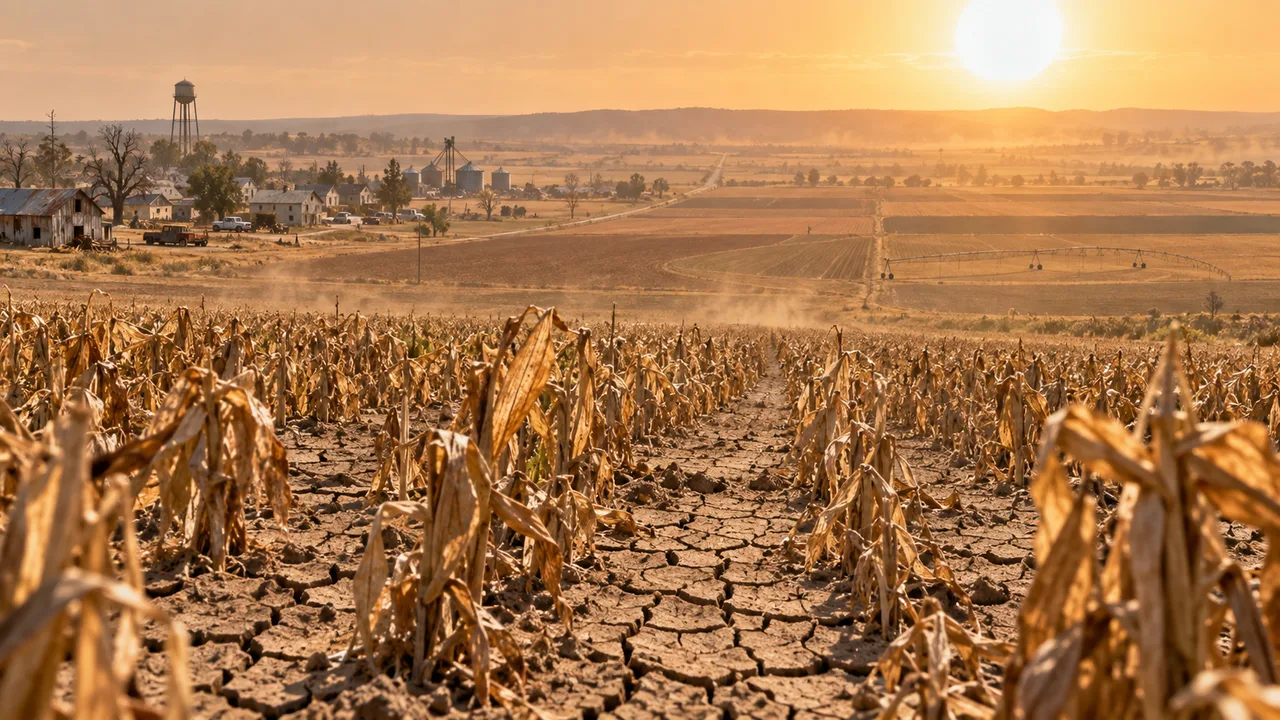
Compound drought-heat wave hazards are concentrated in US regions with multiple social vulnerabilities and agricultural dependence.

Compound drought and heat wave (CDHW) events are becoming more frequent and intense across the contiguous United States, increasing risks to human health, ecosystems, agriculture, and energy production systems. However, their distribution across socioeconomically vulnerable communities remains largely unexplored at the national scale. In this study, we develop a CDHW metric by integrating weekly US Drought Monitor classifications with daily temperature extremes from 2000-2021, allowing consisten

Continue reading
Environment

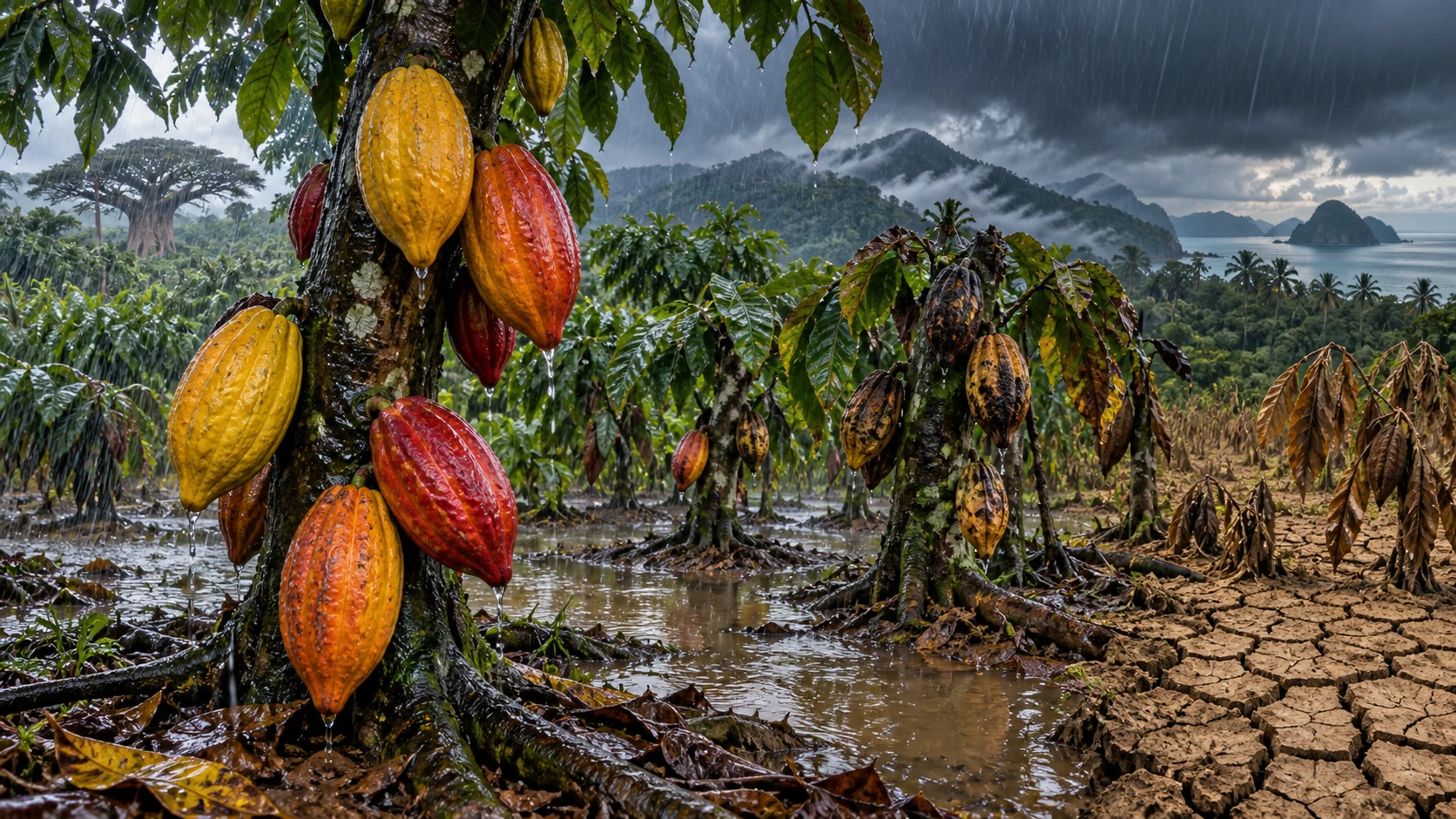
Rainfall extremes drive cocoa yield losses across the tropics.

There is a growing need for human-centered weather and climate forecasts that provide actionable information to farmers and other stakeholders. Cocoa, which sustains the livelihoods of nearly six million smallholder farmers, illustrates this need: Recent production shortfalls have threatened incomes, yet their underlying causes remain unclear, with explanations invoking both climatic and nonclimatic factors. Here we show that heavy rainfall, rather than temperature or mean water availability, is

Continue reading
Environment

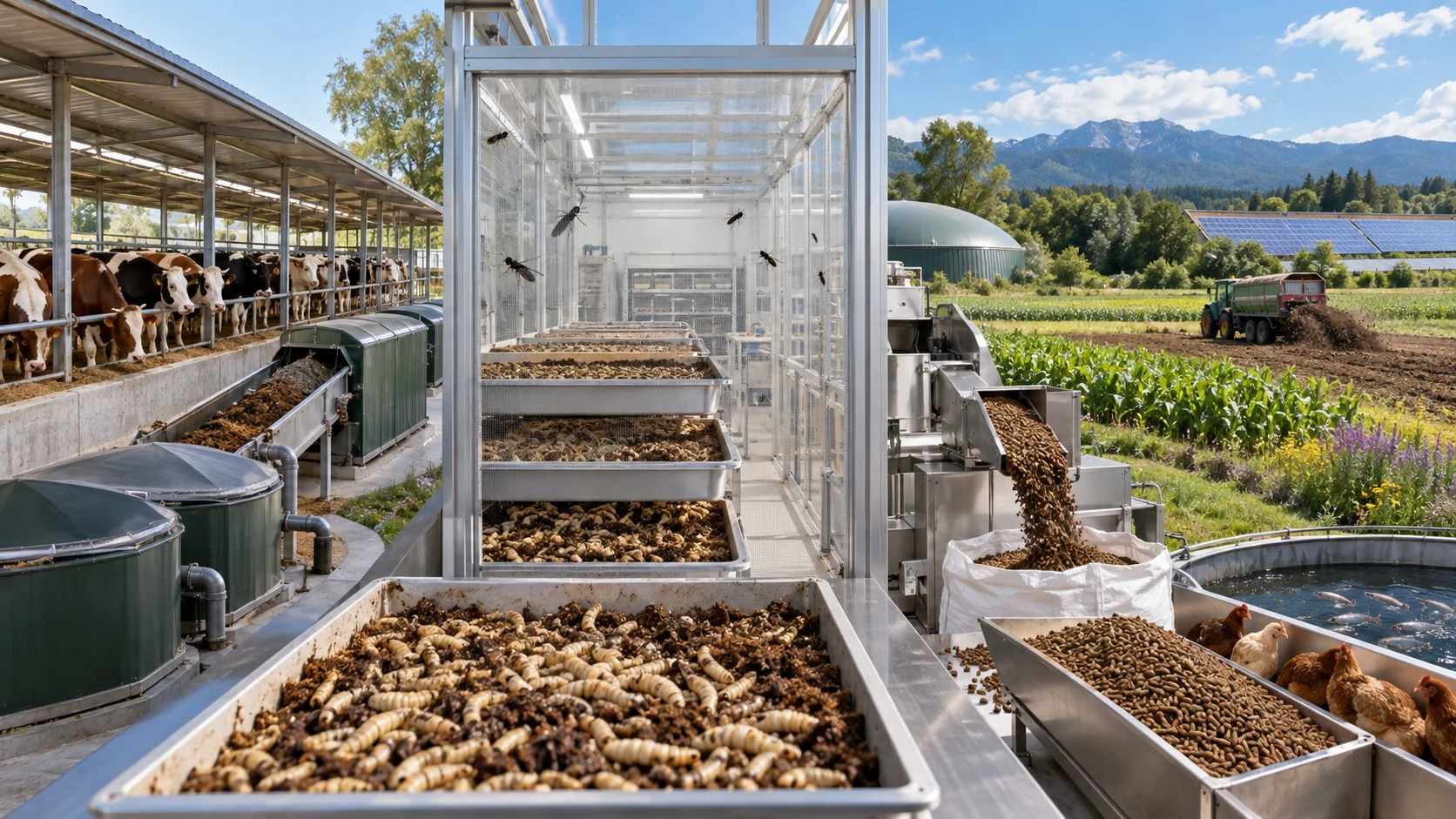
Manure to insect farming for feed mitigates nitrogen and greenhouse gas emissions.

Livestock manure is nutrient-rich and represents a promising feedstock for insect farming, with insect protein offering a high-quality alternative to conventional crop-based livestock feed. This pathway has substantial potential to mitigate nitrogen (N) and greenhouse gas (GHG) emissions from livestock systems. Here, we integrate global livestock models with trade, land-use, and cost-benefit analysis to quantify the environmental and economic implications of manure-to-insect conversion while ens

Continue reading
Environment

Air pollution after the shutdown of US embassy monitoring.

For more than a decade, US embassies and consulates provided independent, publicly accessible air-quality information in cities worldwide. In 2025, this program was abruptly suspended, generating sharp drops in the availability of trusted pollution information. We evaluate the consequences of this change using real-time satellite-derived aerosol optical depth (AOD) and a matched difference-in-differences design with same-country control cities. Across 46 cities, we find no systematic trends prio

Continue reading