Society & Culture

Christopher A. Sims (1942-2026): Paradigm-shifting macroeconomist and econometrician.

| Source: Proceedings of the National Academy of Sciences of the United States of America

Christopher A. Sims, who died on March 14, 2026, left behind an indelible mark on macroeconomics and econometrics. His Nobel Prize winning research reshaped the paradigm for empirical macroeconomics, creating a rigorous and flexible framework for inferring the effects of macroeconomic policies. He also made important contributions to time series forecasting, Bayesian econometrics, factor modeling, approximation theory, and models of monetary and fiscal policy. Few academics have had as direct an

Christopher A. Sims, who died on March 14, 2026, left behind an indelible mark on macroeconomics and econometrics. His Nobel Prize winning research reshaped the paradigm for empirical macroeconomics, creating a rigorous and flexible framework for inferring the effects of macroeconomic policies. He also made important contributions to time series forecasting, Bayesian econometrics, factor modeling, approximation theory, and models of monetary and fiscal policy. Few academics have had as direct an impact on the work of central banks throughout the world. A frank and generous mentor with numerous students, Chris's impact extends well beyond his published papers.

Read the original source →

Related Stories

Society & Culture

Global greenhouse gas cobenefits of US irrigated agriculture.

Land use and land conversion for agriculture contribute nearly a quarter of global greenhouse gas (GHG) emissions, making the sector a key priority for emissions reductions. Crop yields are one factor that modulate agricultural land demand, with, all else equal, global land use change increasing with yield declines and decreasing with yield gains. Therefore, agricultural practices drive both direct, on-farm emissions, and indirect land use change emissions through yield effects. Here, we couple

Continue reading
Society & Culture

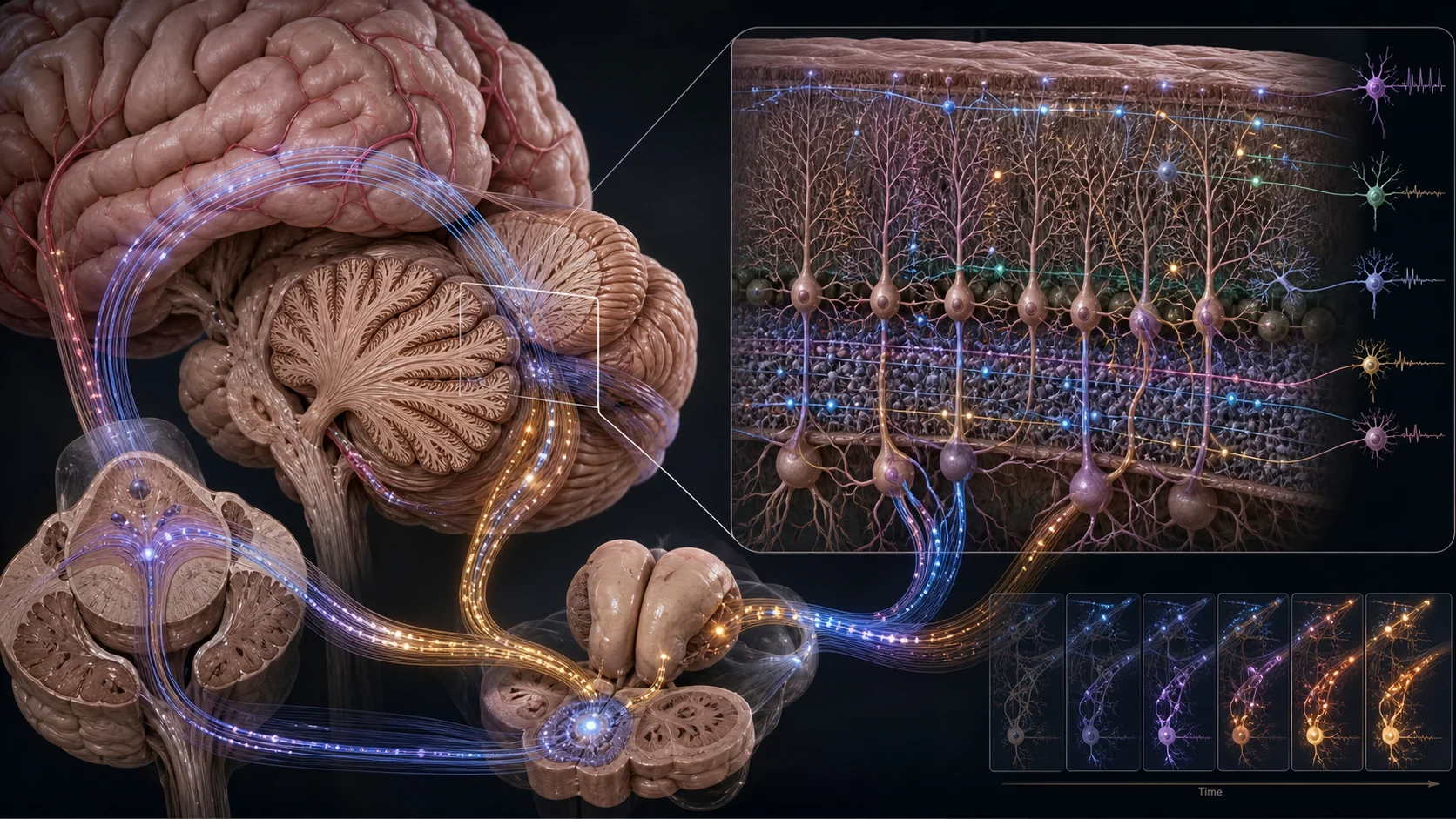
Cerebellar microcircuits enable robust evidence-based decisions through cortico-cerebellar coupling.

The cerebellum is increasingly implicated in perceptual decision-making, yet it remains unclear how the cerebellar cortex can support sparse evidence accumulation over behavioral time scales without assuming cortical-style dense local excitatory recurrence. We present a biologically constrained modeling framework showing that cerebellar microcircuits can implement graded accumulation and competition in the absence of such recurrence. In our model, type-II Purkinje-neuron excitability generates f

Continue reading
Society & Culture

Loss of neuronal population organization links pathology to behavior in a model of Alzheimer's disease.

Alzheimer's disease and related dementias are typically described at two levels: the accumulation of molecular pathology and the emergence of cognitive impairment. Understanding the relationship between pathology, often studied in animal models, and human cognition will require measurements spanning intermediate scales, including single neurons, neuronal populations, and distributed networks. Here we combine longitudinal measurements of behavior and neuronal population activity with fluid and hi

Continue reading
Society & Culture

Deconstruction of lysergic acid diethylamide.

Of the classic psychedelics, lysergic acid diethylamide (LSD) is perhaps the best-known, but its complex chemical architecture has limited synthetic investigations aimed at generating analogues with improved safety and efficacy profiles. Here, we systematically deconstruct the tetracyclic ergoline core of LSD to create 9 simplified ergoline analogues (i.e., ergologs) and evaluate them in pharmacological assays relevant to 5-HT2A, 5-HT2B, and 5-HT2C receptor function. Our work revealed the key mo

Continue reading
Society & Culture

A role for self-regulatory control in the absence of ingroup preference.

One of psychology's most ubiquitous findings is that of robust ingroup preference, an explicitly stated human preference for the groups to which we belong. The advent of implicit measures of social cognition introduced a paradoxical result: Compared to members of higher-status groups, members of lower-status groups often show no implicit ingroup preference, sometimes even showing outgroup preference, a result rarely observed on explicit measures. Prevailing theories have provided macro-level acc

Continue reading