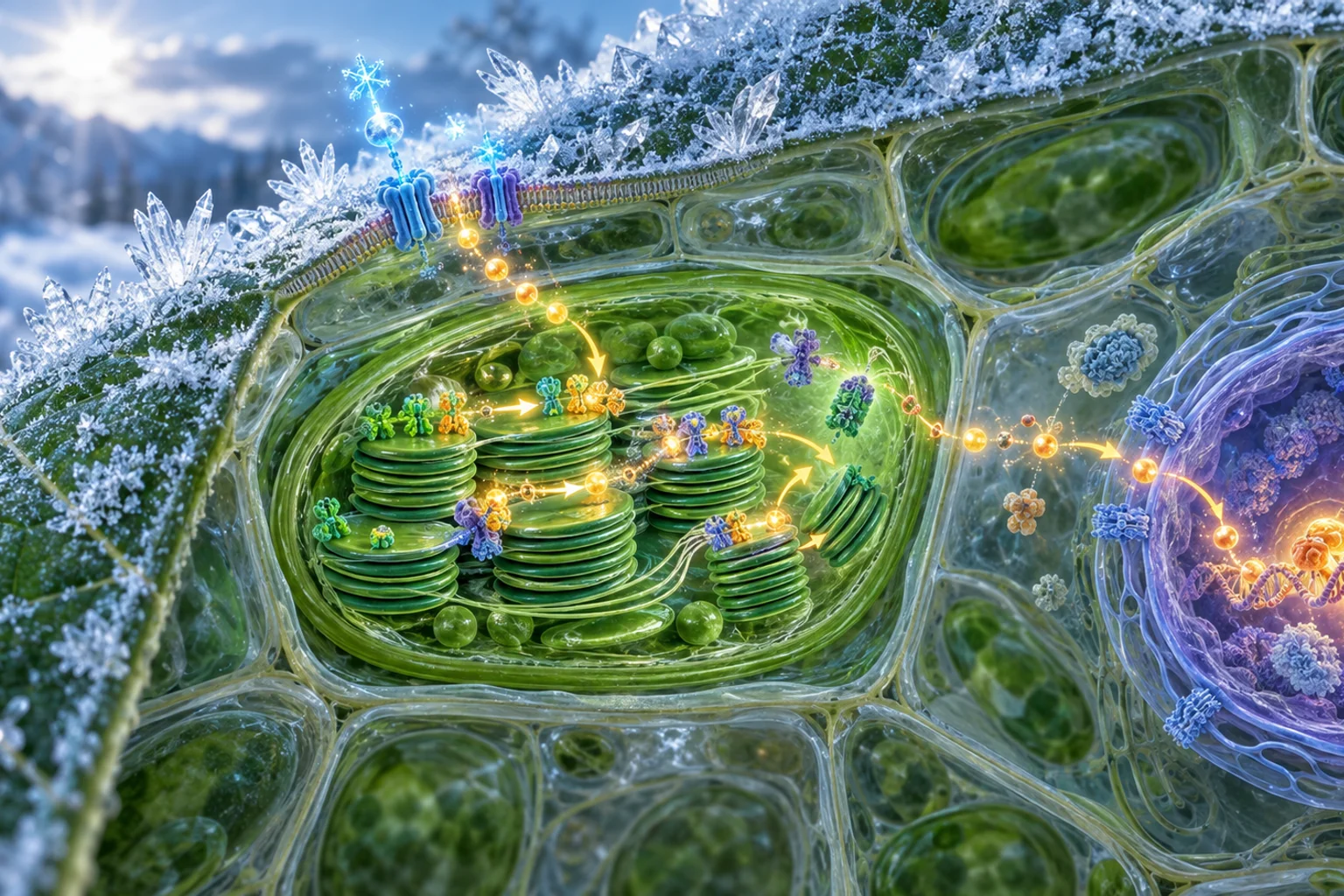
Chloroplasts balance energy production and stress resilience via a cold-induced signaling pathway.
Chloroplasts are plant-specific organelles for photosynthesis and play crucial roles in stress response. However, how chloroplasts respond to cold stress remains unclear. Here, we identify an rapidly accelerated fifibrosarcoma (RAF)-like bi-kinase module, RAF3/6, as key mediators in chloroplast cold-stress responses. RAF3/6 separately localize to the cytoplasm and plasma membrane under growth conditions. Upon cold stress, RAF3/6 translocate into chloroplasts mediated by the chaperone HSP70-1, wh
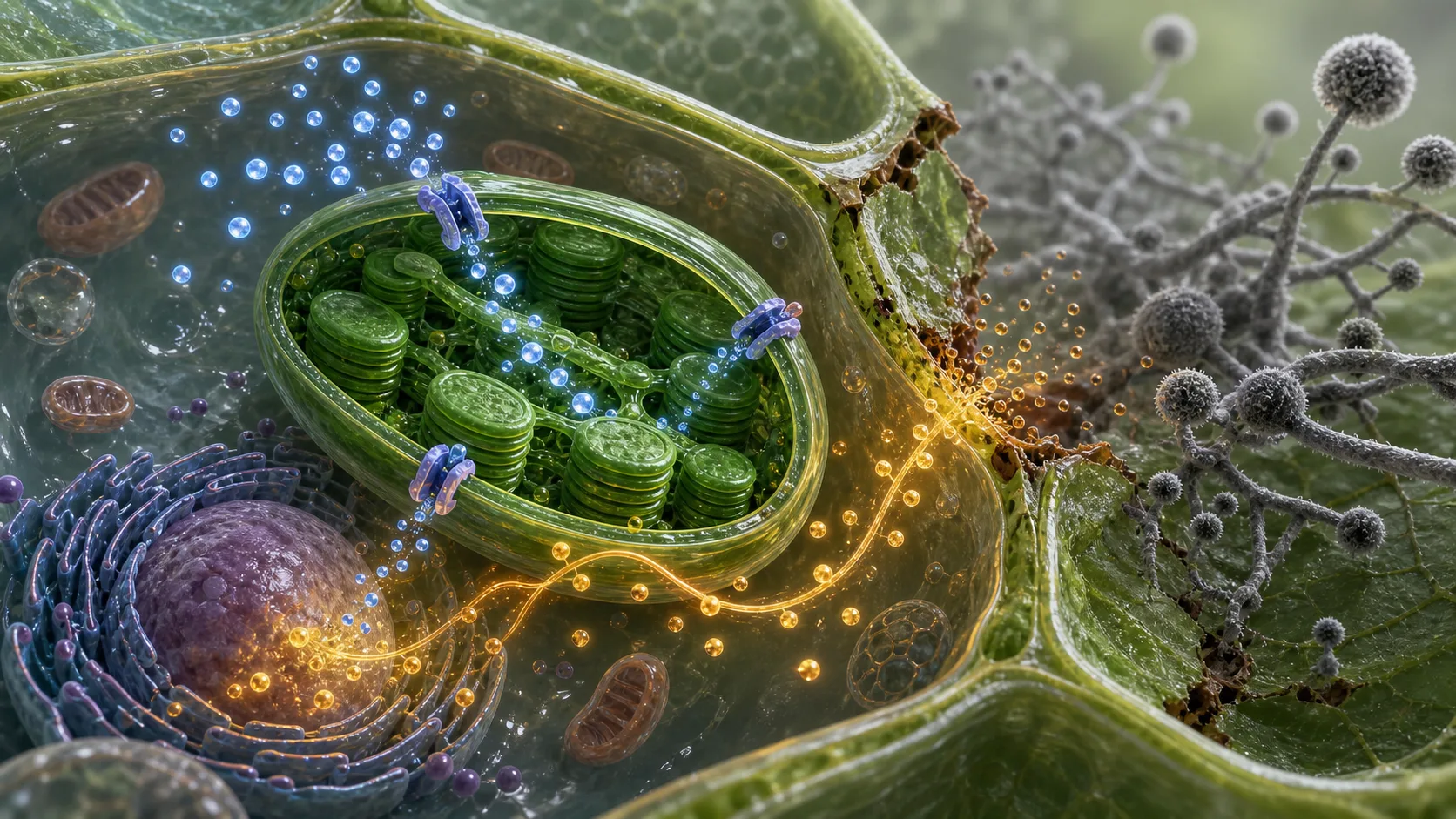
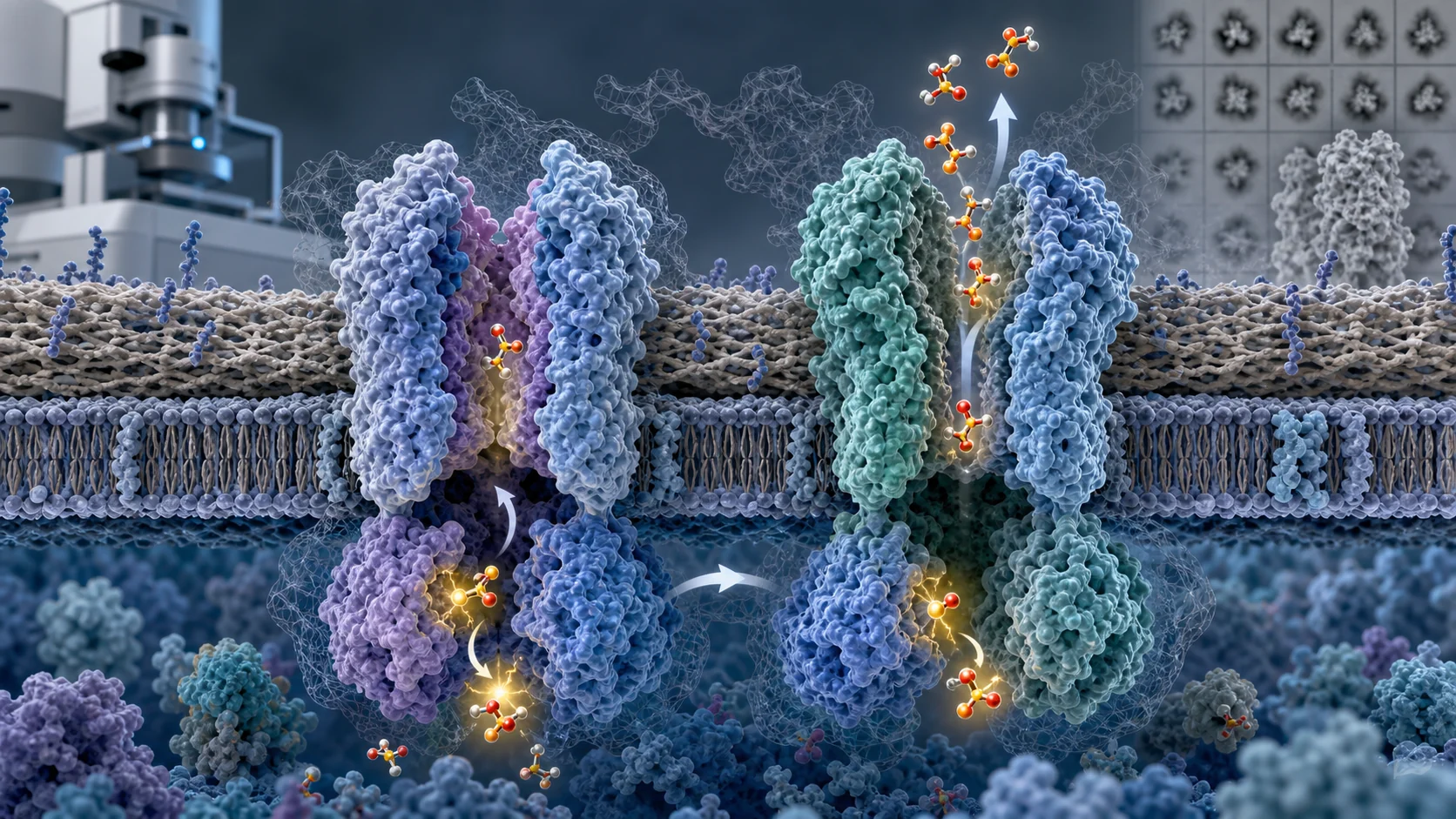
Chloroplasts are plant-specific organelles for photosynthesis and play crucial roles in stress response. However, how chloroplasts respond to cold stress remains unclear. Here, we identify an rapidly accelerated fifibrosarcoma (RAF)-like bi-kinase module, RAF3/6, as key mediators in chloroplast cold-stress responses. RAF3/6 separately localize to the cytoplasm and plasma membrane under growth conditions. Upon cold stress, RAF3/6 translocate into chloroplasts mediated by the chaperone HSP70-1, where they phosphorylate the PSII components D1 and LHCB1, promoting their redistribution across thylakoid membranes and subsequent degradation, thereby suppressing photosynthetic activity. Concurrently, RAF3/6 phosphorylate the chloroplast-to-nucleus shuttling protein WHY1, promoting its nuclear accumulation and cold-defense gene activation. Notably, the natural variation of RAF6 contains a latitude-correlated SNP that affects its chloroplast import, suggesting an evolutionary cold adaptation. Together, these findings reveal a cold-induced outside-in signaling pathway that links cytoplasmic cold perception to chloroplast remodeling and nuclear defense, establishing a conceptual framework that balances energy production with stress resilience.