Cannabinoid tolerance relies on CB 1 receptor ubiquitination by NEDD4L.
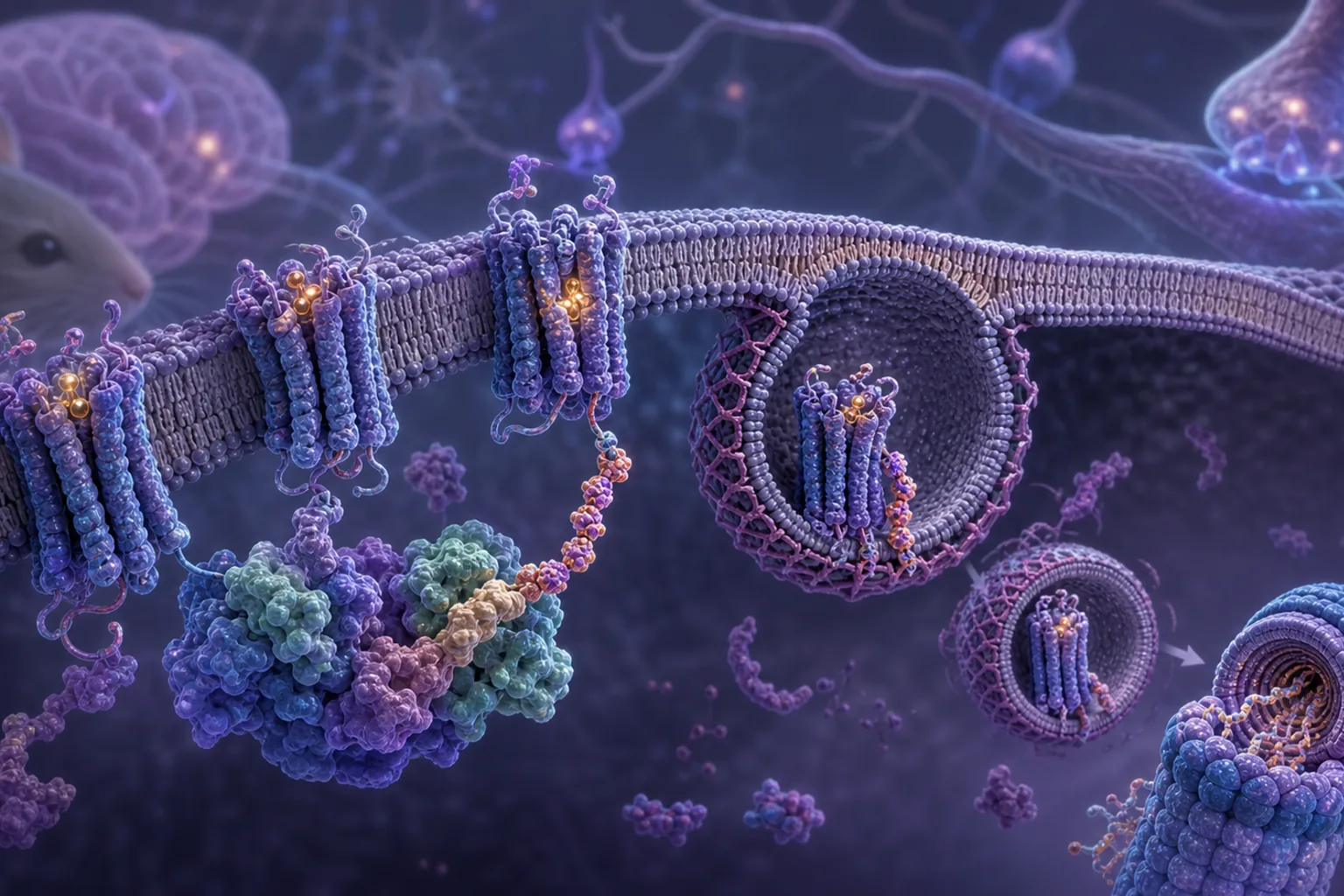
Cannabinoids, the active components of cannabis, exert numerous acute effects in the brain by engaging cannabinoid CB 1 receptors (CB 1 Rs). However, tolerance emerges rapidly after repeated drug exposure, undermining the efficacy of cannabinoid-based therapies and contributing to cannabis-associated adverse effects. Although the processes of CB 1 R short-term desensitization (i.e., receptor uncoupling and internalization) are well characterized, the mechanisms underlying CB 1 R long-term tolera
Cannabinoids, the active components of cannabis, exert numerous acute effects in the brain by engaging cannabinoid CB 1 receptors (CB 1 Rs). However, tolerance emerges rapidly after repeated drug exposure, undermining the efficacy of cannabinoid-based therapies and contributing to cannabis-associated adverse effects. Although the processes of CB 1 R short-term desensitization (i.e., receptor uncoupling and internalization) are well characterized, the mechanisms underlying CB 1 R long-term tolerance (i.e., downregulation of receptor protein levels) remain elusive. Here, we identify a ubiquitin-dependent pathway that couples CB 1 R activation to its proteasomal degradation. We show that cannabinoids engage a G q/11 -PLC-PKC signaling cascade that phosphorylates and activates the E3 ubiquitin ligase neural precursor cell-expressed developmentally downregulated 4-like (NEDD4L), promoting its recruitment to CB 1 R and the ubiquitination of four specific lysine residues. This modification targets the receptor for proteasomal clearance, reducing neuronal CB 1 R abundance in vitro and in the mouse brain. Using molecular, pharmacological, and circuit-specific rescue approaches, we demonstrate that preventing CB 1 R ubiquitination stabilizes receptor levels and abolishes behavioral cannabinoid tolerance in mice without impairing acute drug responses. These findings reveal a molecular mechanism that controls CB 1 R stability and identify NEDD4L-mediated ubiquitination as a central driver of cannabinoid tolerance.