Atmospheric methane lifetime during the Last Glacial Maximum was reduced owing to dust-mediated chlorine chemistry
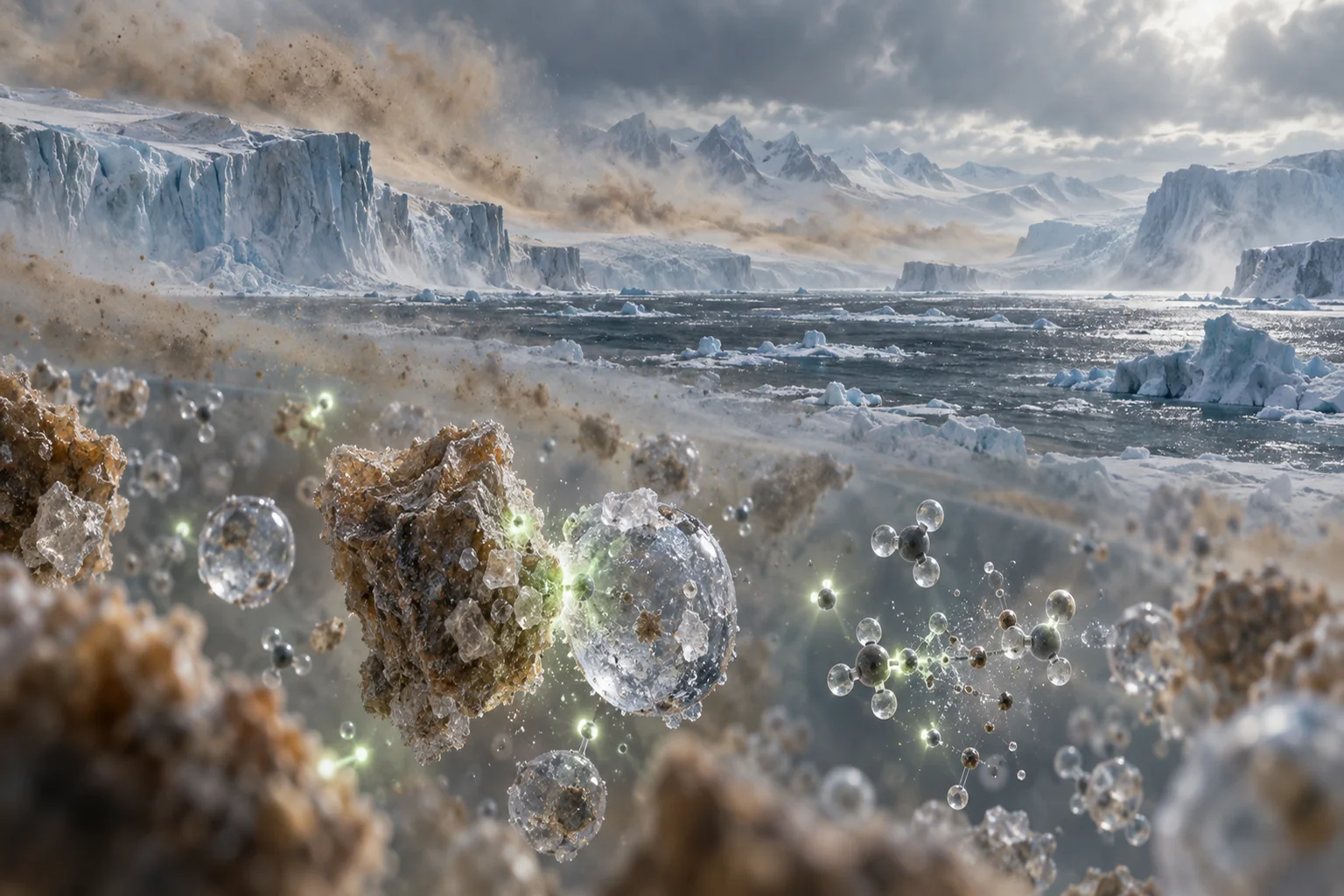
Atmospheric methane (CH 4 ) plays a central role in Earth’s climate, yet the drivers of its decline during the high-dust conditions of glacial periods, such as the Last Glacial Maximum (LGM), remain uncertain. Previous explanations imply source-driven changes, assuming an atmospheric lifetime comparable to that of present day. Recent work shows that interactions between mineral dust and sea salt aerosols produce CH 4 -removing chlorine radicals. In this work, we show that during the LGM, CH 4 li
Atmospheric methane (CH 4 ) plays a central role in Earth’s climate, yet the drivers of its decline during the high-dust conditions of glacial periods, such as the Last Glacial Maximum (LGM), remain uncertain. Previous explanations imply source-driven changes, assuming an atmospheric lifetime comparable to that of present day. Recent work shows that interactions between mineral dust and sea salt aerosols produce CH 4 -removing chlorine radicals. In this work, we show that during the LGM, CH 4 lifetime shortened to 7.8 years, 20% lower than that of present day. Chlorine contributed ~15% of global CH 4 loss, fourfold that of present day. Our results reproduce ice core CH 4 isotopic evidence, demonstrating that stronger-than-assumed atmospheric sinks can explain CH 4 variability without invoking substantial source changes, highlighting the overlooked role of chlorine chemistry in the glacial CH 4 budget.