Environment

An organic semiconductor-based photocatalyst sheet for overall solar-driven water splitting

| Source: Nature Energy

Abstract Splitting water into hydrogen and oxygen using sunlight offers a route to renewable fuel, but translating this reaction into systems suitable for industrial implementation remains difficult. Photocatalyst sheets can overcome key limitations of common direct water-splitting approaches (photoelectrochemical devices and photocatalyst dispersions), but existing photocatalyst sheets rely on inorganic semiconductor nanoparticles and processing techniques that can be difficult to scale. Here w

Abstract Splitting water into hydrogen and oxygen using sunlight offers a route to renewable fuel, but translating this reaction into systems suitable for industrial implementation remains difficult. Photocatalyst sheets can overcome key limitations of common direct water-splitting approaches (photoelectrochemical devices and photocatalyst dispersions), but existing photocatalyst sheets rely on inorganic semiconductor nanoparticles and processing techniques that can be difficult to scale. Here we show that solution-processed organic semiconductors can form water-splitting photocatalyst sheets by simply tailoring the charge extraction layer beneath the light-absorbing film. A single organic semiconductor active layer (deposited as a bulk heterojunction blend) drives either hydrogen or oxygen evolution depending on its underlying molecular contact, yielding photocathode and photoanode half-cells with well-matched photocurrents. Combining both reactions on one substrate using a microdomain-patterned molecular underlayer affords a photocatalyst sheet that achieves unassisted water splitting under simulated sunlight for over 2 h and generates hydrogen at a stabilized rate of 1.3 µmol h −1 cm −2 , which corresponds to a solar-to-hydrogen conversion efficiency of 0.1%.


Read the original source →

Related Stories

Environment

Mussels possess distinct vanadium and iron storage systems for fabricating metal-reinforced adhesive fibers.

Mussels fashion a protein-based fibrous adhesive holdfast known as a byssus to tether themselves in marine habitats against crashing waves. The capacity of mussels to anchor securely is dependent on load-bearing protein-metal cross-links mediated by 3,4-dihydroxyphenylalanine (DOPA) residues coordinated to metal ions, which significantly enhance byssus mechanical properties (e.g., adhesive strength, abrasion resistance, toughness, self-healing capacity). However, the natural metal incorporation

Continue reading
Environment

Host and anatomical filters prevent microbiome convergence in avian scavengers.

How host-associated microbiomes assemble under intense environmental microbial exposure remains a central question in microbial ecology. Vultures represent a unique natural system because these species differ markedly in feeding ecology and carcass use. We characterized bacterial communities across four anatomical niches (facial, buccal, tracheal, and cloacal) in 155 individuals spanning all four European obligate vulture species (subfamily Gypaetinae: Gypaetus barbatus, Neophron percnopterus, a

Continue reading
Environment

Physical distancing to prevent influenza-like illness on a college campus: The eX-FLU trial.

Public health recommendations often advise people to isolate when infected with influenza-like illness (ILI) with the goal of promoting physical distancing and limiting face-to-face interactions when risk of transmission is highest. Because isolation may have negative consequences, it is important to carefully assess whether encouragement to physically distance actually prevents cases of ILI. College campuses can be especially vulnerable to outbreaks of ILI and are ideal environments for assessi

Continue reading
Environment

Dynamical geometric modes in non-Euclidean plates.

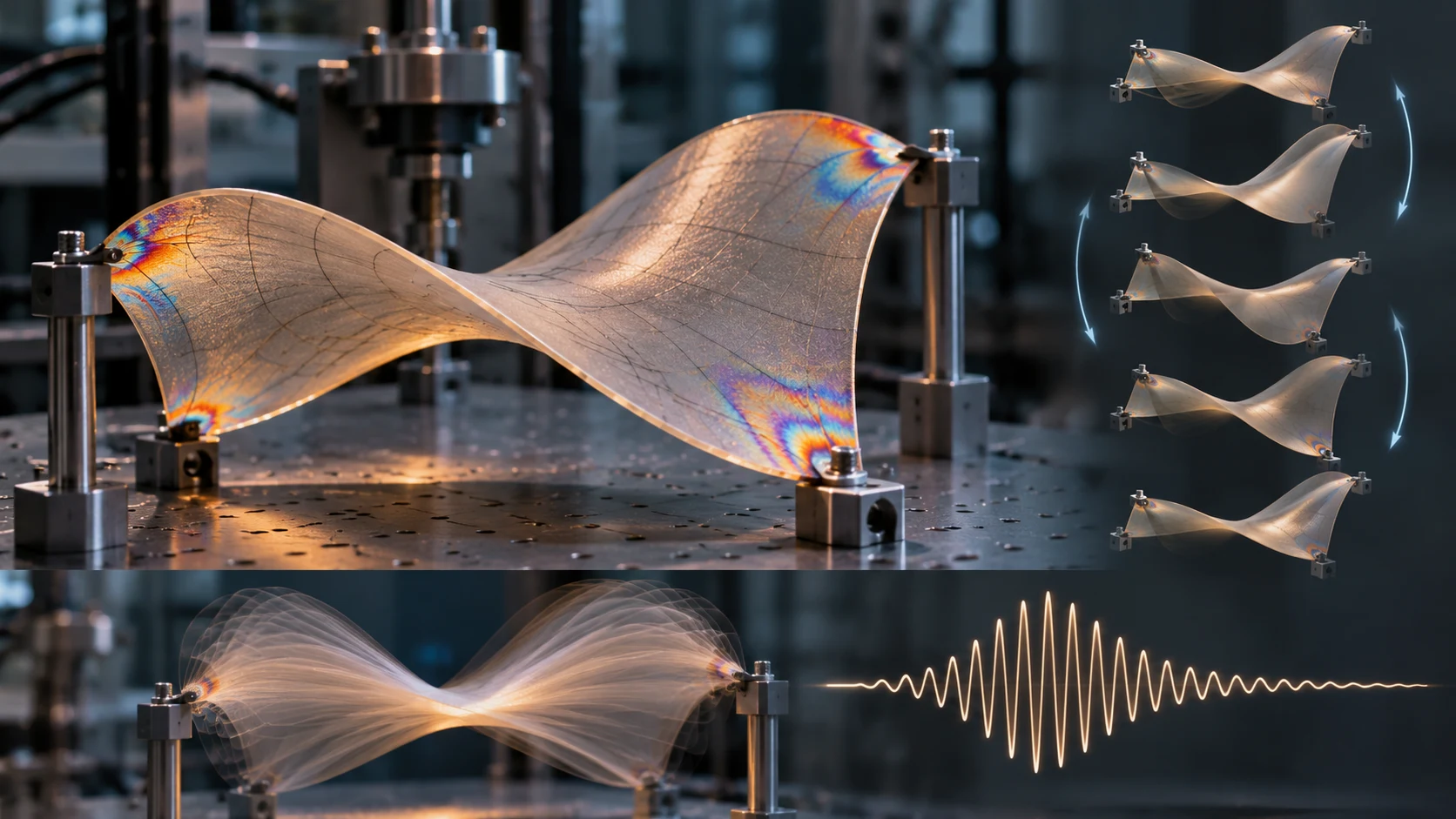
Continuum elastic shells with residual stresses can exhibit complex motions that require vanishing elastic energy to excite, also called geometric zero modes, enabling them to be driven by weak and generic energy inputs. Despite recent interest in these modes, we understand very little about their dynamical properties. Plates with a curved, rather than flat, in-plane geometry, also called non-Euclidean plates, are one example in which residual stresses and geometry combine to produce a continuum

Continue reading
Environment

Hadean mantle depletion and 3.95-Gyr subduction implied by North China rocks.

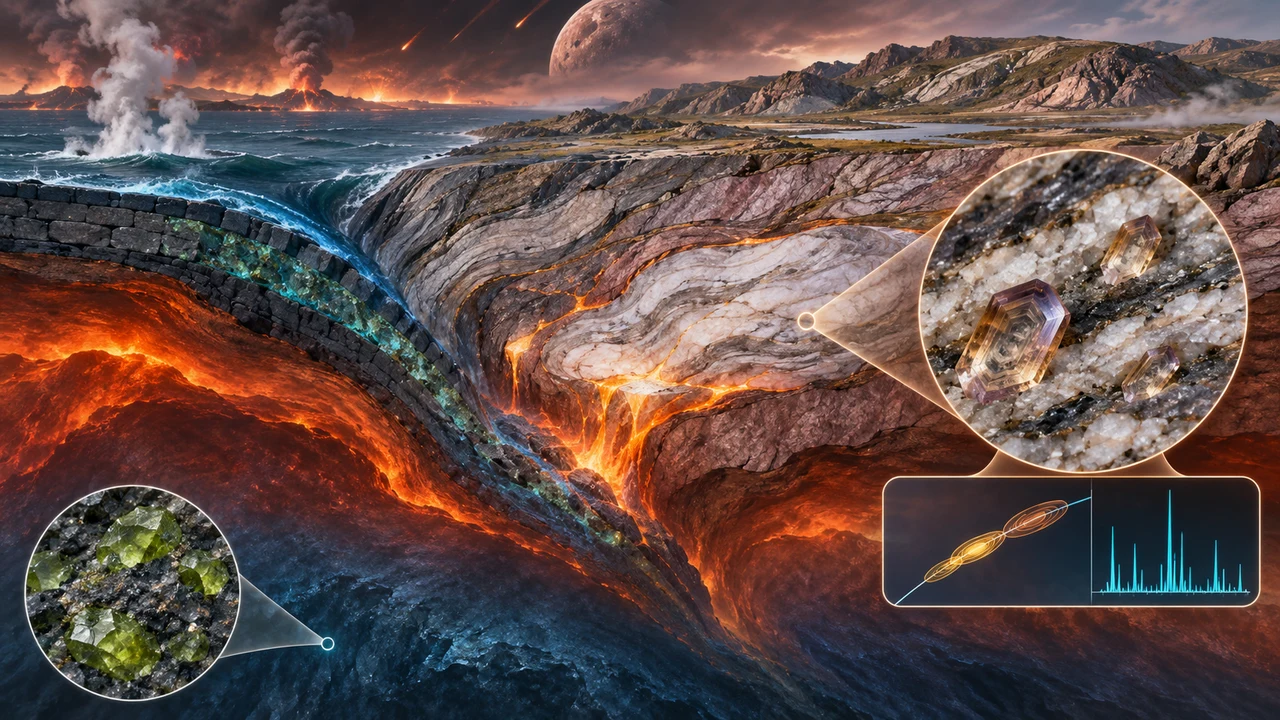
The scarcity of terrestrial rocks older than 3.9 billion years (Gyr) has hindered our understanding of Earth's early evolution, fuelling persistent debates on how and when the first continental crust formed and plate tectonics started. At present, the only unequivocally documented >3.9-Gyr-old rocks are from the Acasta Gneiss Complex, Canada 1-3 . Here we report a 3.95-Gyr-old trondhjemitic gneiss from eastern Hebei, North China Craton, in which primary magmatic zircon records elevated

Continue reading