Xylose phosphatase activity of dystroglycan self-regulates its receptor function
Dystroglycan (DG) is an extracellular matrix receptor crucial for tissue development and pathogen entry. DG harbors a long, complex glycan called matriglycan. Loss of matriglycan or reduction in its length disrupts DG function, causing dystroglycanopathies. However, the mechanism regulating matriglycan length is unknown. In this study, we found that a xylose kinase facilitated the initiation of matriglycan synthesis by adding a phosphate to the xylose of the matriglycan primer. Matriglycan elong
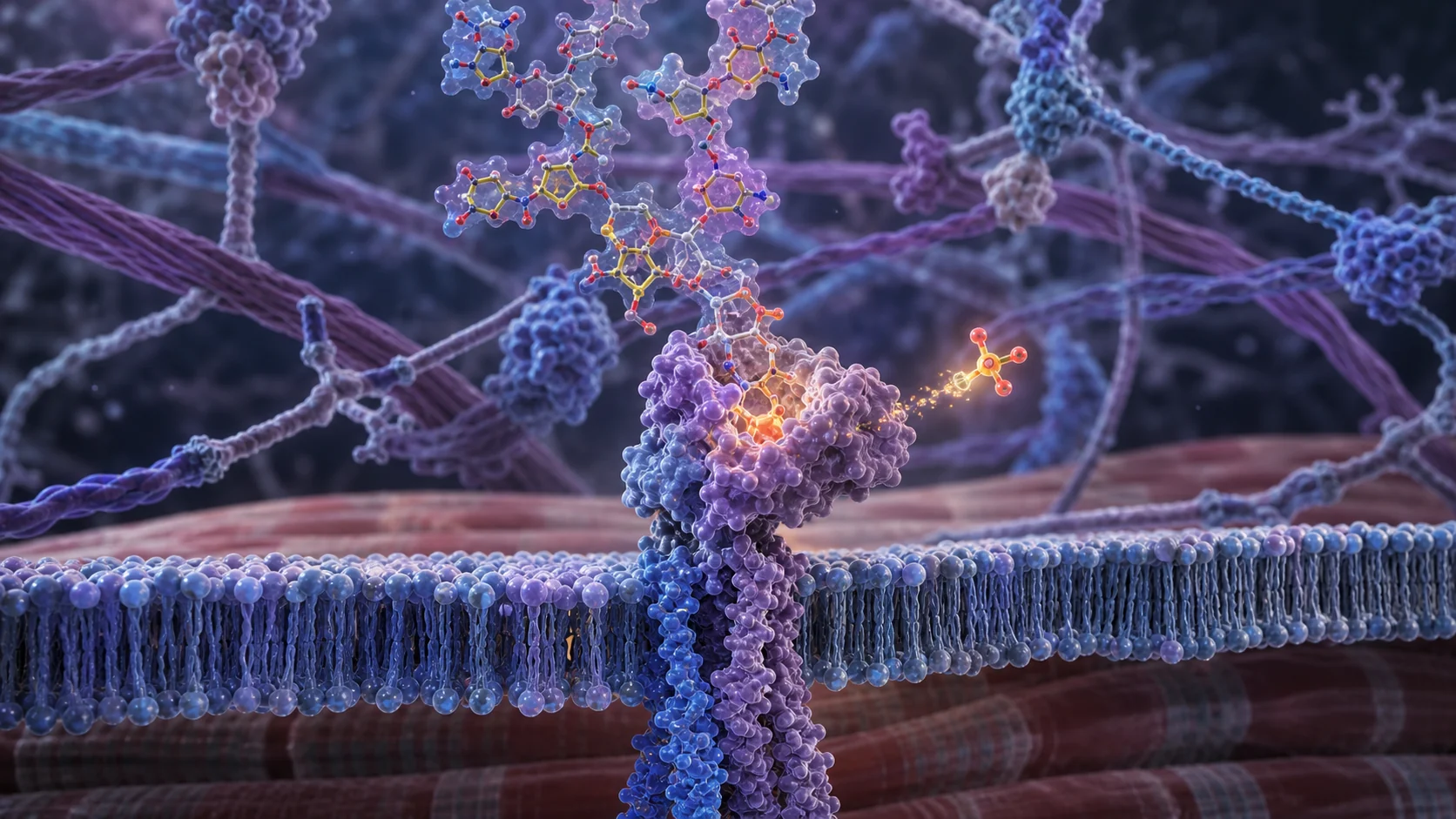
Dystroglycan (DG) is an extracellular matrix receptor crucial for tissue development and pathogen entry. DG harbors a long, complex glycan called matriglycan. Loss of matriglycan or reduction in its length disrupts DG function, causing dystroglycanopathies. However, the mechanism regulating matriglycan length is unknown. In this study, we found that a xylose kinase facilitated the initiation of matriglycan synthesis by adding a phosphate to the xylose of the matriglycan primer. Matriglycan elongation occurred when the phosphate was removed by the N-terminal domain of DG (DGN). DGN has the conserved DXDXT/V active site motif found in haloacid dehalogenase domains of phosphohydrolases. Mutations in this site abolished DGN phosphatase activity, reduced matriglycan length, and caused muscle disease in mice. Thus, DG has an unexpected xylose phosphatase function involved in regulating matriglycan extension.