Tox regulates hair cell stereocilia development and Cdh23 expression in mice and zebrafish.
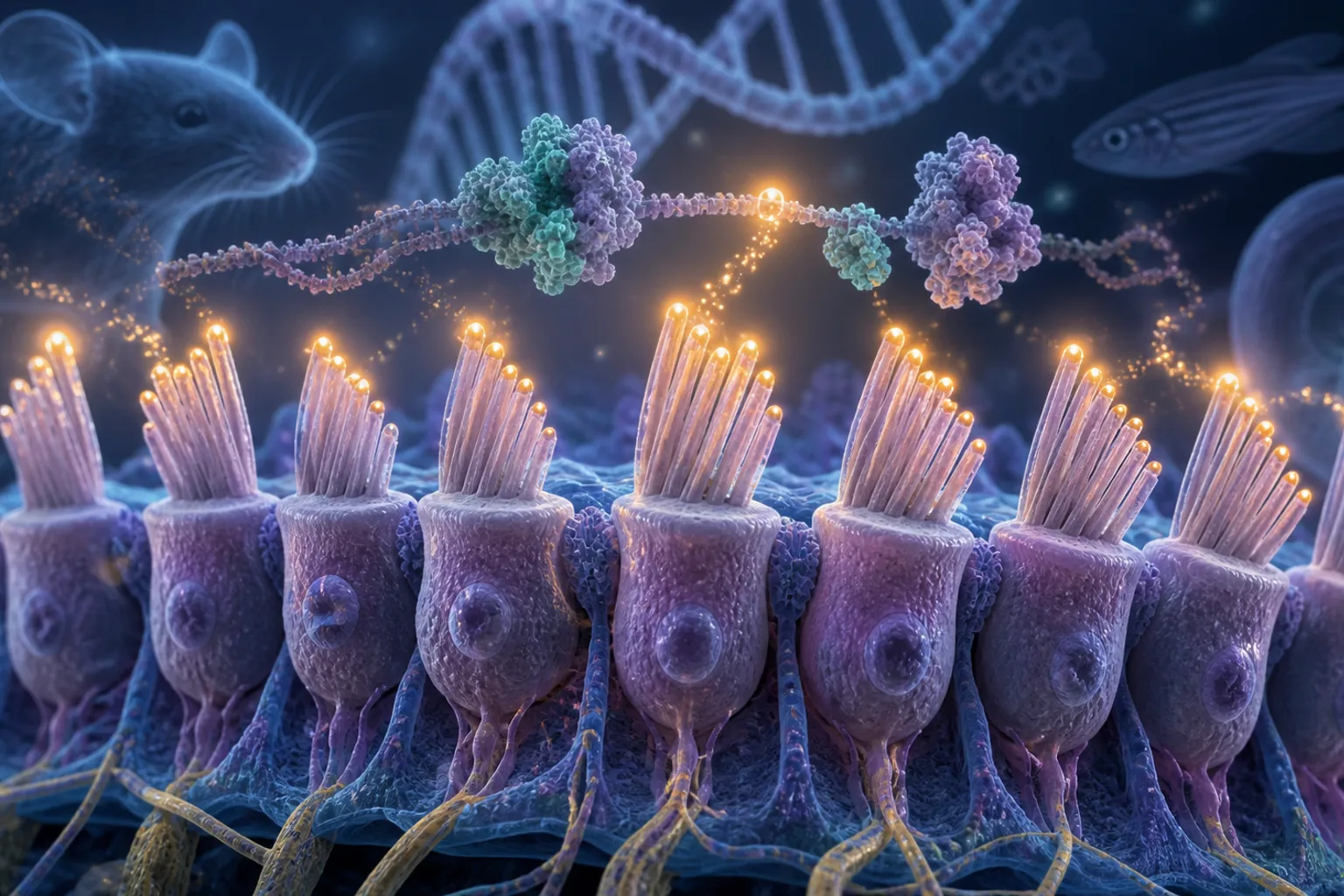
Auditory hair cells (HCs) are critical sensory units for sound detection, and their development requires precise transcriptional regulation. To date, numerous transcription factors crucial for HC development have been characterized; however, the governing regulatory network remains unclear and warrants further investigation. In this study, we identified the transcription factor Tox , which plays a significant role in HC development. Tox is highly expressed in HCs in both zebrafish and mice, and
Auditory hair cells (HCs) are critical sensory units for sound detection, and their development requires precise transcriptional regulation. To date, numerous transcription factors crucial for HC development have been characterized; however, the governing regulatory network remains unclear and warrants further investigation. In this study, we identified the transcription factor Tox , which plays a significant role in HC development. Tox is highly expressed in HCs in both zebrafish and mice, and its expression increases along developmental pseudotime, rising after Atoh1 and preceding Myo7a , suggesting a potential role in development. Utilizing Tox mutant models in zebrafish and mice, we found that Tox is essential for HC functional maintenance and stereocilia stability. Through multiomics integrated analysis, we confirmed that Tox directly binds to conserved motifs in the Cdh23 promoter, drives its transcription, and ensures the precise localization of Cdh23 at the tips of stereocilia, thereby playing a key role in maintaining auditory function. In conclusion, our findings indicate that Tox influences HC development by regulating the transcription and translation of Cdh23 , enriches the regulatory network of HC development, and may serve as a target for clinical gene therapy for deafness.