Scope of Ni(II)-Catalyzed Nonalternating Ethylene/Carbon Monoxide Copolymerization.
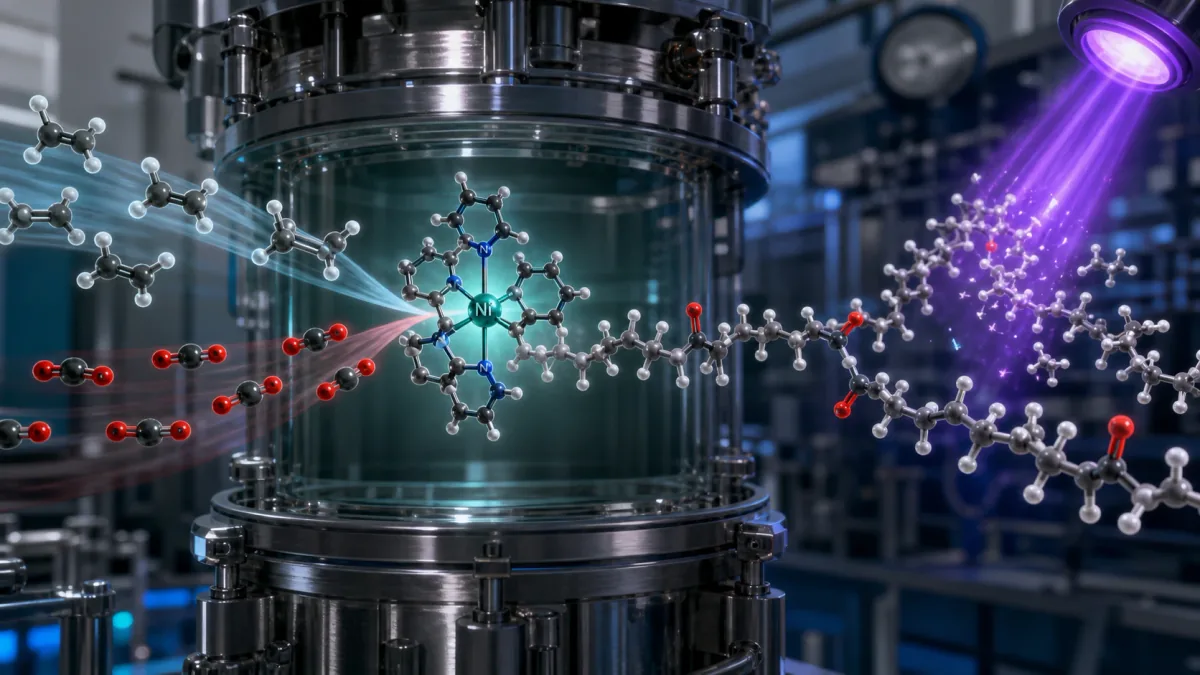
The recent achievement of a nonalternating ethylene/carbon monoxide (CO) copolymerization was a long-sought breakthrough. Their in-chain keto functional groups endow the resulting polyethylenes (keto-PEs) with photodegradability. To date, only two types of catalysts, based on long-known structural motifs, are capable of this challenging copolymerization to keto-PE materials, raising the question whether the reaction is restricted to this narrow scope. Here, we report a diverse range of neutral N
The recent achievement of a nonalternating ethylene/carbon monoxide (CO) copolymerization was a long-sought breakthrough. Their in-chain keto functional groups endow the resulting polyethylenes (keto-PEs) with photodegradability. To date, only two types of catalysts, based on long-known structural motifs, are capable of this challenging copolymerization to keto-PE materials, raising the question whether the reaction is restricted to this narrow scope. Here, we report a diverse range of neutral Ni(II) complexes provides access to keto-PEs, including a phosphine imidate Ni(II) catalyst that is competitive with state-of-the-art catalysts and a N -heterocyclic-carbene (NHC) phenolate Ni(II) catalyst with exceptional preference for ethylene vs CO incorporation. Density functional theory (DFT) calculations rationalize the observed selectivity for nonalternating and alternating chain growth from the individual catalysts' activation barrier differences ΔΔ G ‡ and identify the strong trans -effect of the [NHC,O]-ligand and its high steric hindrance as origins of the desirable exceptionally low preference for CO incorporation.