Physical/Tech

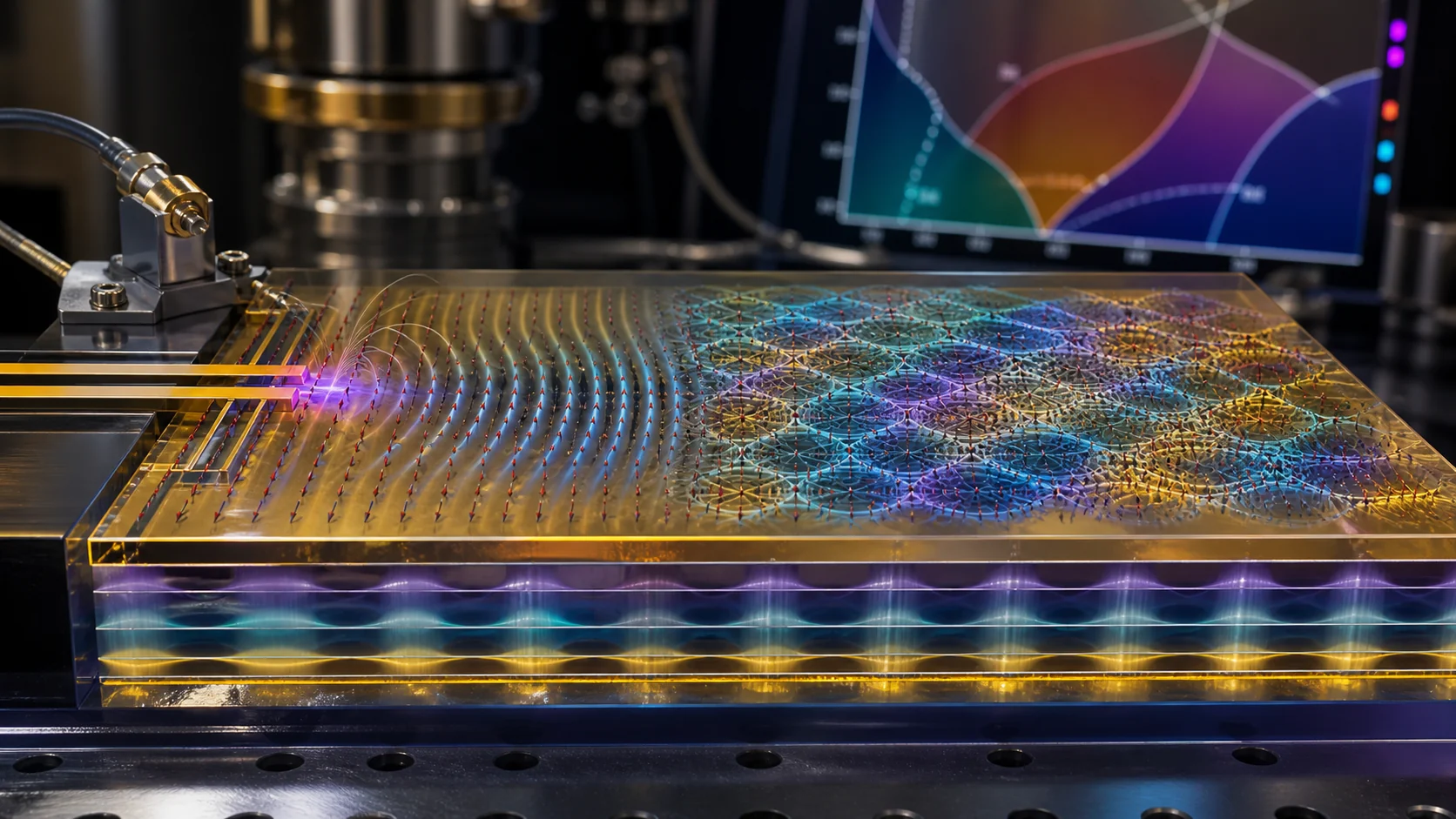
Rarely categorical, highly separable representations along the cortical hierarchy.

| Source: Nature

A long-standing debate in neuroscience concerns whether individual neurons are organized into functionally distinct populations that encode information differently (categorical representations 1-3 ) and the implications for neural computation. Here we systematically analysed how cortical neurons encode cognitive, sensory and movement variables across 43 cortical regions during a complex task (14,000+ units from the International Brain Laboratory public Brainwide Map dataset 4 ) and studied how t

A long-standing debate in neuroscience concerns whether individual neurons are organized into functionally distinct populations that encode information differently (categorical representations 1-3 ) and the implications for neural computation. Here we systematically analysed how cortical neurons encode cognitive, sensory and movement variables across 43 cortical regions during a complex task (14,000+ units from the International Brain Laboratory public Brainwide Map dataset 4 ) and studied how these properties change across the sensory-cognitive cortical hierarchy 5 . We found that the structure of the neural code was scale dependent. At the whole-cortex scale, neural selectivity was categorical and organized across regions in a way that reflected their anatomical connectivity. However, within individual regions, categorical representations were rare and limited to primary sensory areas, and neuronal responses were instead very diverse. With theoretical arguments and empirical evidence, we demonstrate that the diversity of neural responses enables high-dimensional representations and therefore high separability, allowing linear readouts to separate experimental conditions in many arbitrary ways. Indeed, when accounting for information that is actually encoded in each area, all cortical regions exhibit maximal separability. Our results indicate that cortical circuits prioritize diversity over categorical structure, supporting a computational regime geared towards high-dimensional, highly separable neural representations.

Read the original source →

Related Stories

Physical/Tech

Nature's antivenom: Combinations of conserved rattlesnake serum metalloproteinase inhibitors block the lethal action of viper venoms.

Snakebite maims or kills several hundred thousand people each year. For more than a century, treatment has relied on antivenoms derived from animals immunized with whole venoms, but their efficacy, safety, and availability are highly variable, and it is often not well understood which specific venom components must be inhibited to prevent mortality and major morbidities. New therapeutic approaches are needed. Here, we take an evolutionary approach to antivenom design inspired by the longstanding

Continue reading
Physical/Tech

Abrupt transition to irreversible damage in the overdrafted Sacramento Valley aquifer system.

Groundwater extraction decreases water pressure in aquifer systems, causing reversible or irreversible deformation of the water-bearing layers that manifests as recoverable or permanent displacements of the land surface, respectively. Detecting and forecasting when and where an aquifer system transitions from a reversible, poroelastic regime, to an irreversible, inelastic regime remains a crucial challenge given the complex, heterogeneous nature of aquifer systems. Here we leverage high-resoluti

Continue reading
Physical/Tech

Synergistic action of different molecular mechanisms causes striking levels of insecticide resistance in the malaria vector Anopheles gambiae .

Intensifying insecticide resistance in the malaria vector Anopheles gambiae poses a serious threat to the progress achieved the last decades in reducing malaria deaths in Africa. The genetic basis of insecticide resistance is often complex, involving multiple genes and mutations. However, we still lack a clear understanding of how each mechanism contributes to overall resistance and how highly resistant phenotypes arise. In this study, we generated a suite of transgenic An. gambiae strains carry

Continue reading
Physical/Tech

There is no free benchmark: An institutional view of legal AI benchmarking.

Despite substantial excitement around the use of AI in law, little information exists on the performance and associated risks of the domain's widely marketed tools. Recent work, for instance, has demonstrated the significant potential for "hallucinations"-wherein models make up facts, law, and precedent-leading Chief Justice Roberts to spotlight this risk in his annual report on the judiciary. We argue that there is a need for public AI benchmarking in law. First, relative to other AI applicatio

Continue reading
Physical/Tech

A phosphorylation cascade involving ZmSnRK2.10-ZmRIPK2-ZmWRKY38 attenuates drought response by derepressing ZmSUS2 in maize.

Drought stress severely limits crop productivity, with transcription factors (TFs) playing pivotal roles in plant adaptation. Here, we identify the maize TF ZmWRKY38 as a positive regulator of drought tolerance. CRISPR/Cas9-mediated knockout of ZmWRKY38 increased plant sensitivity to drought compared with the wild type. We demonstrate that ZmWRKY38 binds to the promoter of the sucrose synthase gene ZmSUS2 and represses its transcription. Conversely, ZmSUS2 functions as a negative regulator of dr

Continue reading