Outbreak of Severe Methemoglobinemia during Maritime Migration.
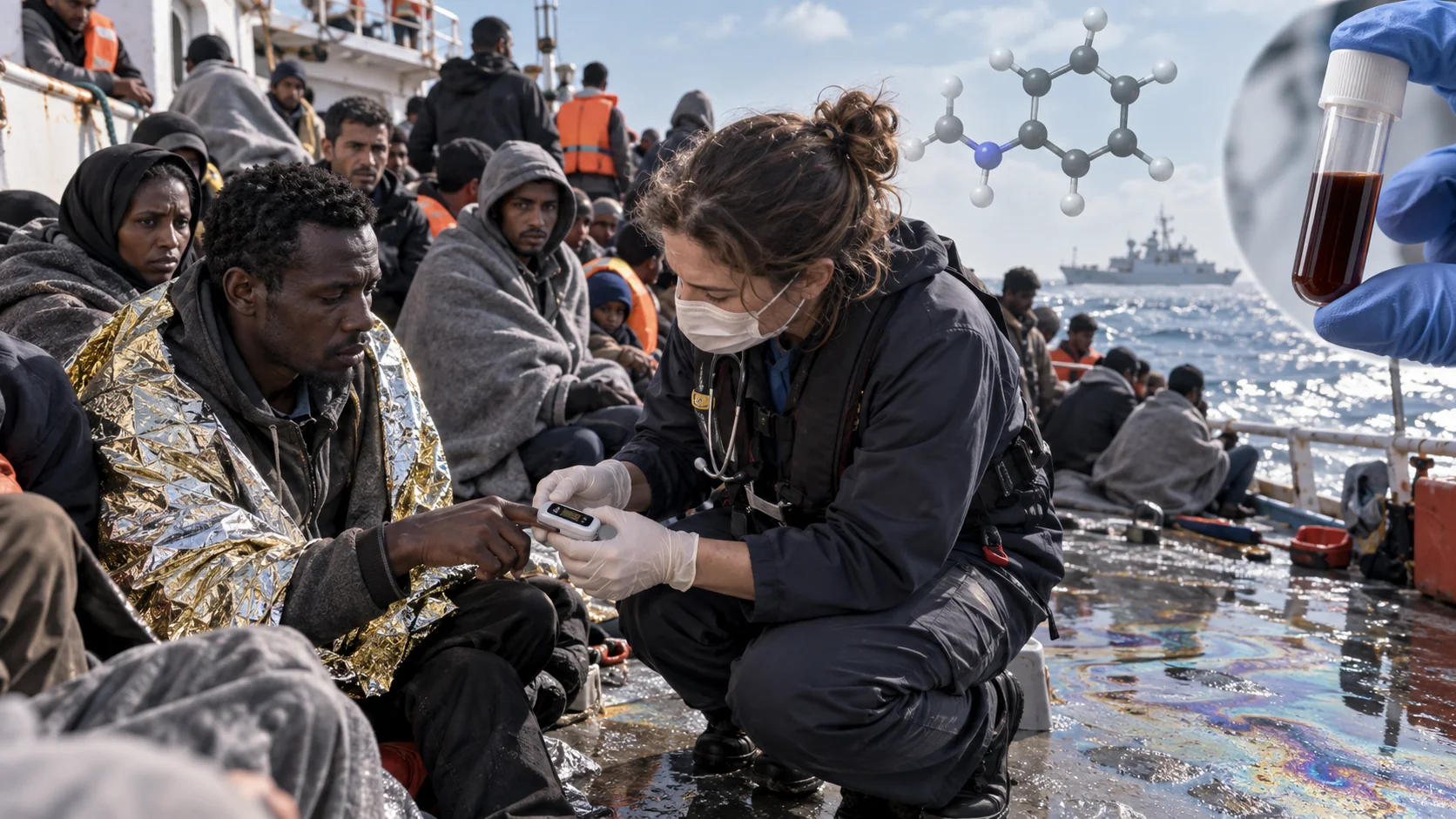
Migrants crossing the Central Mediterranean sea route travel in overcrowded vessels, where fuel may leak and contaminate seawater accumulating on the vessel floor, resulting in prolonged dermal exposure and fuel-related skin injuries. Since March 2024, clusters of cases of severe acquired methemoglobinemia with no apparent cause have been identified by clinicians in Lampedusa at disembarkation among migrants arriving in Italy. We conducted a coordinated clinical and toxicologic investigation to
Migrants crossing the Central Mediterranean sea route travel in overcrowded vessels, where fuel may leak and contaminate seawater accumulating on the vessel floor, resulting in prolonged dermal exposure and fuel-related skin injuries. Since March 2024, clusters of cases of severe acquired methemoglobinemia with no apparent cause have been identified by clinicians in Lampedusa at disembarkation among migrants arriving in Italy. We conducted a coordinated clinical and toxicologic investigation to characterize these cases and identify the underlying cause. Biologic samples were obtained from a subset of patients and analyzed for methemoglobin-inducing agents. A fuel sample from a vessel associated with one of the case clusters was also analyzed. Between March 2024 and December 2025, a total of 82 patients with severe acquired methemoglobinemia were identified, 90% of whom were male; the median age of the patients was 22.5 years (interquartile range, 19.5 to 28.0). The median methemoglobin level at presentation was 44.6% (interquartile range, 32.0 to 55.7), with 43% of the patients having a level of 50% or greater. Methylene blue therapy was used in 90% of the patients, often in repeated doses. Hemolytic anemia occurred as a delayed complication in 38 patients, frequently leading to blood transfusion. Two patients died. Toxicologic analysis identified N -methylaniline (a gasoline additive) or its metabolites in 37 of 39 tested patients (95%) and N -methylaniline at a concentration of 1.1% in the fuel sample from the vessel. This investigation identified dermal absorption of the gasoline additive N -methylaniline from fuel-contaminated seawater as the likely cause of recurrent, life-threatening methemoglobinemia associated with maritime migration. These findings underscore the importance of methylene blue availability and frontline diagnostic capacity in settings where similar exposure conditions may occur.