Nuclear tests at Mt. Mantap have reactivated intraplate faults
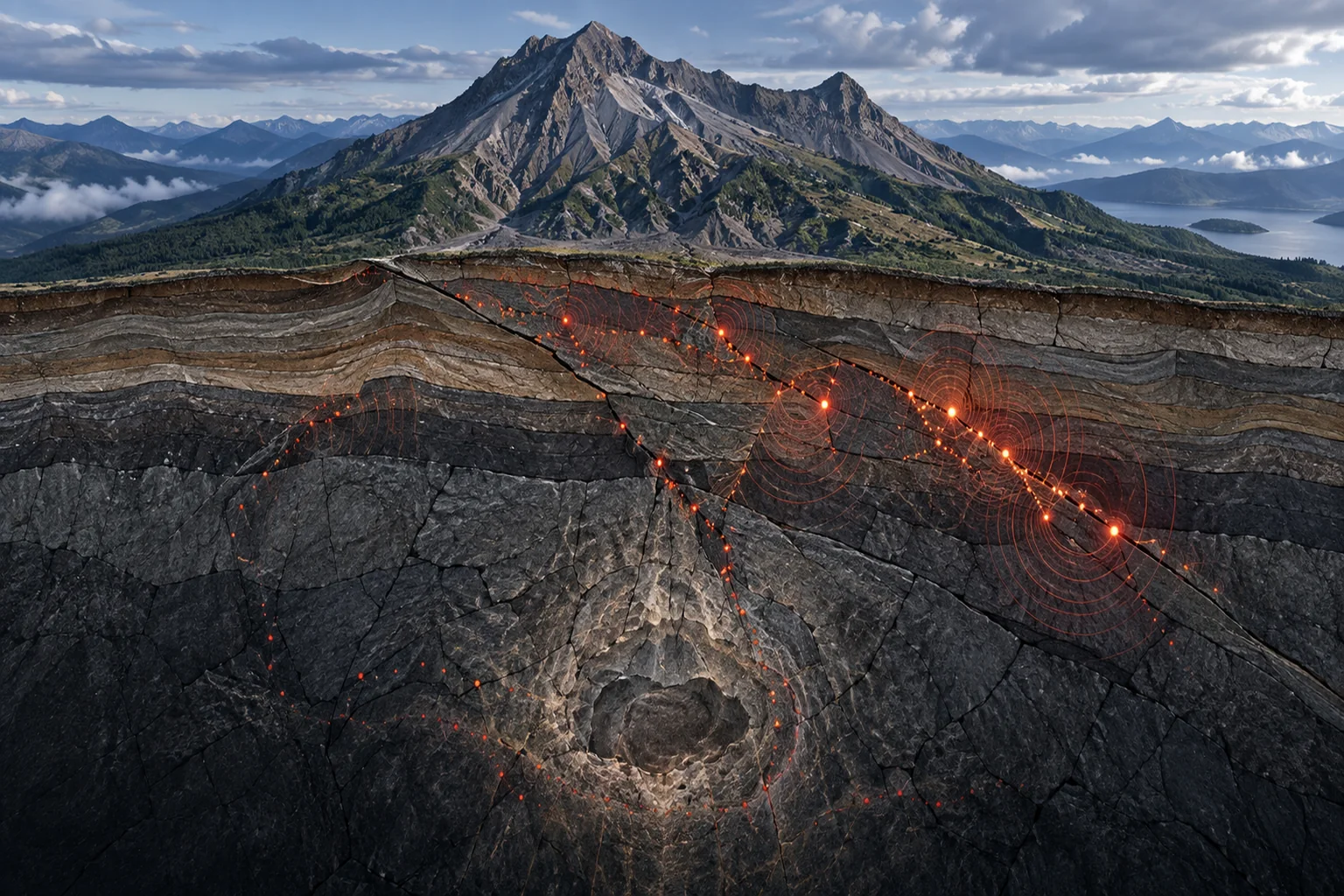
Underground nuclear explosions typically produce short-lived seismic sequences that decay rapidly after testing ceases. By contrast, seismicity near the Punggye-ri nuclear test site at Mt. Mantap in the Democratic People’s Republic of Korea has persisted and intensified for years after the final large-yield explosion in 2017, evolving from diffuse activity to spatially organized distribution along fault-controlled structures. Analysis of 17 years of continuous waveform data reveals a progressive
Underground nuclear explosions typically produce short-lived seismic sequences that decay rapidly after testing ceases. By contrast, seismicity near the Punggye-ri nuclear test site at Mt. Mantap in the Democratic People’s Republic of Korea has persisted and intensified for years after the final large-yield explosion in 2017, evolving from diffuse activity to spatially organized distribution along fault-controlled structures. Analysis of 17 years of continuous waveform data reveals a progressive increase in seismicity and delayed reactivation of shallow faults. Earthquakes cluster beneath asymmetric topography, indicating progressive stress redistribution within a critically stressed crustal volume. These observations challenge conventional expectations, showing that under specific geological conditions, underground nuclear testing can drive multiyear fault reactivation and extend posttest seismicity well beyond the immediate aftermath of an explosion.