Physical/Tech

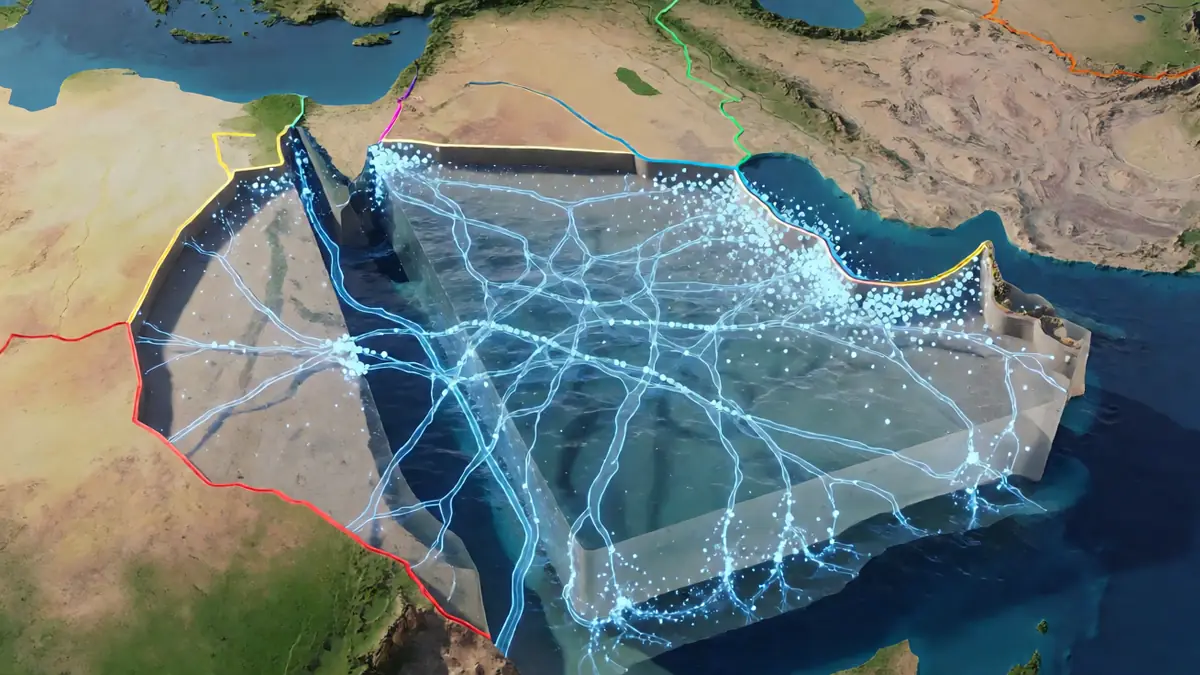
Geography of groundwater use and depletion in internationally shared aquifers.
| Source: Proceedings of the National Academy of Sciences of the United States of America

Transboundary aquifers (TBAs) underlie 35% of global groundwater-irrigated cropland, yet few are covered by formal cooperative arrangements. Whether this limited cooperation is consequential depends in part on where groundwater is used within shared aquifers, because pumping far from international borders may generate little cross-border impact. Combining [Formula: see text]116,000 well observations with global irrigation data across all 426 known TBAs, we assess how groundwater use and depletio

Transboundary aquifers (TBAs) underlie 35% of global groundwater-irrigated cropland, yet few are covered by formal cooperative arrangements. Whether this limited cooperation is consequential depends in part on where groundwater is used within shared aquifers, because pumping far from international borders may generate little cross-border impact. Combining [Formula: see text]116,000 well observations with global irrigation data across all 426 known TBAs, we assess how groundwater use and depletion differ from comparable domestic systems and how they are distributed relative to international borders. While we find no evidence of greater average depletion in TBAs, depletion is more strongly concentrated toward international borders in shared aquifers and varies substantially across systems. Irrigation is also more intensive and concentrated toward borders in shared aquifers, although much of this pattern is attenuated after accounting for border rivers. Groundwater-supplied irrigation remains more border-proximate after accounting for these rivers. A dyad-level typology distinguishes shared systems according to where groundwater demand is concentrated, linking their potential for cross-border interaction to different management options. These findings suggest that transboundary groundwater governance should be organized around the geography of groundwater use and potential cross-border interactions rather than treating shared aquifers as uniform governance units.


Read the original source →

Related Stories

Physical/Tech

Historical trends show more declining than increasing species among European pollinators.

Anthropogenic global change presents a growing threat to insect pollinators. Yet, long-term, continental-scale assessments of their population trends remain limited. Here, we leveraged a curated database of over four million occurrence records, covering 88% of extant bee and hoverfly species in Europe, to assess persistence, richness, and occupancy trends over the past century. Species persistence at the European level was relatively high, with modern records available for 87% of bee and 89% of

Continue reading
Physical/Tech

Extensive glacier loss in the coterminous United States.

Glaciers populate the mountain ranges of the western conterminous United States and despite their importance to alpine hydrology, their area and volume change have never been comprehensively evaluated. Our study shows that since the mid-twentieth century about one-quarter of the glaciers have disappeared and the overall area and volume are reduced by one-third. The pattern of glacier shrinkage suggests most glaciers in the conterminous United States are largely maintained by local topographic in

Continue reading
Physical/Tech

Scientists disrupt less but more persistently with career aging.

Disruption describes the extent to which a scientific work overturns the prior knowledge on which it builds and leads to a new line of research. A scientist's tendency to produce disruptive work has been found recently to decline over the career. However, the disruption index captures only how strongly a paper overturns prior work and ignores whether that disruption is later accepted or overturned by subsequent research. The persistent disruption (PD) framework adds this second perspective, iden

Continue reading
Physical/Tech

Reaction-based cryo-EM resolves the continuous conformational spectrum of CTP synthase catalysis.

Capturing enzymes under native turnover conditions remains a grand challenge in structural biology. Here, we develop a reaction-based cryo-electron microscopy (cryo-EM) strategy that directly samples Drosophila melanogaster cytidine triphosphate synthase (CTPS) from actively catalyzing mixtures containing only natural substrates and allosteric effectors. By integrating reaction-based sampling with three-dimensional variability analysis, we resolve a continuous conformational spectrum of CTPS dur

Continue reading
Physical/Tech

GTP orchestrates CTP synthase via an allosteric effector-cycling mechanism.

Cytidine triphosphate (CTP), a fundamental building block of RNA, plays vital roles in diverse biological processes. CTP synthase (CTPS) is the only known enzyme for de novo synthesis of CTP. Efficient CTPS catalysis requires guanosine triphosphate (GTP) in a dose-dependent, nonconsumptive manner; however, the precise mechanism by which GTP drives CTP formation remains unclear. Here, we integrate a series of cryo-EM structures of Drosophila melanogaster CTPS captured from actively catalyzing sam

Continue reading