Physical/Tech

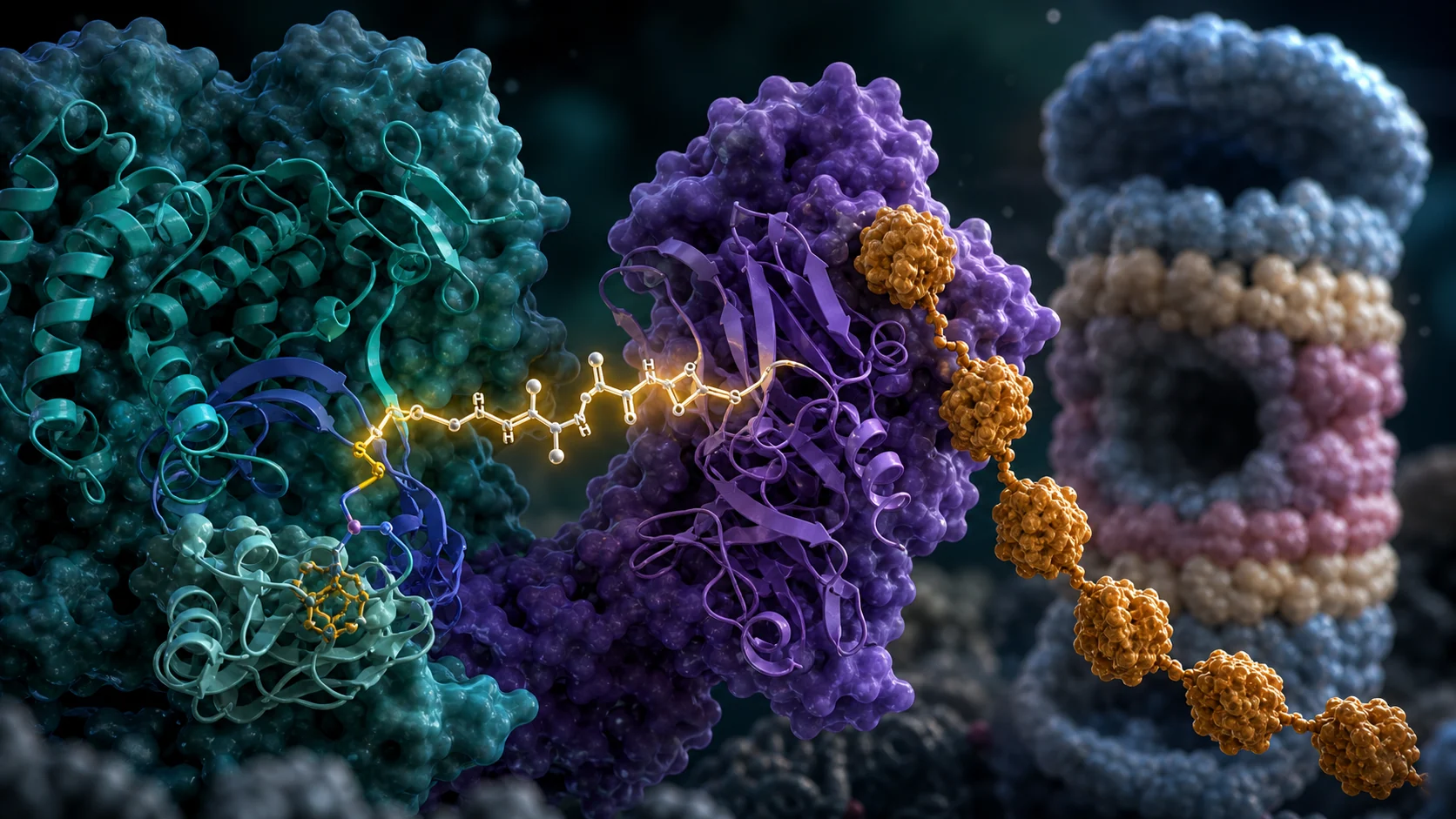
DCAF11-dependent molecular glue degrader activated by glutathionylation.
| Source: Nature

Targeted protein degradation is a powerful pharmacological strategy that harnesses the ubiquitin proteasome system to eliminate disease-relevant proteins, including otherwise undruggable proteins 1 . Here we report an unbiased and broadly applicable platform for the systematic discovery of molecular glues across diverse E3 ligases. Using multiplexed mass spectrometry-based chemical screening, we identified M12, a molecular glue that reprogrammes the E3 ligase DCAF11 to degrade DDX18. Mechanistic

Targeted protein degradation is a powerful pharmacological strategy that harnesses the ubiquitin proteasome system to eliminate disease-relevant proteins, including otherwise undruggable proteins 1 . Here we report an unbiased and broadly applicable platform for the systematic discovery of molecular glues across diverse E3 ligases. Using multiplexed mass spectrometry-based chemical screening, we identified M12, a molecular glue that reprogrammes the E3 ligase DCAF11 to degrade DDX18. Mechanistically, M12 functions as a prodrug that is activated through glutathione S-transferase-mediated glutathionylation. The glutathione moiety binds to an evolutionary conserved glutathione-binding site on DCAF11, and the exposed M12 moiety facilitates neo-substrate recruitment. We demonstrate that this glutathione-dependent mechanism readily enables targeted degradation of a range of proteins. Collectively, these findings establish that metabolically activated compounds can redirect E3 ligase function, thereby expanding the scope of targeted protein degradation and chemically induced proximity.

Read the original source →

Related Stories

Physical/Tech

Nature's antivenom: Combinations of conserved rattlesnake serum metalloproteinase inhibitors block the lethal action of viper venoms.

Snakebite maims or kills several hundred thousand people each year. For more than a century, treatment has relied on antivenoms derived from animals immunized with whole venoms, but their efficacy, safety, and availability are highly variable, and it is often not well understood which specific venom components must be inhibited to prevent mortality and major morbidities. New therapeutic approaches are needed. Here, we take an evolutionary approach to antivenom design inspired by the longstanding

Continue reading
Physical/Tech

Maternal nutrition determines the variable expressivity of STRA6-associated eye malformations.

Mutations in STRA6 , the high-affinity receptor for retinol-binding protein, cause Matthew-Wood syndrome, a congenital disorder characterized by striking phenotypic variability ranging from isolated ocular anomalies to severe multisystem malformations. The mechanisms underlying this variable expressivity and incomplete penetrance remain poorly understood. Here, we used mice to determine how maternal vitamin A status and embryonic Stra6 genotype interact to shape ocular development. Using Stra6 -

Continue reading
Physical/Tech

A semantic-based community model for high-fidelity tuning of olfactory mixture distances.

A central goal in sensory science is to establish quantitative mappings between physical stimuli and perceptual experience. Although such mappings are well defined in vision and audition, they remain elusive in olfaction, particularly for complex odor mixtures. Here, we show that perceptual distances between odor mixtures can be predicted with high fidelity and are unexpectedly well captured by a compact semantic space derived from single-molecule representations. In the Dialogue for Reverse Eng

Continue reading
Physical/Tech

Abrupt transition to irreversible damage in the overdrafted Sacramento Valley aquifer system.

Groundwater extraction decreases water pressure in aquifer systems, causing reversible or irreversible deformation of the water-bearing layers that manifests as recoverable or permanent displacements of the land surface, respectively. Detecting and forecasting when and where an aquifer system transitions from a reversible, poroelastic regime, to an irreversible, inelastic regime remains a crucial challenge given the complex, heterogeneous nature of aquifer systems. Here we leverage high-resoluti

Continue reading
Physical/Tech

High risk of hypoxemic COVID-19 pneumonia in myasthenia gravis patients with type I IFN autoantibodies.

Patients with myasthenia gravis (MG) may produce autoantibodies neutralizing type I interferons (AAN-I-IFN), which underlie severe viral diseases, including critical COVID-19 pneumonia, in patients without MG. We studied an international cohort of 85 unvaccinated SARS-CoV-2-infected MG patients not given antiviral treatment. Hypoxemic pneumonia occurred in 48 of these patients, including 22 (45.8%) with AAN-I-IFN, which neutralized both IFN-α2 and IFN-ω in 14 (29.2%) patients. Six (1

Continue reading