Physical/Tech

Conformational asymmetry of replicated human chromosomes
| Source: Science

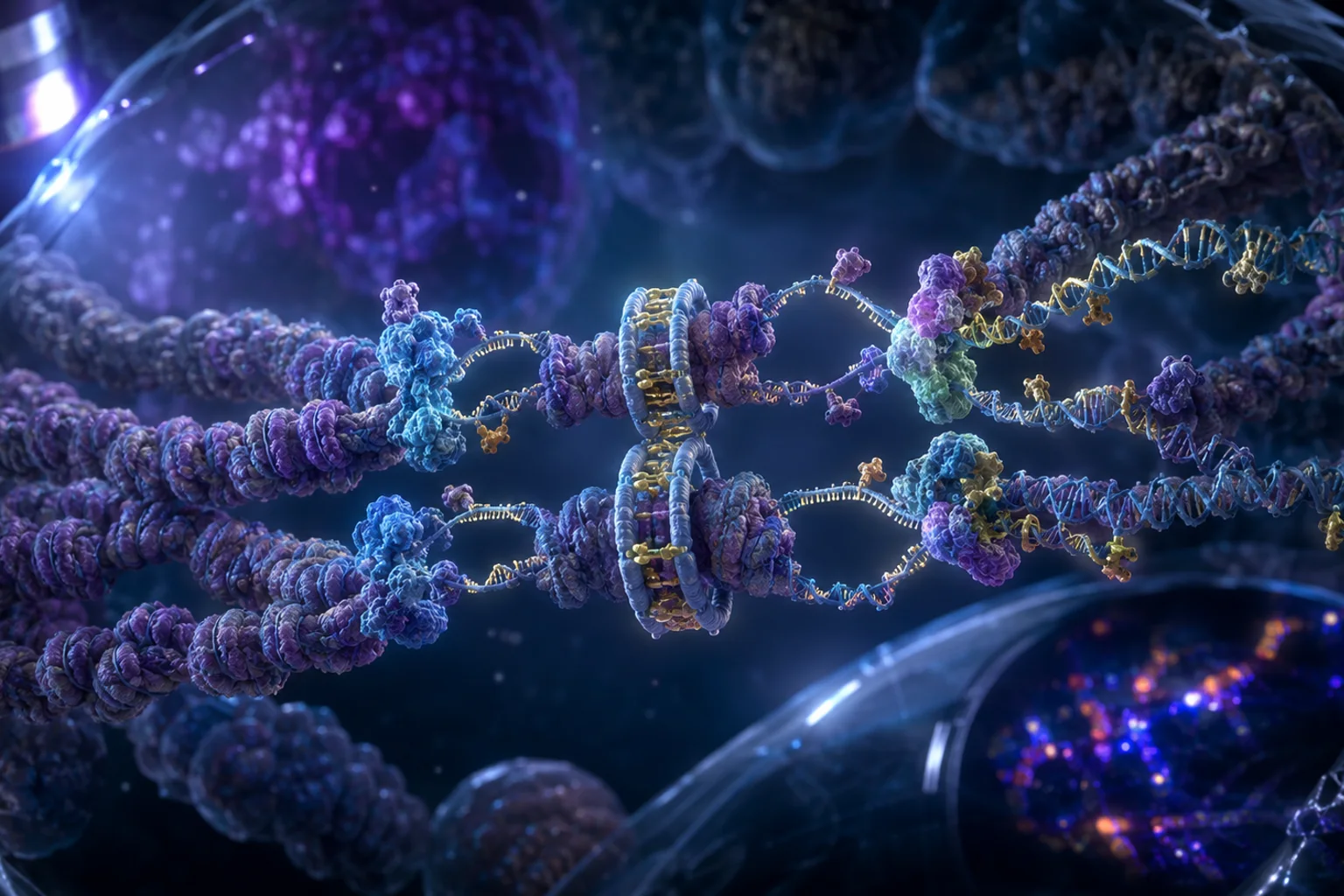
DNA replication generates sister chromatids with identical sequence, yet its mechanism is fundamentally asymmetric: Chromatids inherit strands of opposite orientation, whereas forks synthesize new strands by distinct leading- and lagging-strand mechanisms. How this replication asymmetry affects chromosome organization is unknown. Using sister chromatid–sensitive conformation analysis, we found that human sister chromatids are consistently misaligned in the 5′→3′ direction of inherited DNA strand

DNA replication generates sister chromatids with identical sequence, yet its mechanism is fundamentally asymmetric: Chromatids inherit strands of opposite orientation, whereas forks synthesize new strands by distinct leading- and lagging-strand mechanisms. How this replication asymmetry affects chromosome organization is unknown. Using sister chromatid–sensitive conformation analysis, we found that human sister chromatids are consistently misaligned in the 5′→3′ direction of inherited DNA strands. This shift persisted without cohesin-mediated loop extrusion but was lost upon disruption of cohesion. Polymer modeling showed that modest directional misalignment of cohesive cohesins can explain the observed shift, and we propose two models for how such misalignment could originate from replication fork asymmetry. This register shift between sister chromatids has implications for homology search during DNA repair.

Read the original source →

Related Stories

Physical/Tech

Multiband condensate of magnons in two dimensions.

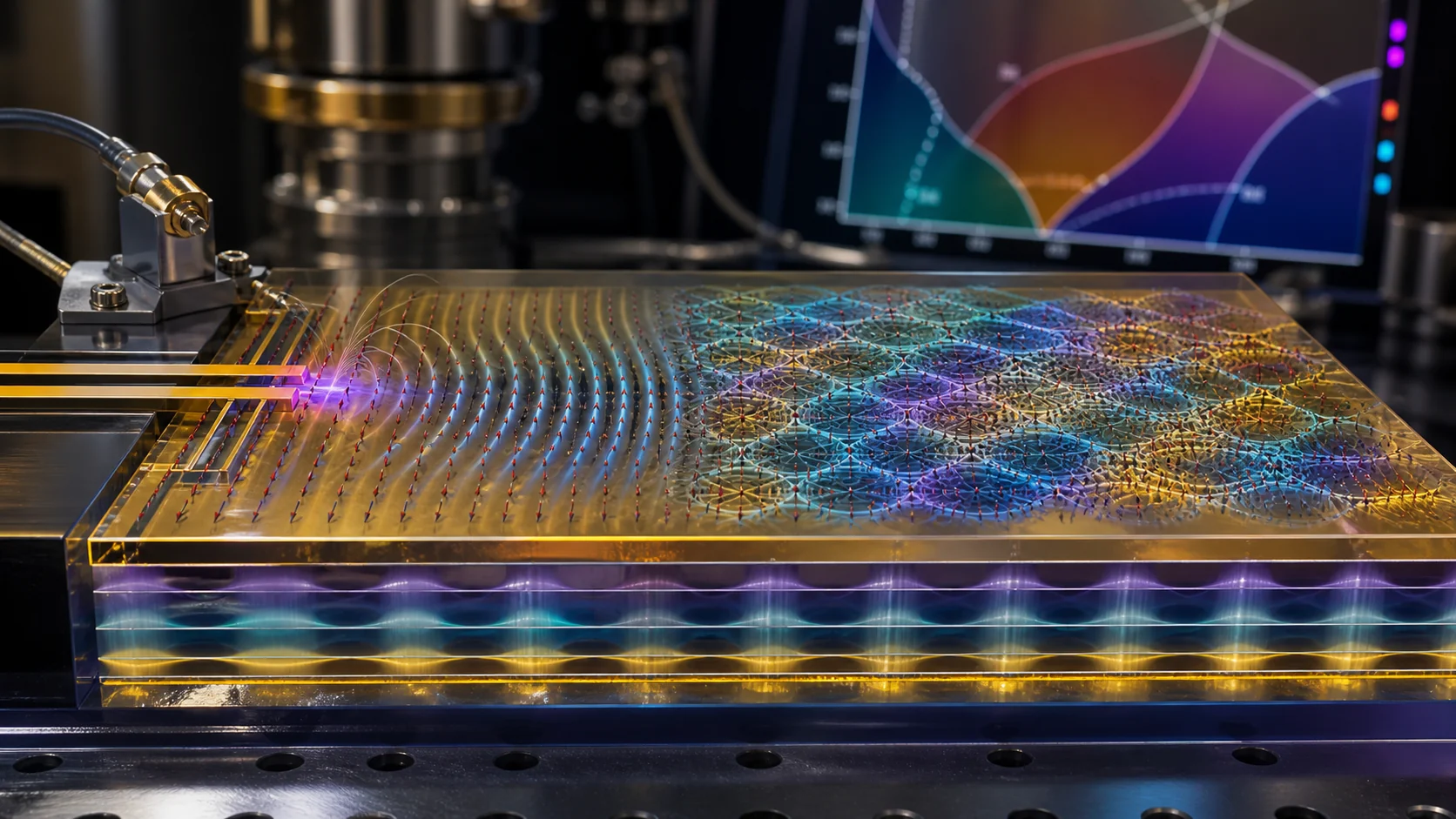
Wavelike bosonic particles can accumulate in a single mode characterized by a particular wavelength, and such condensates are at the heart of phenomena such as superconductivity and superfluidity where usually a single complex number describes their state. If there are several flavors of excitations or particles, a vector containing several complex numbers can characterize multicomponent condensation, thus opening new possibilities for textures, dynamics, and devices. Thus far, multicomponent co

Continue reading
Physical/Tech

Indirect reciprocity with dual private assessment.

People often cooperate out of concern for their reputation. The corresponding theory of indirect reciprocity predicts that such cooperation can only evolve if people's opinions of each other are sufficiently correlated. This correlation, however, can be difficult to achieve when individuals form their opinions independently from one another, as in private assessment models. In that case, errors can generate disagreements that propagate throughout a population. Here, we identify a simple mechanis

Continue reading
Physical/Tech

A genetic program for rapid initiation of axillary meristems at the onset of flowering.

Shoot branching patterns and their diversity arise from variable activities of axillary meristems (AMs). A common feature of flowering plants is delayed AM initiation and growth during the vegetative phase, followed by a sudden and rapid acceleration of apical AM initiation during the reproductive phase. The mechanisms underlying this pronounced developmental shift are poorly understood. During tomato floral transition, the primary shoot meristem (PSM) terminates in a flower after producing two

Continue reading
Physical/Tech

David Botstein: A pioneering geneticist and educator 1942-2026.

David Botstein, who died on February 27, 2026, was a towering figure in the field of modern molecular genetics. His research career was largely focused on the development of methods to better understand biological systems, beginning with his early work on Salmonella phage P22 and yeast, where he exploited the use of conditional lethal mutations as suppressors to identify genes with common functions and to order them in a pathway. He is best remembered for developing restriction fragment length p

Continue reading
Physical/Tech

Ultra-narrowband organic room-temperature phosphorescence achieved by boosting low-frequency vibronic coupling.

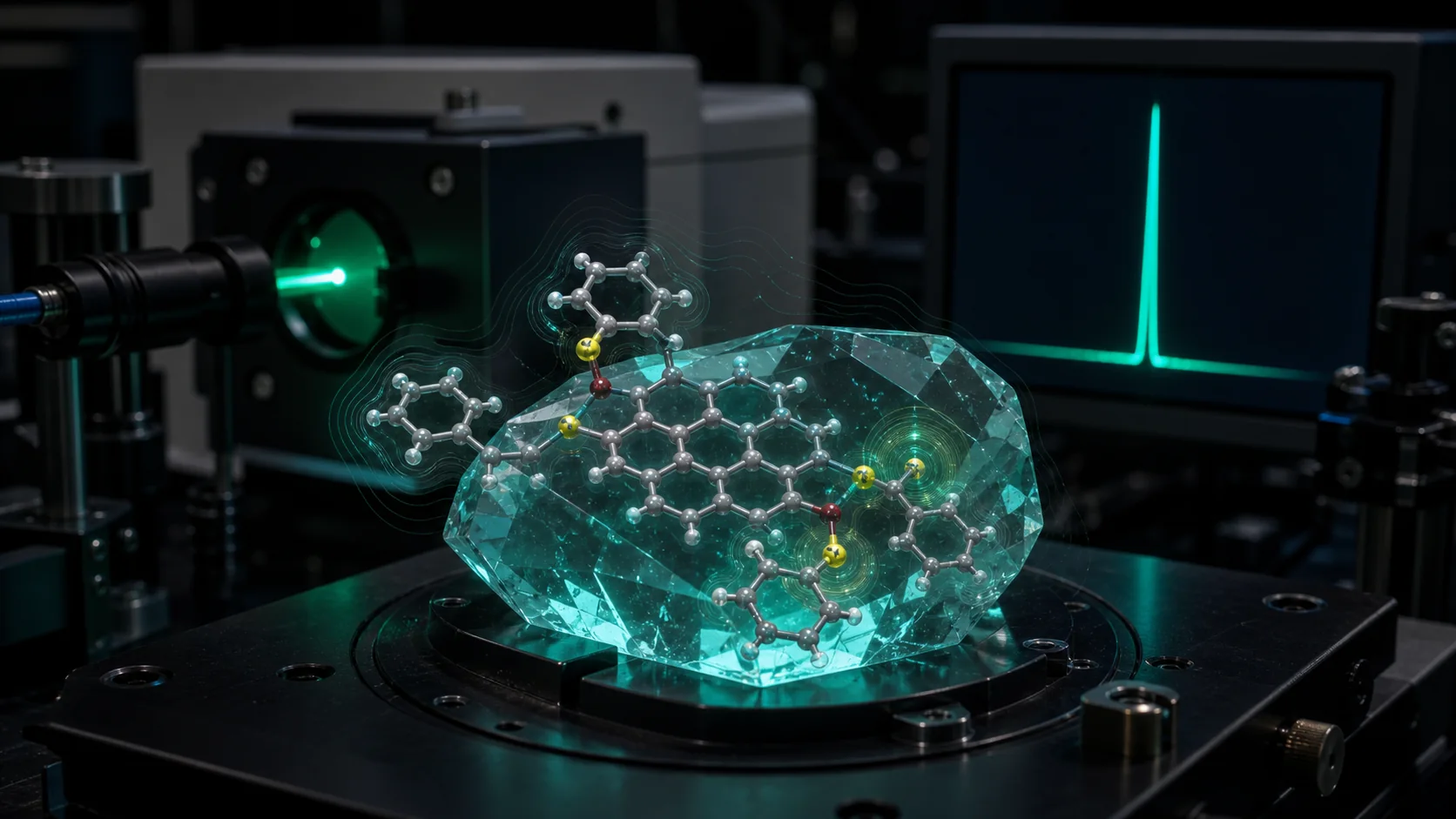
We pioneered a strategy based on low-frequency vibronic coupling to design narrowband room-temperature phosphorescent (RTP) materials. Here we select coronene derivative (CoDe) system and report that attaching aroyl group to the coronene core disrupts its intrinsic symmetry and introduces abundant low-frequency vibrational modes, thereby affording efficient room-temperature phosphorescence with a full width at half maximum (FWHM) of approximately 25 nm or narrower. In CoDe systems functionalized

Continue reading