Ancient DNA unveils distinctive ancestries in the Bronze and Iron Ages of East Tianshan
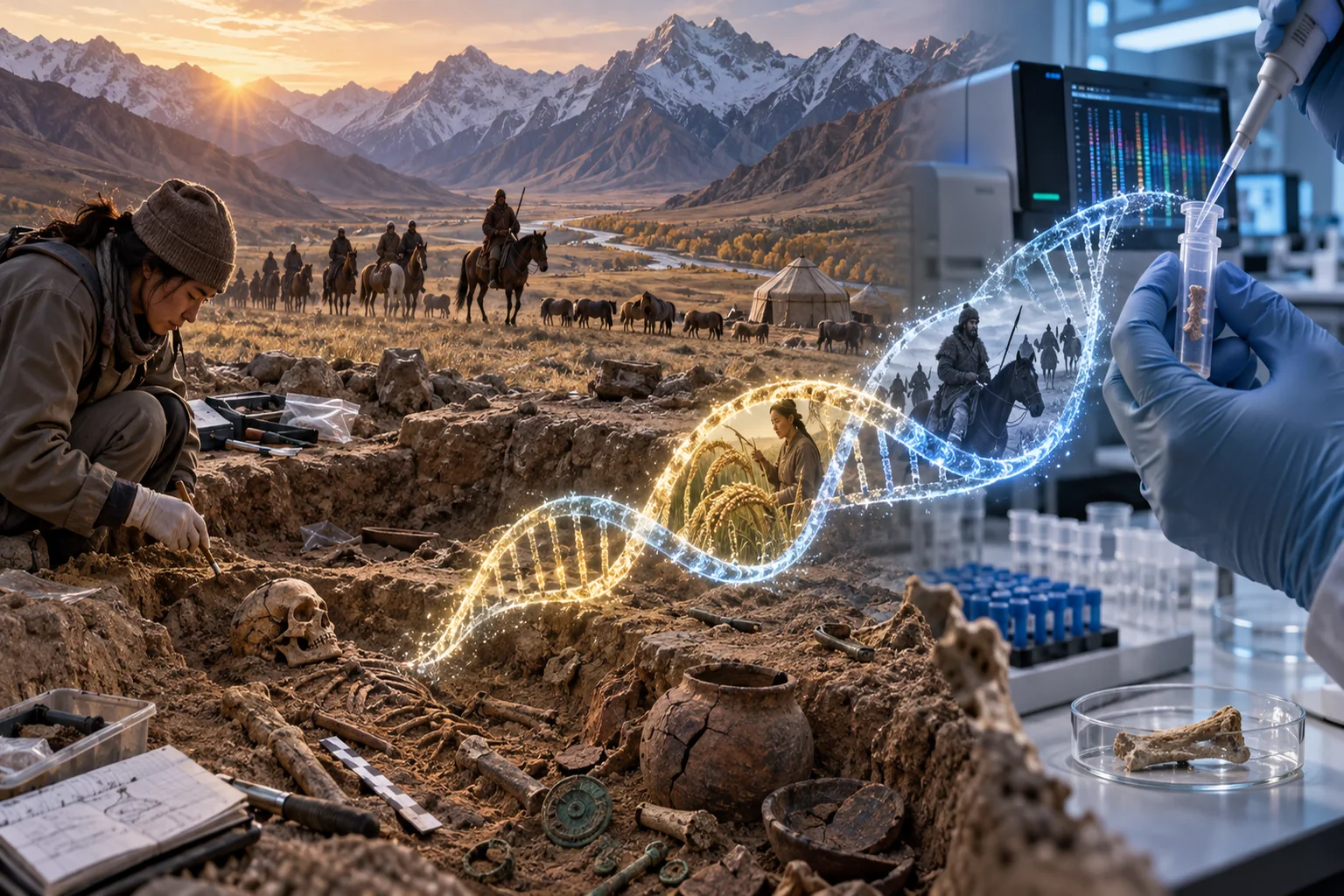
The East Tianshan Mountains occupy a key corridor between Central and East Asia, but their population history remains poorly understood. Here we report genome-wide data from 135 ancient individuals from 11 archaeological sites. We identify a previously unrecognized Bronze Age admixture between populations related to Yellow River millet farmers and steppe pastoralists associated with the Chemurchek culture. In contrast, we find little genetic contribution from contemporaneous middle-to-late Bronz
The East Tianshan Mountains occupy a key corridor between Central and East Asia, but their population history remains poorly understood. Here we report genome-wide data from 135 ancient individuals from 11 archaeological sites. We identify a previously unrecognized Bronze Age admixture between populations related to Yellow River millet farmers and steppe pastoralists associated with the Chemurchek culture. In contrast, we find little genetic contribution from contemporaneous middle-to-late Bronze Age steppe pastoralists, despite their eastward expansion across the Eurasian Steppe. By the Iron Age, regional populations had become more heterogeneous, incorporating additional eastern and steppe-related sources while retaining variable contributions from Early Bronze Age groups. These results reveal sustained demographic interactions in eastern Central Asia nearly 1800 years preceding the establishment of the historic Silk Road.