A 10-million-year biogeographic holding pen primed the Great American Biotic Interchange
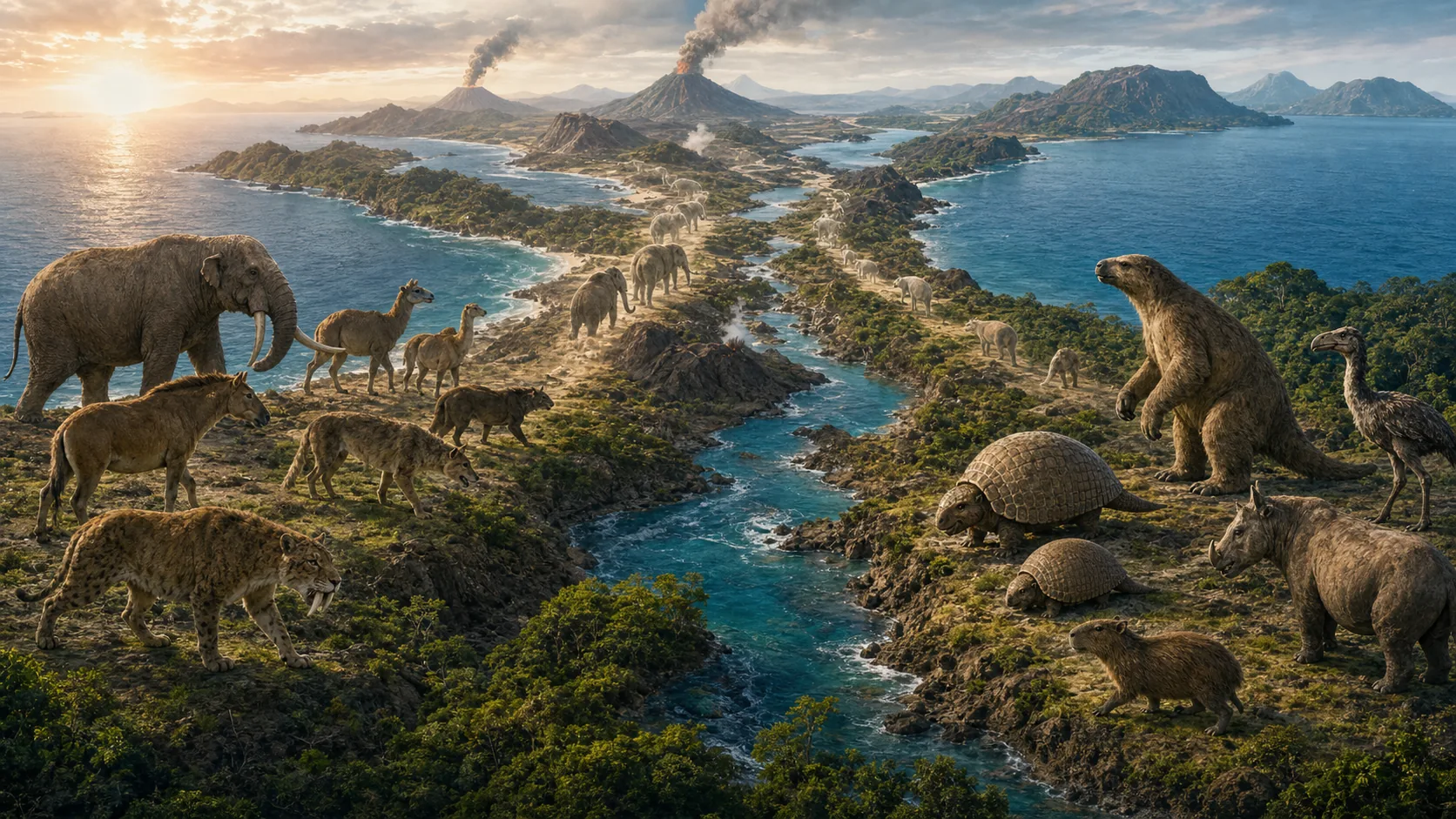
The movement of taxa between North and South America across the Panamanian land bridge, known as the Great American Biotic Interchange (GABI), established modern-day mammal assemblages in the Americas, heralding the decisive end of what has been called the “splendid isolation” of the South American fauna. Lacking substantive low-latitude records, previous work on this pattern relied on South American and temperate North American fossils to conclude that pulsed interchanges began about 2.8 millio
The movement of taxa between North and South America across the Panamanian land bridge, known as the Great American Biotic Interchange (GABI), established modern-day mammal assemblages in the Americas, heralding the decisive end of what has been called the “splendid isolation” of the South American fauna. Lacking substantive low-latitude records, previous work on this pattern relied on South American and temperate North American fossils to conclude that pulsed interchanges began about 2.8 million years ago (mya). Based on new low-latitude fossil data from México, we found evidence for a prolonged, triphasic interchange. Phase 1 consisted of the initial accumulation of northern higher-latitude mammals in a Mexican “holding pen” beginning 10 mya. Dispersal began in phase 2, with a strong north-south gradient and increasing biogeographic connections (7 to 3 mya). The final phase consisted of the already well-described taxonomic pulses (from ~2.8 mya).